


Biohacking Breathwork: Transform Your Mind, Body, and Life
Biohackers are trying to break the system of life we are accustomed to. To do this, they try new ways to make themselves more resilient and efficient. Unlike people who simply lead a healthy lifestyle, biohackers try to maximize their achievements by resorting to the help of science. They use this approach both for health and productivity. In addition to studying genes and nootropics, biohacking does not forget the basics – for example, breathing.
Humans take up to 20,000 breaths every day, naturally and unconsciously. So, being mindful during this process could help you explore your body and its borders. In the article, we will show the mechanics of breathing, how it affects us physically and mentally, and how to use breathwork to make your life better.

Contents
How Breathwork Rewires Your Brain and Body
We do not think about how we breathe. The body does it “by itself” without conscious control. However, by controlling breathing, you can change your state: from stress to relaxation, from despondency to energy. Interest in the phenomenon of breathing arose more than two thousand years ago and is today realized in a large number of studies in various fields of medicine.
Our respiratory center, as well as the centers of sleep and wakefulness, heart control, and vascular tone, are located in the medulla oblongata and the pons – they are built along the central part of the brain and form the so-called trunk. The rhythm of breathing is controlled by pacemaker cells. They create rhythmic excitation impulses that spread to other cells. Gas exchange is the primary breathing function. Inhaled oxygen moves from the millions of alveoli in the lungs into the capillary blood, and carbon dioxide leaves the capillaries into the alveoli.
Breathing is a powerful tool for relieving stress and anxiety. It affects pretty much everything in your body, from blood pressure to immune function. The nervous system is susceptible to changes in breathing rate.
Benefits of Breathwork for Biohacking
Today, biohacking is increasingly popular among those who want to improve their health and quality of life. One of the key tools in the biohacker’s breathing practices. Not all of them are easy to achieve correctly from the first time. But if you do, you’ve got a bunch of benefits for the physical and mental state. Let’s consider the main ones.
Stress Reduction and Emotional Regulation
Breathing helps to significantly reduce the level of stress in the body. Research shows that people who use breathing techniques note an elevated mood and reduced stress. This occurs both in terms of subjective testing and objective parameters. The heart rate decreases, as does the cortisol level in the saliva.
Increased Energy and Endurance
Oxygenation of the body can also improve. Deep breathing increases the flow of oxygen to the cells. This not only improves their function but also helps you be more energetic. We get this effect due to the saturation of blood with oxygen. Just a few correct inhalations and exhalations will improve your productivity in the gym or during a run.
Cognitive Enhancement and Mental Clarity
Acetylcholine plays a vital role during learning and memory formation. This mediator is secreted when the vagus nerve is stimulated. Chronic stress causes its deficiency. There is a zone in the brain that is responsible for both attention and breathing functions. The study examined this using MRI. The results showed that meditative breathing practices and pranayama practices lead to improved attention, mood, and physiological functions. Breathing activates the parasympathetic nervous system and gives it relaxation, reducing anxiety.
Better Sleep and Recovery
If you have problems with sleep, breathing meditations could become your best friends. Often, it is all about excessive activity of the sympathetic nervous system. Exercise will help activate the parasympathetic system, which will help you relax and improve the quality of sleep. Sleep yoga – yoga nidra – will be an excellent assistant in recovery and the fight against insomnia. This practice enhances the sleep process and includes several meditation breathing techniques.
Reducing a Protruding Belly
Breathing exercises can help strengthen your abdominal muscles and improve your posture. Diaphragmatic breathing activates the deep abdominal muscles, which helps strengthen the lungs and can lead to a smaller waist. Proper breathing also improves digestion and helps reduce bloating. So, in addition to strong nerves, you can also get nice ABS.
Breathwork Techniques
It all starts with awareness of how we breathe in everyday life. Quite often, we breathe wrongly. If you want to get more from this routine and biohack breathing, try some workouts for your lungs. This way, you could maximize your profit through some proper techniques.
Box Breathing
Box breathing, or equal breathing, is a simple but effective technique. It involves inhaling, exhaling, and holding your breath in between. These relaxation breathing techniques help you manage stress and function optimally despite high-stress levels. It is also an excellent method to quiet the internal chit-chats in yourself when you go to bed and can’t sleep.
Sit comfortably, and keep your back straight. Start inhaling, counting to four, then pause briefly. Exhale, also counting to four. Breathe through your nose the entire time. If you want to make the practice more challenging, try counting to six or eight. Ensure all three components (inhale, pause, exhale) are the same length. Then, you can hold your breath longer – up to 20 seconds during each part of the exercise.
Diaphragmatic Breathing
The chest and abdominal cavities are separated from each other by a dome-shaped muscle, which is called the diaphragm. It is mainly used during breathing. The diaphragm tenses and flattens, allowing air to be sucked into the lungs. When exhaling, it relaxes. This naturally releases air from the lungs. During diaphragmatic breathing, this muscle actively contracts and relaxes. This natural and productive technique occurs in newborns and adults during sleep.
Inhale slowly and deeply through your nose. The stomach should rise, but the upper part of the chest should remain motionless and relaxed. Slowly exhale through pursed lips as if blowing out candles. As you exhale, slowly and gently draw your stomach toward your spine.
4-7-8 Breathing
One of the varieties of slow controlled breathing is where the exhalation is longer than the inhalation, and there is a breath hold between them. Experts recommend this practice in case of insomnia. Breathing 4-7-8 will help you relax and fall asleep faster. Slow, controlled breathing increases the activity of the parasympathetic division of the nervous system. It reduces the activity of the sympathetic division, and holding the breath, according to some hypotheses, increases the activity of the vagus nerve, as does a long exhalation.
How to do it?
The basic technique involves inhaling through the nose for 4 seconds, holding the breath for 7 seconds, and exhaling through the mouth for 8 seconds. The tip of the tongue should be behind the upper front teeth.
Alternate Nostril Breathing
The entire nervous system calms down when you perform alternate breathing through both nostrils. At the same time, the body is filled with energy. Alternate breathing technique balances air movement through the right and left nostrils and opens the lungs. If you are tired, this slow, deep process will energize you. Breathing through the left nostril will give you calm and relaxation, even if you experience intense emotions such as anger, stress, joy, and sadness. The energy of the left and right hemispheres of the brain come into balance.
All you need to do is breathe for 3-5 minutes, closing one nostril after the other, and your nervous system will recover. This wonderful technology is very simple but effective. Try this breathing if you are facing serious negotiations or a speech and are worried and cannot get yourself together. This breathing will help you calm down and build effective communication.
Holotropic Breathwork
The goal of the technique is to change the state of consciousness to understand oneself more deeply, rethink traumas, and heal from mental problems. A person can open unique levels of consciousness in which collective unconscious memories are stored – this is the idea behind holotropic breathing. To heal, the practitioner needs to immerse himself in a psychedelic state and find the original collective unconscious.
The practice is led by a specially trained leader – a facilitator. A group of people is gathered in a separate room with subdued lighting. Participants are asked to come in comfortable clothes and are placed on pillows and mattresses.
Breath of Fire
The technique comes from the world of yoga. It’s especially popular in the kundalini yoga community. Such a practice will tighten your stomach and give your body an energy boost. If you are doing it for the first time, be careful. You could feel a bit dizzy because of the practice. But it gets better when it comes to routine. Breath of fire helps to recharge and to make your mentality more stable.
Sit straight on the floor or on a chair. If you choose the second option, ensure your back is tightly pressed against the back of the chair. Exhale sharply, using the navel area during this. You should feel how this happens. Then, relax your stomach as you exhale. Repeat several times at a fast pace.
Pursed Lip Breathing
The technique involves inhaling through the nose and exhaling through the mouth with pursed lips. A person needs to inhale through the nose with the mouth closed for a few seconds and then exhale slowly for 4-6 seconds through the lips, held in a tube or kissing position. It improves lung ventilation, reduces shortness of breath, and increases the body’s tolerance to physical exertion. This technique creates resistance to the airflow, which helps increase the concentration of carbon dioxide in the body and improve breathing efficiency.
Sit or lie down in a comfortable position. Purse your lips so that the inhalation slit is narrow but not too tight. Inhale through slightly pursed lips slowly and deeply, trying to make the inhalation as complete as possible. Hold your breath for a few seconds if it is comfortable for you. Exhale smoothly through slightly pursed lips, paying special attention to a complete and controlled exhalation. Repeat this process for several minutes.
Lion’s Breath
Another practice that came from yoga is powerful breathing with the upper chest. It cleanses the body of toxins and helps even with a sore throat. This growl damages the upper layer of the epithelium in the throat and exposes the receptors. They, in turn, detect the infection faster and stop it. In addition, the lion’s breath helps fight infectious diseases and can remove bad breath. The immune system activation also results in an influx of additional energy.
To practice this breathing, it is advisable to lie in the cobra pose – first lie on your stomach and then lift the upper part of the body with your hands. You can also just sit on your knees, tucking your legs. Press your chin to your chest and stick out your tongue. Take deep and sharp breaths in and out at least 10 times in this position.
Five-Finger Breathing
This is a simple but very effective cognitive behavioural therapy technique that helps to cope with panic attacks, anxiety, anger and other intense emotions. It is based on the association with five fingers of the hand, each of which symbolizes a key phrase or action aimed at self-help. Five-finger breathing is useful for everyone, especially those preparing for surgery or recovering from an illness.
The practitioner performs the exercise by extending both hands in front of him; Place the index finger of the right hand on the outside of the left little finger. Inhaling, gradually lift the index finger to the tip of the little finger. Then continue to move the index finger down towards the inside of the little finger, exhaling. The practitioner inhales, bringing the index finger to the tip of the next finger, and exhales, lowering the index finger to the opposite side of the finger. Repeat the same with each finger.
What You Need to Know Before Starting Breathwork
There are some things to remember before you start breathing work. It is important to understand that the body can react differently and the main thing is to be prepared for this.
Body Reaction
As we mentioned before, the body can give unexpected reactions to the beginning of breathing practices. For example, it can resist them and lose focus. You may experience hyperventilation of the lungs. Some complex techniques can lead to such an effect for an unprepared organism. You may experience: irregular heartbeat, dizziness or tingling in the arms and legs. In some cases, there is a risk of losing consciousness.
How to Recover From Breathlessness
If you have overdone your breathing exercises and feel that you are starting to get short of breath, you can do a few simple exercises:
-
sit on a chair with your head down,
-
put a pillow in front of you and lie down on it
-
stand behind the chair and put your elbows on it while bending your upper body
-
Press your back against the wall
-
lie on the bed and put a lot of pillows under your head to support your neck.
The Synergy of Breathwork and Biohacking
We have covered the basic breathing techniques, how to practice them and why it is so important to pay a lot of attention to this process. But how can you use knowledge about breathing in your life routine regularly? Let’s try to figure it out.
Combining Breathwork with Wearables
To achieve the greatest effect in breathing practices, it is worth using wearables. Smartwatches often have special applications that help track your breathing or recommend stopping and breathing. It can remind you to breathe deeply every few hours. Also, the help to find out the speed of breathing and how the blood is filled with oxygen.
Breathwork and Workout
It is critical to pay close attention to your breathing during training. If you take high speeds during jogging or other types of cardio, it is important to focus and concentrate on your breathing and make it deeper. This applies not only to cardio loads but also to strength training. Thanks to proper breathing, you can see greater results.
Myths About Breathwork
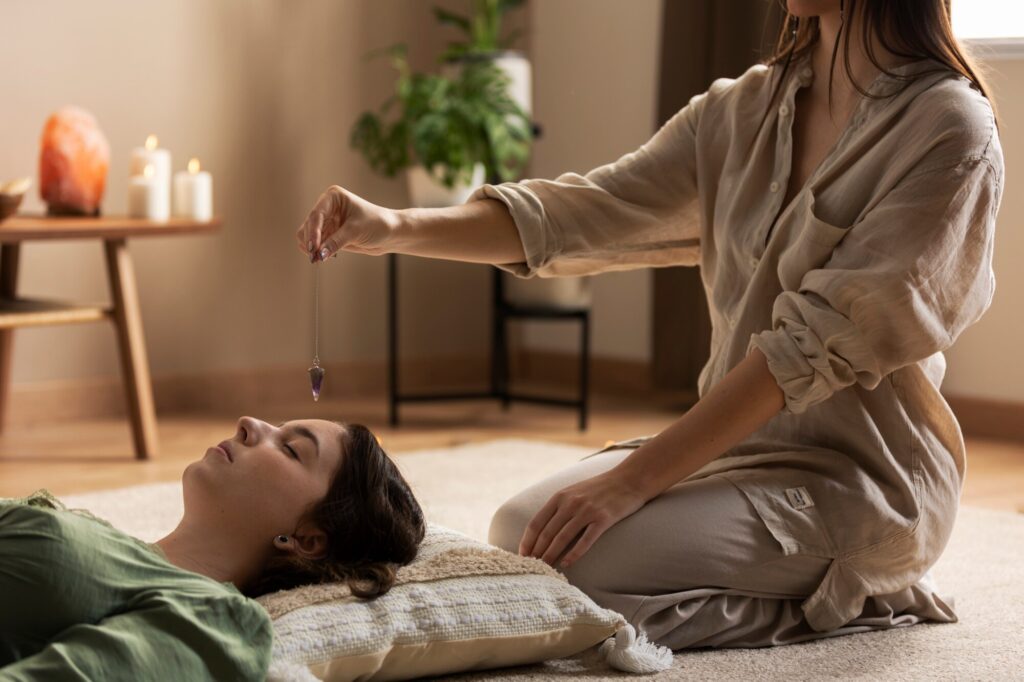
As we can see, working with breathing is incredibly important for biohackers. In essence, it is a tool for tuning the body, which helps to set the right pace for the whole life. However, there are many myths about breathing techniques. Let’s try to dispel them.
Only belly breathing is right
Breathing should involve all parts of the lungs and it is important to fill not only the diaphragm area with air but also the upper parts of the lungs. It is important to use the lungs to the fullest. This way there will be no stagnation in them and ventilation will be performed fully over the entire area of the organ.
Breathwork gives more oxygen to the lungs
If you are healthy, your blood is already full of oxygen, and special breathing cannot affect this in any way. Even with the cheapest oximeter, you will see that a person has 95-99% oxygen in the blood. If you have a normal level of oxygen in the blood, you need to balance it with CO2. This is necessary for the oxygenation of cells to proceed correctly. Because of this, many exercises focus on slow breathing, which helps this process.
You should get rid of CO2
Both CO2 and O2 can be toxic. It’s all about quantity because any medicine in the wrong dose can become poison. A more common problem is a lack of CO2 since most people breathe too quickly. This affects the normal gas exchange of the body.
Top athletes breathe only through their noses
Here it all depends on what zone your pulse is in. If it is possible to control it in the first 3, then in the 4th and 5th it is almost impossible. When the pace of physical activity accelerates, it is completely normal and even correct to switch to mouth breathing. This can be seen in many sports competitions.
You need to increase your lung capacity
The area of your lungs is already about twice as big as a tennis court (100 m2), and their filling is from 4 to 6 litres. Of course, you can increase the volume. Special training is great for this. But the volume will not change much. What is important here is how you use your lungs. With proper and sufficient breathing, you get the maximum benefit from them. It is better to focus on this and on optimizing the exchange of O2 with CO2 instead of volume.
To sum up
We cannot live without breathing and often use our lungs not quite correctly because no one taught us this. But this can be corrected, and you can squeeze the greatest benefit out of your body’s usual oxygenation. To breathe correctly, you just need to track your inhalations and exhalations for some time and watch which parts of your body are tense.
These breathing techniques help us focus on different areas of our lives. Some will calm us down and give our nervous system a break. On the contrary, some help us achieve more during physical activity and boost energy and mental activity. Short breathing breaks during work will relieve stress or stimulate the brain to solve particularly complex problems. Use this free tool to improve your life, and you will see how biohacking your breathing will help make your day more efficient.
for subscribing!