


Biohacking with Purple Light Therapy
Light therapy is becoming more advanced every year. Infrared rays help fight inflammation, improve skin condition, and promote collagen production. You most often hear about red light, but in fact, it’s far from the only spectrum used in cosmetology and medicine. This method of photobiomodulation uses both red and blue LED light. This combination helps treat acne. It also reduces inflammation and improves skin texture.
Our experts have analysed information about purple light therapy. Today, we’ll learn about its benefits and how you can use it at home. We’ll also discuss what purple light therapy does and its safety.
Highlights
- Purple light therapy combines red and blue LED wavelengths to target acne and skin inflammation simultaneously.
- Purple light therapy works through photobiomodulation which changes cellular activity in the skin.
- Regular sessions with LED masks or devices can gradually improve skin texture and tone.
- You will need several weeks of consistent use before visible results appear.
- Purple light therapy generally has a relatively low risk of side effects.

Contents
What Is Purple Light Therapy?
Let’s start with the most basic: what is purple light? It’s essentially a combination of red and blue light therapy. Each affects different mechanisms in the skin. Blue suppresses acne-causing bacteria. It also helps cleanse pores without mechanical stress and balance skin oiliness. Red, in turn, soothes inflammation and improves skin tone. It stimulates fibroblasts and increases collagen production. Such LED phototherapy also performs well in the anti-ageing segment, reducing the appearance of wrinkles and making the skin appear plumper. Red light-based skin therapy helps combat pigmentation and evens out skin tone. By combining these two spectra, we get a combo – purple LED light therapy According to clinical studies, the combination of blue and red light is significantly more effective in treating inflammatory acne than using only one spectrum. For example, a randomised clinical trial showed an improvement in inflammatory skin lesions up to 76% with combination LED phototherapy. It is important to note that we are not talking about Violet Light (380-420), this is a slightly different one. In turn, violet is exactly a combination of blue and red spectra, 405-420 nm
How Purple Light Therapy Works
Now that we’ve covered what it is, let’s talk about how the purple light happens. The basis of its work in photobiomodulation (PBM) lies in the alteration of cellular activity under the influence of light waves of specific wavelengths. In the context of our topic, this refers to the scientific term for the combination of the red and blue light spectra. Each of these has its own response zones on the skin. Let’s have a look at each.
Blue Light Effects
Blue light in LED therapy is typically used in the range 405-450 nm. It is low-level light therapy (LLLT). He affects the epidermis and upper layers of the dermis. Bacteria that cause acne – Cutibacterium acnes, contain porphyrins. These are photosensitive molecules that are activated by blue light. When exposed, reactive oxygen species are formed, which damage bacterial cells. This helps to reduce the bacterial load in the sebaceous follicles. The inflammatory element of acne is also reduced. Studies show that light near 415 nm effectively inhibits the growth of C. acnes, so LED blue light therapy can improve the condition of your skin both inside and out.


Red Light Effects
While blue light works more in the upper layers, red light penetrates deeper, to the dermis. It is used in the range 620-660 nm and affects cellular metabolism and inflammatory processes. This type of light-based skin therapy helps stimulate mitochondria, improves blood microcirculation, and stimulates collagen synthesis. An experimental study showed that 630 nm LED light promotes collagen fibre remodelling and improves skin structure. It also shows his perspective inanti-aging therapy.
Combination of Red and Blue Light Therapy
When you combine the two PMB spectra we talked about earlier, you get Purple Light Therapy. It allows you to work with the skin on several levels at once. Blue light acts on the epidermis and suppresses bacterial activity, while red light penetrates deeper and reduces inflammation.
This combination allows for simultaneous action on bacteria, the inflammatory response, and skin regeneration processes. Therefore, purple light therapy is often used as a comprehensive treatment for acne and improving skin condition.
Purple Light Therapy Benefits
Purple light therapy is good for combining the antibacterial and regenerative properties of two LED light spectrums. Let’s look at the benefits.
- Collagen Stimulation. Red light increases mitochondrial activity in dermal cells, boosting collagen and elastin synthesis. Their production slows with age, and red light restores elasticity. As studies show, LED radiation at 630 nm promotes collagen fibre remodelling and improves skin structure, especially in photoaging.
- Evening Out Skin Tone. Purple light therapy for the face evens out skin tone using the red spectrum. It works on pigmentation and helps the complexion appear fresher. This spectrum also plumps the skin, so under-eye circles can become less noticeable. Blue light works to reduce inflammation and shine. You’ll notice that acne marks fade faster thanks to this combination.
- Helps Control Oily Skin. Acne bacteria often thrive on oilier skin types because they have more food there. This works by reducing sebum production and depleting the bacteria. Therapeutic light exposure helps with this, as both blue and red light regulate the skin’s microbiome, just at different layers.
- Reduces acne-causing Bacteria. Bacteria Cutibacterium acnes. It’s suppressed quite well by blue light, which depletes it of oxygen. When exposed to light, bacterial porphyrins are activated and trigger a photochemical reaction. This decreases the microorganisms and potentially puts acne into remission. Experimental data show that radiation 415-449 nm effectively kills P. acnes in laboratory conditions.
- Reduces Surface Inflammation. Here, the red spectrum takes on the main role. It has a noticeable anti-inflammatory effect and influences cellular signalling pathways, potentially reducing the level of pro-inflammatory cytokines in the skin. By improving microcirculation and the skin’s regenerative capacity, redness and inflammation subside more quickly.
- Supports a Balanced Skin Microbiome. Balance is essential for a healthy skin microbiome. If the microbiome is imbalanced, bacteria readily colonise the epithelium, especially on oily skin. Blue LED light helps maintain this balance. It suppresses pathogenic bacteria without disrupting the skin barrier. Red light, in turn, promotes tissue regeneration. Together, they normalise the skin’s protective functions.
Purple Light Therapy Devices
LED therapy devices are quite extensive. There are several types of purple light skin therapy devices so we will talk about the essential ones. They differ in design, power, and area of application.
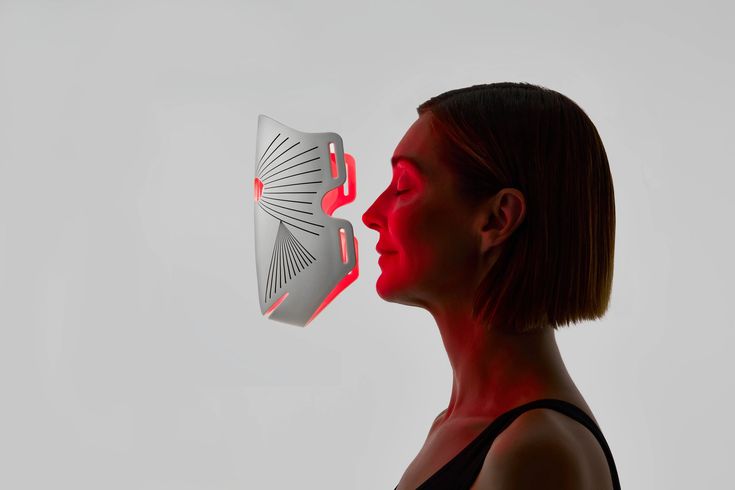
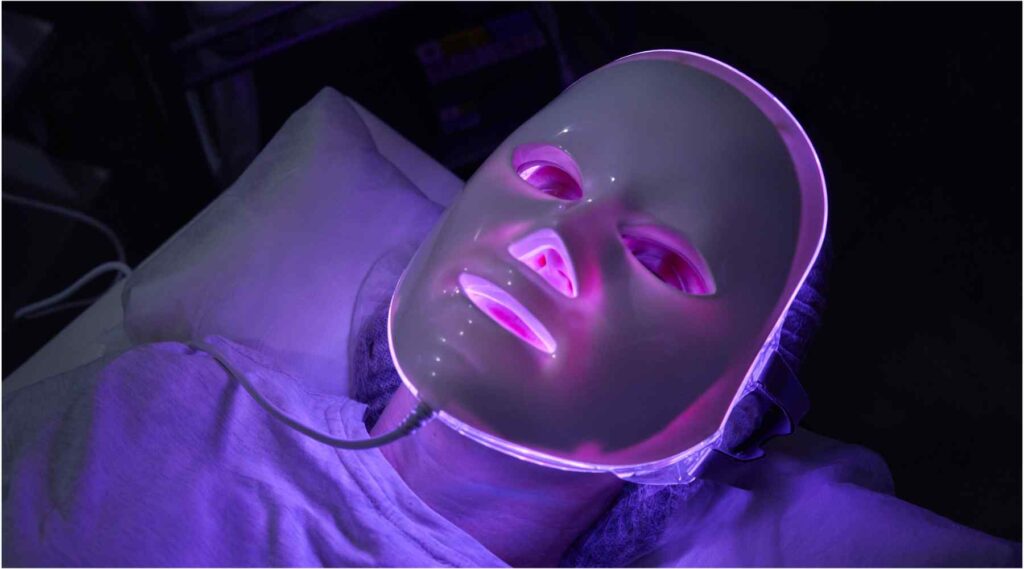
- LED masks. The most common type of device. The red and blue light therapy mask covers the entire face and is self-supporting, making it convenient for daily wear. These devices typically use a combination of 415 nm blue light to suppress acne bacteria and 633 nm red light to restore skin. For example, Omnilux Clear LED Mask uses blue light at 415 nm and red light at 633 nm. This purple light therapy mask is made of silicone and fits perfectly on the face, allowing the rays to penetrate deeper. The mask is designed to treat acne and also helps with age-related changes. The average wear time is 10 minutes.
- Handheld LED applicators. This option is suitable for targeted light wavelengths used on inflamed areas of the skin. They are typically applied locally for up to 3 minutes. For example, Solawave Bye Acne Spot Treatment uses red light around 630 nm and blue light around 415 nm to reduce inflammation and suppress acne bacteria.
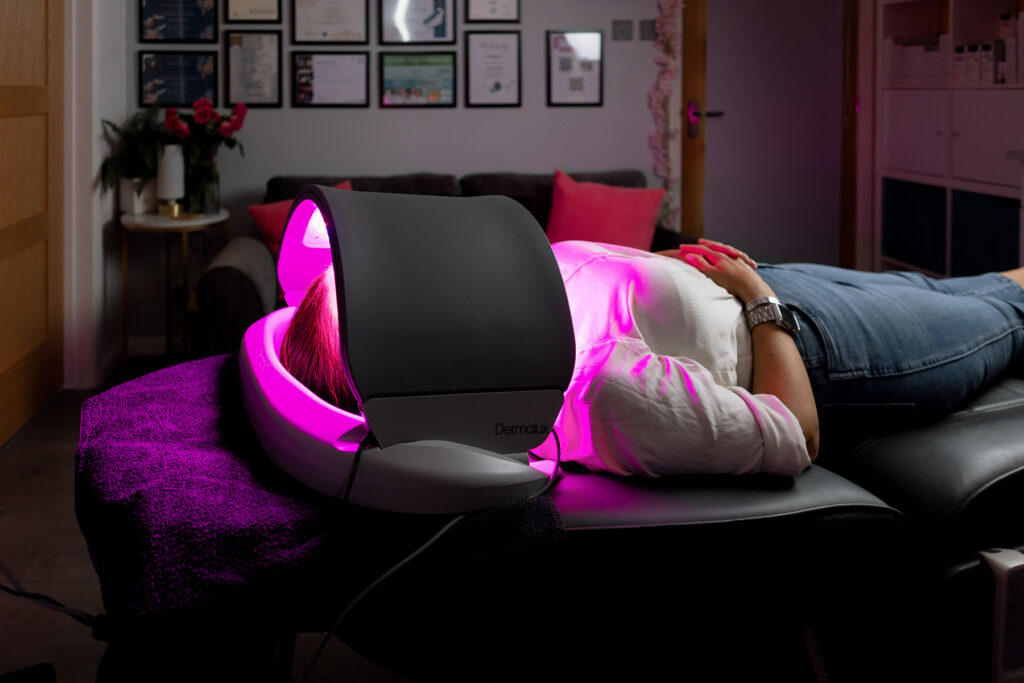
- LED panels. These are more powerful devices that are placed against the face but not in direct contact. These systems can contain hundreds of LEDs and often include additional wavelengths, such as near-infrared (830 nm), which enhance the anti-inflammatory effect. Dermalux Flex MD LED System. This is one of them. It’s used in professional cosmetology clinics. These procedures can be done several times a month.
How to Use Purple Light Therapy
To achieve the desired results, it’s important to approach the procedure correctly. Let’s review the key points to incorporate into your beauty routine if you’ve decided to try purple infrared light.
- Cleanse the skin gently with the product you use daily. To prepare the skin, it’s important to start with this step. This removes dead skin cells and allows light to better penetrate the skin’s layers. Also, you can add moisturising serum before and after purple light therapy.
- Dry your face completely. LED devices work more effectively on dry skin. Residual water or active ingredients can reduce the light intensity and uniformity of the treatment.
- Put on the mask or another device you use. Make sure it fits tightly on your face. If you are using an LED panel, keep the device at a distance.10-30 cm from the face, to maintain therapeutic light density.
- Make sure you have set the correct mode. It should be blue + red light.
- Carry out the procedure for 10-20 minutesThis is enough for one time, assuming you will repeat the therapy 3-5 times a week.
- Don’t forget to apply moisturiser and SPF before going outside after light therapy. Using LED light increases skin sensitivity, so sunscreen is essential to prevent photoaging and pigmentation.
The course of therapy usually consists of 4-8 weeks.
Is Purple Light Therapy Safe?
Overall, LED phototherapy is considered a safe procedure. It’s non-invasive and, with the right approach, can be used by anyone. No serious side effects have been observed in clinical trials. This is especially true for acne treatment. However, it may not always be sufficient for some groups of people with photosensitive issues; in such cases, it’s best to consult a cosmetologist and consider additional dermatological treatment.
It’s worth noting that you may experience mild dryness and your skin may become more sensitive. This is due to the biological response of the skin to PBM – changes in cellular activity under the influence of light waves. Over time, your skin will adapt, and these effects will become less noticeable. Regarding contraindications, it’s worth consulting a specialist if you have:
- photosensitive diseases;
- taking photosensitising drugs,
- and photic stimulator-induced epilepsy.
Pros and Cons of Purple Light Therapy
Of course, every therapy has its pros and cons. And while purple light therapy may seem like the perfect solution at first glance, let’s talk about its various aspects.
Pros:
- Non-invasive procedure. LED therapy works through lights so you don’t have to dive into the epidermis.
- Suitable for home use. You don’t need to have an expert by your side to use it and it is easy to figure out how to perform the procedure at home.
- Relatively low risk of side effects. You may notice slight dryness or redness if you leave the device on your face for too long, but generally, there are no serious complications.
- Long-lasting equipment. LED devices work for years without needing to replace the bulbs.
- Quick sessions. You’ll need just up to 20 minutes per session to see visible results.

Cons:
- Requires regular use. This therapy works through cumulative effects, so you’ll need to discipline yourself and use the mask 3-5 times a week.
- Cost of devices. Effective devices often cost between $150 and $1,000 or more.
- Not suitable for all skin types. If your skin is sensitive or too thin, the intensity of the waves may irritate it. And if you lower the intensity of the waves, the effect won’t be noticeable.
- No instant results. You’ll only see results after several months of regular use, so it’s best to be patient.
- Limited effectiveness in severe acne. Even though the purple light therapy mask or any other device is good quality, it’s not a magic pill. You still need to consult with a doctor and have proper acne treatment.
Summary
Today, we explored purple light therapy. We learned that it’s a photobiomodulation method based on a combination of red and blue LED light. We analysed clinical studies that demonstrate how the combination of spectra affects skin condition. Scientific data confirms that blue light effectively destroys Cutibacterium acnes, while red stimulates regenerative processes and collagen synthesis. The combined use of these spectra provides a more comprehensive effect on acne pathogenesis and improves skin condition. It’s important to note that this is a relatively safe procedure, but only devices with a certain intensity produce a noticeable effect. The intensity shouldn’t be too high, but it shouldn’t be too low either. Here are a few tips to ensure that LED therapy brings you only benefits.
- Use devices with wavelengths of 415-450 nm and 620-660 nm.
- Take the course minimum of 4-6 weeks for visible results.
- Do not exceed 20 minutes for one procedure.
- For visible results, use the devices 3-5 times a week.
- Don’t forget to use moisturiser after the procedure, as LED therapy can cause dry skin.
- Never forget about SPF protection and use it even on cloudy days after therapy.
- For severe acne, combine LED therapy with dermatological treatment.
By following these recommendations and maintaining discipline, you’ll achieve excellent results with purple light therapy before and after effects. However, be sure to consult a specialist before using this new device.
for subscribing!