


Biohacking With Yellow Light Therapy
Non-invasive skin improvement treatments are quite popular these days. The cosmetology industry offers a wide variety of such procedures, including microcurrents, massages, peels, and vibration therapy. Light therapy holds a special place in this list. This skin care and treatment method is gaining popularity due to its safety and effectiveness.
Today we’ll discuss what yellow light therapy does. It’s not the most popular, but our experts have studied it and are ready to share why yellow light may be beneficial for you. We’ll learn about its benefits and which layers of the skin it penetrates. Also, we will figure out the yellow light therapy before-and-after effects, whether it’s safe to use, and the best way to use it.
Highlights
- Yellow light therapy uses wavelengths around 570 to 620 nm to gently affect the upper layers of the skin.
- This type of LED therapy is often chosen for sensitive skin because it works more gently than red or blue light.
- Yellow LED light may help calm visible redness and support skin recovery after cosmetic procedures.
- This spectrum is one of the least studied types of LED therapy.

Contents
What is Yellow Light Therapy
Let’s start with what actually is a yellow light therapy. It’s a type of LED phototherapy that uses light in the yellow or amber spectrum. The cosmetic industry uses it to treat sensitive skin and gently combat inflammation. Since yellow light therapy for skin is considered relatively gentle compared to other types of light therapy, it can be used by people with particularly sensitive skin. For example it could be an option for people with rosacea. However, there is significantly less scientific research on yellow light than on red or blue LED therapy. The 2022 Yellow LED Study by Hong et al. showed that LED light with a wavelength of approximately 590 nm can reduce oxidative stress in skin cells and inhibit inflammatory signaling pathways, including NF-κB and COX-2. The study also noted an effect on procollagen synthesis, which may be related to skin structure support. The authors conclude that yellow light may possess antioxidant and anti-inflammatory properties. However, the study was conducted on cell models, so clinical effects require further investigation.
Light Wavelength and Spectrum
Yellow and amber LED lights typically fall into the range 570-620 nm. It lies between the red and green spectrums. The wavelengths penetrate the skin to a moderate depth, the epidermis and upper layers of the dermis. This makes it more comfortable for reactive and particularly sensitive skin. Compared to red light, it penetrates the tissues less deeply, primarily affecting the skin’s superficial processes.
How LED Light Therapy Works
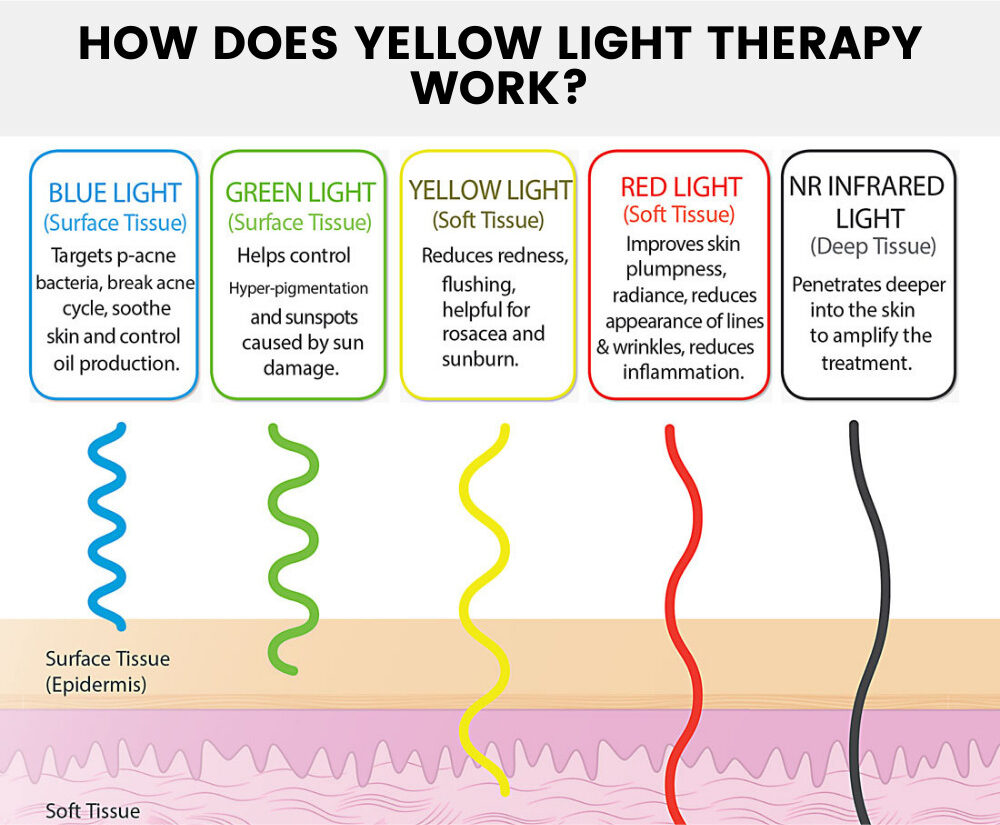
Each LED light therapy system works similarly. The rays penetrate the skin layers and affect it at different levels. Each colour has its own wavelength, which determines the specific problem it addresses. The light is absorbed by the skin’s cellular structures. This can affect microcirculation and cellular metabolism. The yellow spectrum primarily affects superficial layers of the skin, so its effect is often described as gentle and soothing. Unlike blue light, which targets bacteria, or red light, which stimulates deep regenerative processes, yellow light therapy typically focuses on maintaining the overall health of the skin.


Yellow Light Therapy Benefits
Now that we’ve covered each spectrum, let’s return to yellow. It’s worth noting that it’s one of the least studied compared to the others. However, even now, its main benefits can be identified.
- Reduce Skin Redness. Because its rays penetrate only the upper layers of the epidermis, yellow light therapy helps eliminate redness and skin reactivity. Some experts believe it can support skin recovery after cosmetic procedures. However, scientific evidence on this effect remains limited.
- Improve Skin Tone. Sometimes used for skincare with dull and uneven skin tone, Amber Light Therapy can help even out skin tone and create a radiant effect. By gently targeting superficial processes, microcirculation improves more evenly and smoothly. It’s worth noting that the results are typically less pronounced than with therapy using deeper light spectrums.
- Support Microcirculation. A yellow LED light can support skin microcirculation. Light waves can affect small vessels and stimulate local blood flow in the superficial layers of the skin. This is sometimes used to improve overall skin condition and appearance. Improved microcirculation can support the delivery of oxygen and nutrients to cells.
- May Calm Irritated Skin. This light can be beneficial for those with sensitive skin. Due to its shallow penetration, the light has a less intense effect on tissue. Therefore, it is sometimes used for recovery treatments after cosmetic procedures. Many specialists consider this spectrum safer for skin prone to redness.
Yellow Light Devices
Although devices with this spectrum may be fewer on the market, it is still quite common in combination with other devices and other options. Yellow therapy devices vary in power, design, and application. Most modern devices use LEDs that emit light in the range 570-620 nm. Below are the main biohacking devices used for this therapy.
LED masks (multi-colour LED masks)
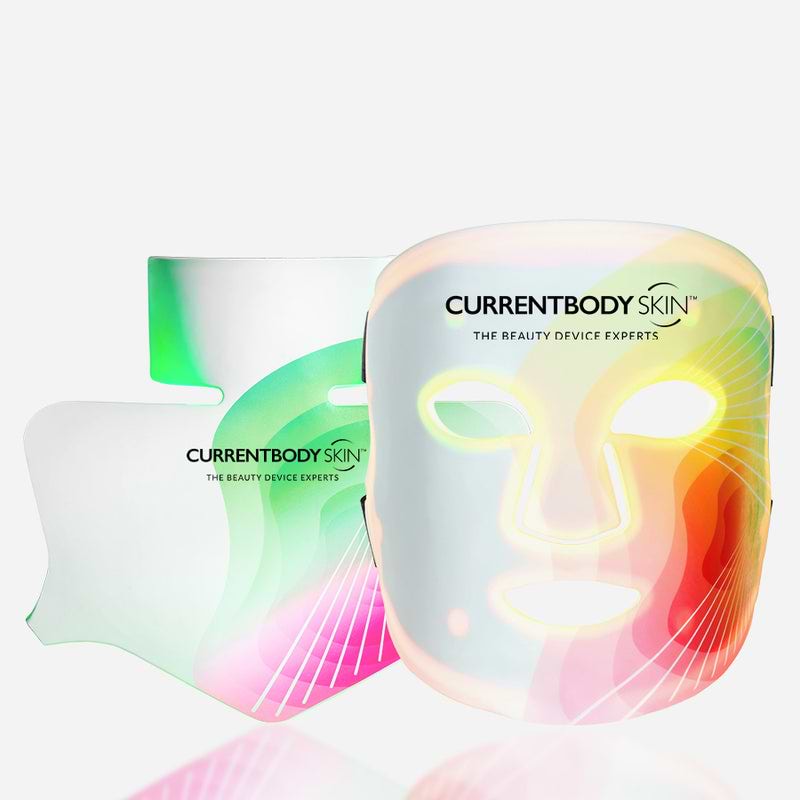
This is perhaps one of the most common formats. It’s easy to use and adds interactivity to your beauty routine. These masks contain dozens or hundreds of LEDs and evenly illuminate the entire face. Many modern models support multiple spectrums, including yellow, red, and blue light. CurrentBody LED 4-in-1 Zone Facial Mapping is a multi-colour LED mask. It allows you to switch between different light modes. The masks are typically used in 10-20 minute sessions several times a week.
Handheld LED devices
If wearing a mask isn’t your thing, try more compact devices that allow you to control where and how the light is directed. This way, you can target your skin locally. Hooga LED Yellow Light Therapy Device is a portable light therapy device with 12 yellow LEDs designed for at‑home use, providing gentle yellow light for the skin without heat.

Professional LED panels
This is a more serious format and is used in cosmetology rooms. LED panels offer higher power and illuminate a larger area of skin. These systems can incorporate multiple light spectra. ZAQ IRZA Full-Body LED Light Therapy Panel – Red, Blue, Yellow & Infrared Light is one of the most famous. Such procedures are carried out under the supervision of a specialist.

Yellow Light Therapy Before and After
The results of yellow light therapy usually appear gradually. Because the yellow spectrum affects the superficial layers of the skin, changes may be less pronounced than with red LED light. However, with regular use, skin can appear calmer and more even. Users sometimes report reduced redness and a more youthful complexion. A course of treatments lasting several weeks is usually required to achieve noticeable results.
Yellow vs Other Light Therapy
Yellow LED light differs from other spectrums in its penetration depth and intensity. It primarily affects the superficial layers of the skin, while red light penetrates deeper into the dermis, and blue light targets the epidermis and bacteria.
Main differences:
- Yellow light (570-620 nm). Superficial action may help with sensitive skin. Could be useful for irritations and inflammations.
- Red light (620-660 nm).Deeper penetration, stimulation of regeneration. Helps to stimulate collagen production.
- Blue light (405-450 nm).Works with irritation and acne problems as this spectrum affects acne-causing bacteria.
Because of its gentler effect, yellow light is sometimes used as a gentle alternative for sensitive skin.
How to Use Yellow Light Therapy at Home
To maximise the benefits of yellow light therapy for the face, we’ve prepared a few basic habits. These steps will integrate your light routine and enhance the effectiveness of the treatment. Let’s have a look at this type of skincare biohacking.
- Cleanse your skin
Before the procedure, remove makeup, sunscreen, and skincare products. Clean skin allows light to better penetrate the surface layers.
- Protect your eyes
During LED therapy, it is recommended to wear protective goggles or keep your eyes closed. This reduces the risk of discomfort from bright light.
- Position the device correctly
The LED mask is placed on the face according to the manufacturer’s instructions. If a handheld device is used, it is typically held 15-30 cm away from the skin.
- Use the device strictly as directed
Avoid using the device for too long, as this can dry out the skin and cause irritation. Most devices recommend 10–20 minute sessions. Treatments are typically performed 3–4 times a week.
- Apply post-treatment care
It’s believed that active ingredients are distributed much better after LED therapy and work more noticeably on the skin. Therefore, use a moisturising serum or cream after each session. This will also prevent dryness and tightness.
Pro Tip: regular, short treatments often work better than infrequent, long sessions. The skin responds to constant, gentle stimulation, so consistency is more important than increasing treatment time.
Is Amber Light Therapy Safe?
LED therapy is generally considered a relatively safe procedure. Amber Light Therapy is, in fact, one of the gentlest forms of LED phototherapy. Due to its relatively shallow penetration depth, it is less likely to cause skin irritation. Side effects are typically limited to mild, temporary redness and a sensation of warmth. However, if you have skin conditions or are hypersensitive to photosensitivity, a consultation with a specialist is recommended.
Pros and Cons of Yellow Light Therapy

Like any skin manipulation method, LED therapy has its pros and cons. Let’s look at a few of them to get a complete picture of the procedure.
Pros:
- Gentle treatment. Suitable for regular use without harsh effects.
- Easy to incorporate into your routine. Works well with basic skincare.
- It is easy to use yellow light therapy at-home. Devices are readily available and you can use them without visiting a clinic.
- Short sessions. Treatments take 10-20 minutes.
- Suitable for frequent use. Can be used several times a week.
Cons:
- Limited evidence base. There are fewer studies specifically on amber light therapy compared to other wavelengths.
- Less pronounced results. The effect is usually mild and takes time.
- Dependence on device quality. Cheap devices may produce weak results.
- Not a universal method. Does not solve all skin problems as a standalone therapy.
- Requires discipline. Without regular use, there is almost no effect.
Summary
Today we learned more about yellow light skin treatment. This gentle form of LED phototherapy uses light in the yellow or amber spectrum. In this article, we examined the wavelengths, mechanism of action, and potential benefits of different types of light therapy for the skin. We learned that amber light therapy can gently even out skin tone. Also, we get more info about LED yellow light therapy side effects. As you could notice, it is quite sensitive compared with other LED spectrums. That’s why rosacea and irrigation coils can be treated with yellow light therapy. However, there is significantly less scientific research on this spectrum than on blue or red light therapy.
Here are some tips to help you use it:
- The waves of the yellow spectrum should be 570-620 nm.
- Start with short sessions and gradually increase the duration of the procedure.
- Don’t forget about regularity and perform the procedure at least 3 times a week.
- Use gentle skin care after the session.
- Avoid use if you have photosensitive skin conditions.
- Choose devices from trusted manufacturers.
- If you have any skin diseases, consult a specialist.
- Don’t forget to choose the scinkate device wisely. Have a look at the yellow LED light therapy reviews beforehand.
for subscribing!