


Biological Age vs Chronological Age: Which One Matters More?
We often think of age as just the number of birthdays we’ve celebrated, but that doesn’t tell the whole story. Chronological age counts the years, while biological age reveals how well your body is truly holding up. Now we explore the difference, why biological age matters more for health and longevity, and how everyday habits can help you stay younger inside and out.
Highlights
- Biological age reveals how well your body functions, while chronological age only counts years lived.
- Lifestyle choices — diet, exercise, sleep, and stress control — can lower biological age and boost longevity.
- Biomarkers and epigenetic tests provide deeper insight into health and aging speed.
- Focusing on biological age helps build a balanced, personalized strategy for long-term wellness.

Contents
We all track age by our birthdays, but the calendar only tells half of the story. Chronological age just measures time, while biological age measures how your cells are actually holding up. If you are focused on health and longevity, one of these numbers matters a lot more than the other. Let’s look at the simple difference between the both of them and identify the real metric to focus on.

What Is the Chronological Age?
This is the number that shows the actual years in your ID. It is a factual number based purely on the calendar.
While chronological age tells us exactly how long you have existed, it does not account for how well your body functions or your mental development. To explore how time and lifestyle affect the body, experts use biological age markers.
What Is the Biological Age?
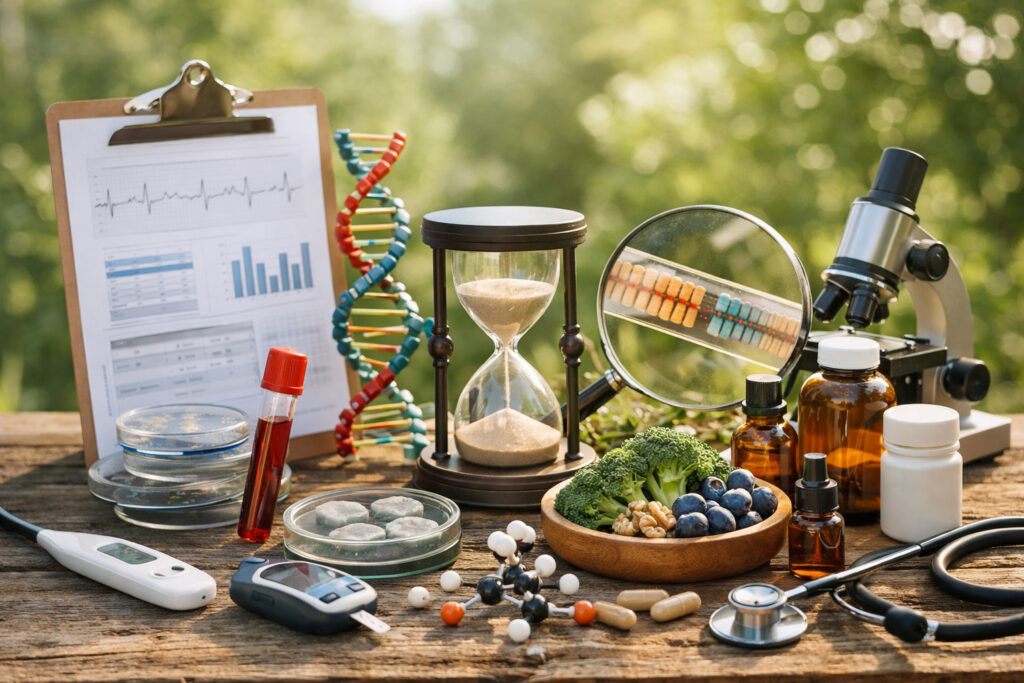
Biological age measures how well your cells and organ systems function relative to your chronological age. It is influenced by genetics, diet, and lifestyle, and can be higher or less than your chronological age. Surely you have seen people who, despite their age, look younger than they are, or who, at 60, have physical strength like that of 40. For example, you could definitely see two 50-year-olds, and depending on their lifestyle, their biological ages will show different numbers. This measures your body’s current condition. While you cannot change your age, you can still enhance your well-being. By adopting healthier habits, you can improve your performance and effectively or even reverse the aging process.
Biological Age vs Chronological Age: Key Differences
| Biological Age | Chronological Age |
|---|---|
| Reflects the current state of health | Shows the number of years lived |
| May change over time | Constantly increasing |
| Depends on lifestyle and habits | Depends only on the date of birth |
| Helps assess disease risk | Doesn’t always reflect actual health |
| Used in modern longevity research | Traditionally used in medicine |

Why Biological Age Is Becoming More Important
Biological age measures how well your cells and organs function, whereas chronological age is simply the time elapsed since you were born. It is becoming more important because it is a highly accurate predictor of disease risk, and unlike your birthdate, biological age is modifiable through lifestyle and medical interventions. Studies also show biological age is a better predictor of chronic conditions (such as cardiovascular disease, type 2 diabetes, neurodegeneration, etc.) than chronological age.
How Is Biological Age Measured?
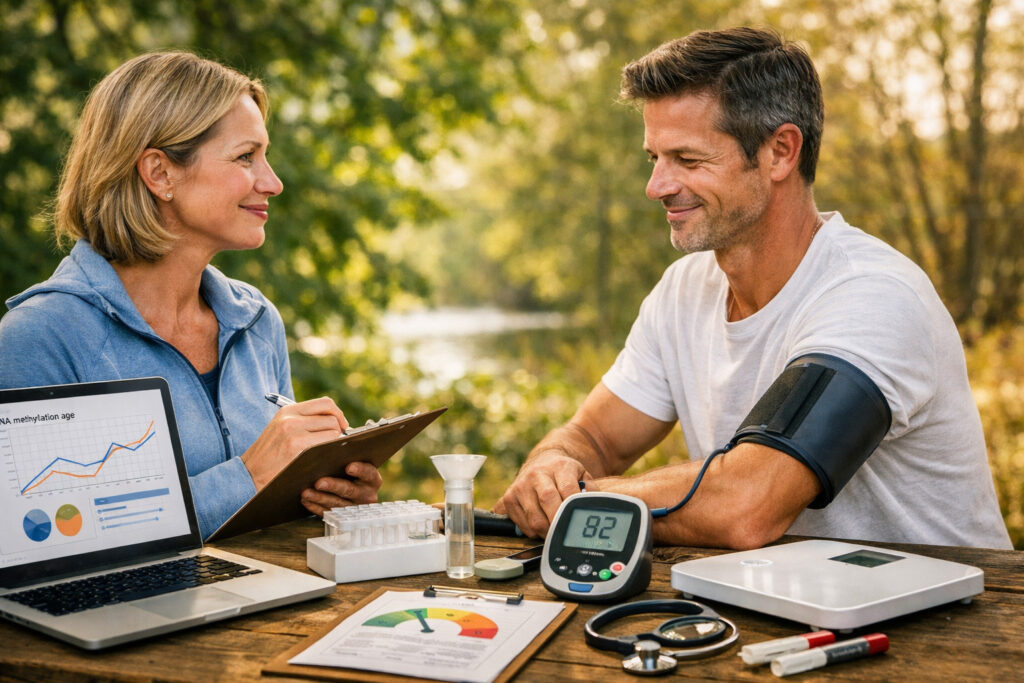
When measuring biological age, scientists consider how much damage your cells have suffered during your lifetime. This damage occurs naturally as you age. Other factors that influence biological age include genes, habits, and physical environment.
1. Biomarkers
Blood tests are one of the most accurate indicators. They help you understand what’s happening in your body right now and also identify any nutritional deficiencies. Here are the main biomarkers that will help you determine your body’s age:
- ApoB. Shows the risk of cardiovascular disease. The higher the level, the greater the likelihood of atherosclerotic plaques. ApoB is considered more informative than a standard cholesterol test.
- HbA1c. This biomarker helps determine blood sugar levels. It helps assess the risk of developing diabetes and evaluate metabolic health.
- hsCRP. This test helps assess the level of hidden inflammation in the body that influences the risk of cardiovascular disease and age-related changes in general.
- Fasting insulin helps understand how efficiently our body uses glucose.
- VO2 Max. This indicator shows how efficiently the body uses oxygen. This indicator is considered one of the best ways to assess heart and blood health, as well as overall physical wellness.
2. Epigenetic Testing
This method is considered one of the most modern for diagnosing your age. In this way, we can understand changes in gene expression that occur due to external factors and lifestyle. It is believed that epigenetic technologies will play a major role in future longevity science. Here are several examples of them:
- DNA methylation – occurs when small groups of chemicals called methyl compounds attach to the DNA of your cells. Methylation does not affect DNA sequences, but can disrupt cellular functions, especially those associated with aging and age-related diseases. The level of DNA methylation in cells is then used to calculate biological age, also known as the ‘epigenetic clock’.
- Epigenetic clocks. A collection of epigenetic markers in DNA that calculate biological age. With such models, it is possible to predict whether the body will age faster than normal.
- GrimAge. It is a model that analyzes DNA changes and helps assess the risk of age-related diseases. It is also useful in predicting life expectancy.
- DunedinPACE. This biological age testing helps in assessing a person’s age. It monitors the impact of exercise, diet, sleep, and other habits on the effectiveness of anti-aging strategies. It can estimate biological age fairly accurately and predict potential illnesses, disability risk, and mortality.
3. Wearable Data
It’s also worth mentioning the tracking devices that provide real-time performance data. They can tell you how your heart is doing and also track the quality of your sleep. Such devices often come in the form of smartwatches or rings. They are all similar in their tracking methods, so choose one that is comfortable for everyday wear.
What Causes Biological Aging?

Unfortunately, we don’t have a magic pill that will slow down aging processes. It depends on many factors, including genetics, your routine habits, and stress levels. But we can still push it away and preserve our health. Here are the most important factors that can affect your biological age in better way:
- A healthy diet. The best foods for anti-aging are fruits and vegetables, whole grains, healthy fats, and lean proteins.
- Exercising regularly. Studies show that exercise can help you live a healthier and longer life. Experts recommend at least 150 minutes of moderate-intensity aerobic exercise per week, as well as two sessions of strength training.
- A good night’s sleep. Poor sleep can contribute to aging. Researches have shown that nearly 8% of deaths are linked to poor sleep patterns. To live longer, aim for seven to nine hours of sleep each night.
- Stress reduction. Chronic stress takes a toll on your body and can accelerate aging. Exercise, a healthy diet, and sleep can reduce stress. Meditation and yoga are also effective stress management tools.
- Quit smoking. Smoking takes years off your life, but quitting it at any age can stop this process and help you live longer.
Can drugs slow down biological aging? Actually, no. Scientists have long been looking for drugs that could slow down aging. However, the U.S. Food and Drug Administration (FDA) has not yet approved any drugs for anti-aging use. Some are currently being studied, but it takes a long time.
Doctors worldwide advise caution with any supplements advertised as slowing aging and instead recommend following healthy habits!
Signs Your Biological Age May Be Higher or Lower Than Your Chronological Age
Although biological age can only be measured accurately with specialized tests, your body may show everyday signs that suggest you’re aging faster (or slower) than your chronological age. Here are some common indicators to look for:
| Signs Your Biological Age May Be Higher | Signs Your Biological Age May Be Lower |
|---|---|
| Low energy and frequent fatigue | High energy throughout the day |
| Poor sleep and slow recovery | Restful sleep and quick recovery |
| High blood pressure or blood sugar | Healthy metabolic markers |
| Low muscle strength and fitness | Good strength and cardiovascular fitness |
| Brain fog or memory issues | Sharp focus and cognitive function |
| Excess belly fat | Healthy body composition |
| Chronic inflammation | Low inflammation |
| Biological age exceeds chronological age | Biological age is younger than chronological age |
Which Matters More for Longevity?

It is hard to distinguish which indicator is more accurate. Each of them carries certain information about the state of your body, and neither figure can be ignored. Still, all biological ages can provide a more complete picture of what to expect next and how to achieve healthy aging. It is also a more accurate predictor of mortality. With knowledge of your biological age, you can adjust your daily eating habits and understand what you need to reduce stress. How can one understand the most balanced approach to consider both numbers and your sensations when assessing your health? It is through this balance that you can build the most effective strategy for yourself.
The chronological age indicates how many years have passed since a person was born, and the biological age helps assess how well an organism ages. Current research shows that biological age often better reflects current health and future risks. For people who want to increase not only life expectancy but also quality of life, monitoring biomarkers, fitness, building healthy habits, and understanding the difference between biological and chronological age are important tools.
Here are a few tips to sum up all the info:
- Check key biomarkers regularly. Monitoring biomarkers of aging, such as HbA1c, ApoB, hs-CRP, and insulin, for depletion helps better understand the body’s state and detect changes early.
- Make physical activity part of your daily life. The combination of strength and cardio training helps maintain muscle mass, heart health, and a younger biological age.
- Pay attention to sleep quality. Full rest plays an important role in body recovery and can positively influence many biomarkers of aging.
- Watch your diet and body composition. A diet rich in whole foods and sufficient protein, along with healthy visceral fat levels, contributes to healthy aging.
- Evaluate health comprehensively, not by a single number. Chronological age is important, but the combination of biological age, laboratory indicators, and physical fitness data provides a much better understanding of long-term health and longevity prospects.
for subscribing!