


How to Improve Deep Sleep – 8 Proven Tips

Deep sleep is the foundation of true recovery, where the body repairs itself, balances hormones, and clears the brain of toxins. This article explores practical biohacks — from consistent sleep schedules and the 10‑3‑2‑1‑0 rule to optimizing your bedroom environment and managing stress — that help you unlock restorative rest.
By adopting small lifestyle changes like reducing blue light, relaxing before bed, and supporting sleep with natural routines, you can improve sleep quality, boost energy, and experience the full benefits of deep, restorative sleep.
Highlights
- Consistent sleep schedules strengthen circadian rhythms and health.
- The 10‑3‑2‑1‑0 rule prepares the body for deep rest.
- A cool, dark environment boosts melatonin and sleep quality.
- Relaxation routines like baths or stretching ease stress before bed.
- Deep sleep restores the body, balances hormones, and sharpens memory.

Contents
Deep sleep is the most critical stage of human rest, during which the brain relaxes, the body rids itself of toxins, tissues repair themselves, and the body physically recharges. A comprehensive approach is needed to extend this stage. Our biohacking experts explain what steps to take and how to improve your sleep.
Biohacks for Deep Sleep
Biohacks to get more deep sleep involve a set of simple rules. These include maintaining a daily routine, eating a balanced diet, and following sleep hygiene principles to establish a consistent sleep schedule. Gradually implementing these rules will help your body enter restorative sleep stages more easily.
Set a Regular Sleep Schedule
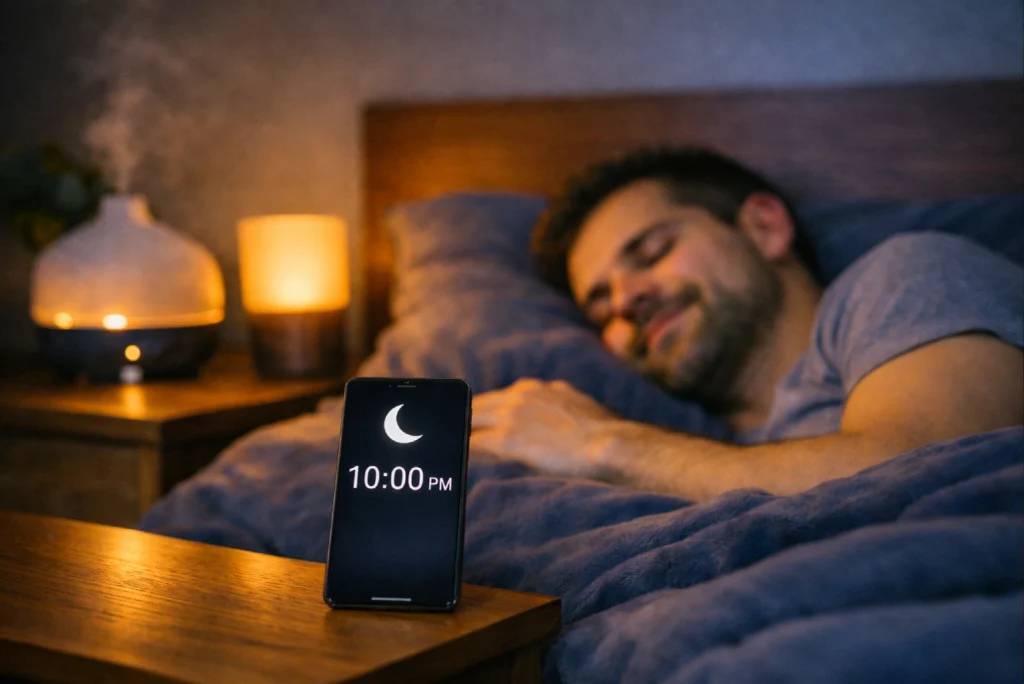
Go to bed and wake up at the same time every day, including weekends. Biological timing and establishing proper circadian rhythms are crucial for the body.
A landmark prospective cohort study analyzing over 60,000 UK Biobank participants found that consistent sleep timing is a stronger predictor of mortality risk than total sleep duration. Maintaining regular bedtimes and wake times significantly reduces the risk of premature death.
The results suggest that going to bed and waking up around the same time every day is more vital for longevity than fixating strictly on total hours slept. Because establishing consistent sleep habits is behaviourally feasible, sleep regularity acts as a highly effective target for improving general health and survival.
Sticking to a consistent bedtime schedule supports circadian rhythms, stabilizes hormone production (melatonin and cortisol), and prepares the body for deep sleep phases. This improves concentration, strengthens the immune system, and reduces the long-term risk of cardiovascular disease.

Follow the 10-3-2-1-0 Sleep Rule
The optimal time to fall asleep is between 10:00 PM and 11:00 PM. To easily adopt this routine, follow the 10-3-2-1 rule:
- 10 hours before bed: avoid caffeine.
- 3 hours before bed: avoid alcohol and heavy meals.
- 2 hours before bed: finish your work.
- 1 hour before bed: turn off the phone and TV.
By the way, eating within 3 hours of bedtime significantly disrupts sleep in young adults, primarily by increasing the odds of nocturnal awakenings. However, this proximity does not significantly affect sleep duration or how long it takes to fall asleep.
Cool Down Your Bedroom
When it gets cooler outside, open a window and notice how quickly you fall asleep. Research shows that extreme heat or cold can keep you awake when you’re trying to rest. So, find the optimal temperature — cool enough to help you fall asleep, but not so low that you’re shivering.
Research shows that actively transferring heat away from your body, such as by using a high-heat-capacity mattress, accelerates the natural evening drop in core body temperature. This enhanced conductive heat loss effectively boosts deep, restorative slow-wave sleep (N3) and calms your heart rate.
The ideal temperature for deep sleep is around 18–22°C. Open the window to air out the room before bed and again in the morning after you wake up.
Reduce Blue Light at Night
Reducing blue light before bed is one of the fundamental principles of biohacking. It is critical for protecting your circadian rhythms. This spectrum of light suppresses melatonin production (the sleep hormone), tricking the brain. Avoiding screens (TV, computer, smartphone) in the evening helps you fall asleep faster, improves sleep quality, calms the brain, and supports overall health.
According to a 2024 review published in the journal Chronobiology Medicine, just two hours of using devices with LED backlighting reduced melatonin levels by 55%. On average, melatonin production was delayed by 1.5 hours compared to reading a paper book in dim lighting.
Another intriguing result was reported in a 2024 study published in Brain Communications. Researchers found that after using a smartphone without a blue light filter, melatonin levels in adolescents and adults dropped significantly. In adolescents, melatonin levels recovered within the next 50 minutes. However, in adults, levels remained noticeably lower before bedtime.
For many people, it’s impossible to give up using their phone before bed. Still, experts recommend at least replacing bedside lamps with ones that emit red or amber light. Another effective measure is to lower the screen brightness before bed. Also, don’t overlook blue-light-blocking glasses.


Managing Stress Before Bed
Stress has many negative consequences; however, sleep disruption is one coping response humans and animals have developed to deal with stressful or dangerous situations. In humans, stress can trigger the central nervous system (CNS) to produce hormones such as adrenaline and cortisol. These hormones increase heart rate to improve blood flow to vital organs and muscles, preparing the body for immediate action if necessary. This CNS response was vital for human survival in the early stages of evolution.
Today, problems that do not pose a threat to life can trigger the same response. For example, problems at work or relationship difficulties.
According to a survey by the National Sleep Foundation (NSF) in the U.S., 43% of people aged 13-64 lose sleep at least once a month due to stress.
Take a Warm Shower or Bath
A hot bath or shower taken an hour or two before bedtime can improve the quality of your night’s rest. This was established by American researchers in a meta-analysis of 13 studies on water-based treatments for sleep hygiene. Exposure to hot water at 40-42°C helped participants fall asleep faster and improve the quality of their sleep, as measured by both objective and subjective indicators, the researchers write in Sleep Medicine Reviews.
Other benefits of bathing include:
- reducing stress and anxiety;
- relieving muscle and pain sensations;
- lowering blood pressure and cardiovascular risk;
- improving metabolism;
- strengthening the immune system.
A highly cited 2019 systematic review and meta-analysis evaluated the effects of passive body heating (like warm baths or showers) on sleep. It found that bathing or showering for 10-15 minutes in a warm bath about 1 to 2 hours before bedtime significantly improves overall sleep efficiency and self-rated quality.
Don’t Exercise Before Bed
The time of day you exercise also matters. Exercising in the morning or afternoon can help you sleep. Still, intense exercise right before bed can actually make things worse. Studies have yielded interesting findings regarding exercise before bedtime. In one study, people who exercised in the evening had more slow-wave sleep and a longer latency to rapid eye movement (REM) sleep than the control group. They also had a shorter stage 1 sleep (or light sleep) duration. However, the researchers also noted that higher body temperature, which occurs after intense workouts, was associated with lower sleep efficiency and longer wakefulness after falling asleep.
Consequently, while exercising before bed isn’t harmful in itself, intense workouts within an hour of bedtime can affect sleep efficiency and overall sleep duration. Additionally, some researchers believe that the optimal time for exercise depends on individual factors, specifically your chronotype, age, and any underlying health conditions.
Some exercises are more beneficial for sleep than others: yoga, light stretching, and breathing exercises.
Try Sleep Supplements
Many biohackers and doctors recommend taking specific deep sleep supplements to improve sleep quality and duration. For example, the combination of magnesium and glycine is one of the most effective and safest ways to improve sleep. They work synergistically: magnesium relaxes muscles and relieves general tension, while glycine (an amino acid) calms the nervous system, helping to “shut off” intrusive thoughts before bed. They are usually taken 30-60 minutes before bedtime with water.
Please note that this information is for general reference only. Do not take any medications without consulting a doctor first!
Why Deep Sleep Matters

Deep sleep is one of the most restorative stages of the sleep cycle. It plays an essential role in both physical and cognitive recovery. During this stage, the body shifts into repair mode: heart rate and breathing slow down, muscles relax, and important recovery processes become more active. Scientists say that deep sleep supports immune function, hormone regulation, memory consolidation, and overall brain health. To dive deep in:
- Physical recovery: deep sleep is when the body focuses on tissue repair, muscle recovery, cellular regeneration, and growth hormone release, making it especially important after physical or mental stress.
- Hormone balance: studies suggest that deep sleep helps regulate hormones involved in growth, metabolism, stress response, and appetite regulation.
- Immune support: deep sleep may strengthen immune defenses by supporting the body’s ability to respond to inflammation, infections, and other external stressors.
- Learning and memory: researchers believe deep sleep plays an important role in memory consolidation, helping the brain process, organize, and retain newly learned information.
- Brain waste clearance: deep sleep may support the glymphatic system. This process helps remove metabolic waste products from the brain that accumulate during waking hours.
- Energy and restoration: increase deep sleep may help people wake up feeling more refreshed, mentally clear, and physically recovered, while insufficient deep sleep is often linked to fatigue and daytime sleepiness.
How to Measure and Track Deep Sleep
Deep sleep can be measured and tracked using both clinical methods and modern consumer sleep technologies. While laboratory testing remains the most accurate approach, wearable devices and at-home tools now make it easier to monitor sleep patterns over time. For people experiencing sleep concerns, there are also innovative technologies created to support relaxation and improve sleep quality.
- Polysomnography (PSG): the clinical “gold standard” for sleep analysis, conducted in a sleep laboratory. It records brain waves, breathing, heart rate, oxygen levels, and sleep stages, including deep sleep. For example, sleep studies performed in medical sleep clinics or hospital sleep centers.
- Wearable fitness trackers: smart devices estimate sleep stages based on movement, heart rate, and heart rate variability during the night. Example: Fitbit devices or Garmin smartwatches that provide nightly sleep stage breakdowns.
- Smart rings: small wearable devices that track sleep with high sensitivity, often focusing on sleep stages, recovery, and physiological signals. Example: Oura Ring, which provides detailed sleep scores and estimates of deep sleep.
- Sleep-support technologies: some devices are designed not only to track but also to improve sleep quality through relaxation techniques. Example: Somnox robotic sleep pillow, which simulates breathing rhythms and plays calming audio to help users fall asleep and relax more deeply.
To sum up
All it takes is a little determination to gradually incorporate small lifestyle changes, like cutting back on caffeine, avoiding late-night meals, putting your smartphone away in bed, and waking up in the morning without hitting the snooze button. If you adopt these habits and tips for deep sleep, your sleep hygiene may improve, and you’ll fully experience the benefits of high-quality deep sleep, which brings numerous positive results.
for subscribing!