


The Science of NAD+: Benefits, Risks, and What the Latest Research Says
NAD+ is a vital coenzyme linked to energy production, DNA repair, mitochondrial health, and cellular resilience. Its decline with age contributes to fatigue, metabolic issues, and reduced regeneration. Boosters like NMN and nicotinamide riboside show promise in raising NAD+ levels, but long-term human evidence is limited. Lifestyle factors such as exercise, sleep, and nutrition remain the most reliable ways to sustain NAD+, while supplementation is best seen as a complement rather than a replacement.
Highlights
- NAD+ is vital for energy, DNA repair, and mitochondrial health.
- Levels decline with age, contributing to fatigue and slower recovery.
- Boosters like NMN and NR raise NAD+ but long-term effects remain unclear.
- Lifestyle habits such as exercise, sleep, and nutrition are the most reliable ways to sustain NAD+.

Contents
Is there the molecule of youth? Science and longevity experts are trying to find out the answer and NAD+ might be it. This is an important coenzyme, present in every cell of our body and involved in metabolic processes. It helps to release energy and supports mitochondrial health. NAD+ is becoming increasingly popular these days. Researchers are studying how it affects aging, cellular energy, and how it potentially improves immunity. We will try to answer the question: can increasing NAD+ levels actually improve health and support healthy aging? Our experts have reviewed the best-known facts about this molecule and how important it is to our bodies.
What Is NAD+?
NAD – Nicotinamide Adenine Dinucleotide – was first discovered in 1906. It is an important coenzyme of niacin, vitamin B3, a molecule that exists in our body initially in every cell and is fundamental to energy production and metabolism.
Why Is NAD+ Important?

This molecule supports hundreds of processes and is essential for saving your energy and proper cognitive function. Although research is still ongoing, several important NAD+ roles are already known. Here are the main ones.
Cellular Energy Production
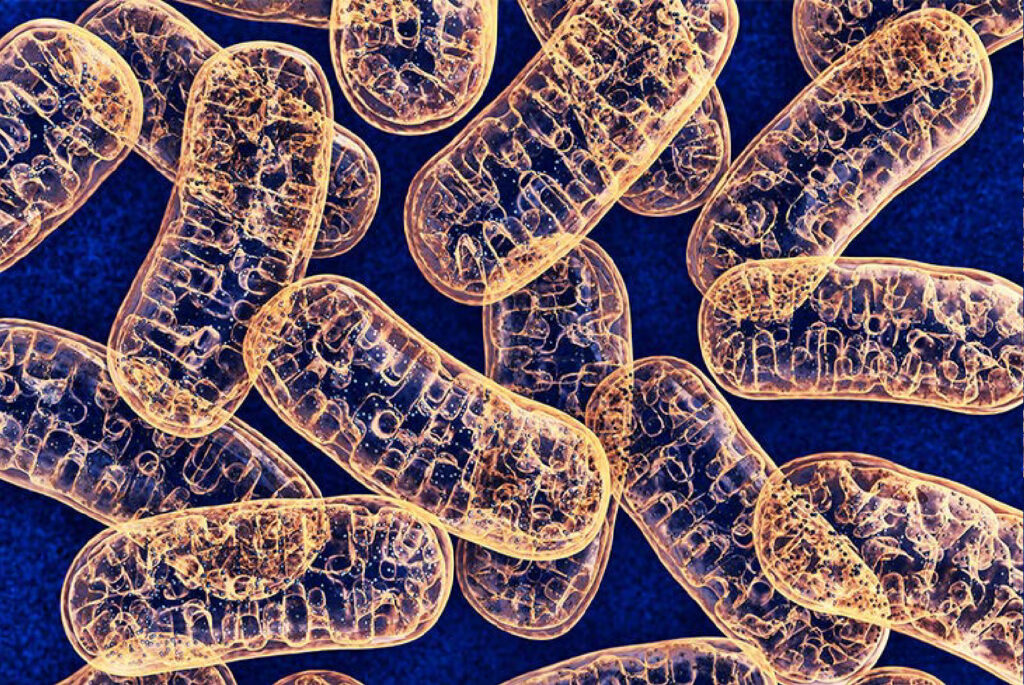
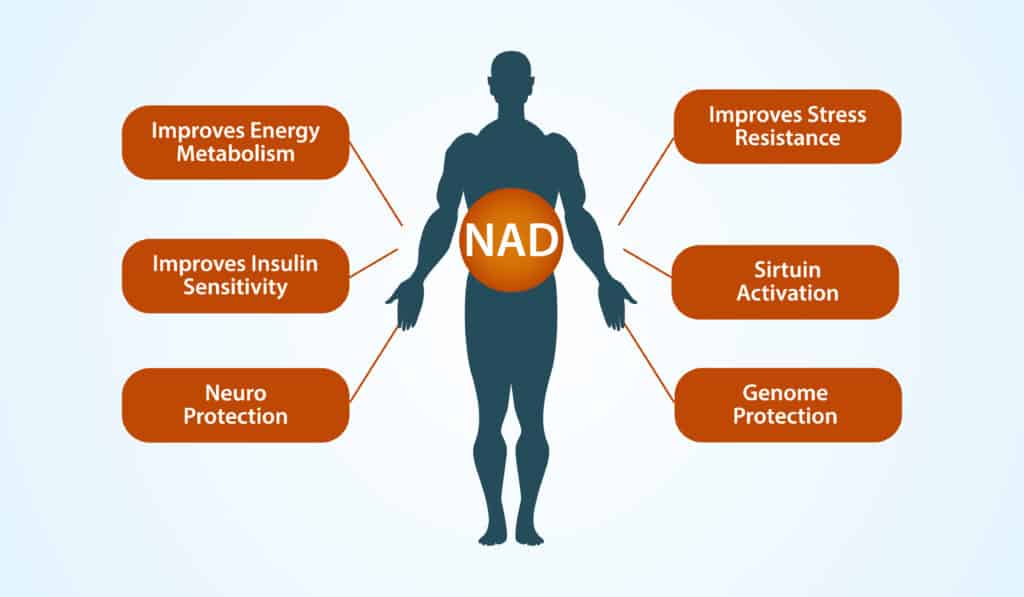
One of the fundamental functions is the production of cellular energy from food. It helps power the mitochondria – our body’s energy stations. This role is particularly important for tissues with high energy necessities, such as muscles, heart and brain. If the NAD+ level decreases, the efficiency of energy exchange goes slower.
DNA Repair
Our bodies encounter numerous factors every day that can damage DNA. But in our body, there are special mechanisms for eliminating such failures. The NAD+ molecule plays a role in it. It helps repair genetic material; therefore, the amount of this molecule in our body is important, as more of it means faster recovery.
Mitochondrial Function
Mitochondria are important energy stations located in cells. They produce a large part of the cellular energy and play a significant role in their work. Low NAD levels are closely associated with mitochondrial dysfunction and aging. Specialists studying the mechanisms of aging highlight that maintaining mitochondrial health is one of the important directions in modern science.
Cellular Resilience
Aging is also the process of cellular oxidation. Cells constantly face various stressors, including inflammation and environmental impact. NAD+ activates protective mechanisms that help them adapt to these conditions and remain healthy, so the body maintains internal balance and recovers after loads more efficiently.


Why Do NAD+ Levels Decline With Age?
Many processes in our bodies depend on this molecule, and NAD levels decrease with age, which may lead to various health problems such as chronic fatigue, decreased cognitive function, metabolic disorders and cardiovascular diseases. Its levels decline with age, primarily due to a supply-and-demand problem: your body starts producing less of it while simultaneously breaking it down and using much more of it. NAD longevity gradually lowers after 25-30 years. By the age of 40-50, the volume of it could have fallen by 40-50% relative to that of young people. Often, this is why we can see a much higher regeneration at a young age, as the molecule actively supports the growth and development of the body.
NAD+ and Longevity: What Is the Connection?
These days, one of the most studied topics is the link between NAD+ and aging. Scientists are trying to raise its level for elderly people and explore how it’s possible to save it on a proper level.
- Animal studies. As NAD research in animals has shown, an increase in this molecule can positively affect mitochondrial metabolism and certain health indicators. Mouse experiments have shown increased NAD+ levels, accompanied by improved animal health. But still, it is important to understand that this does not mean the same effect for a person. That is why clinical trials continue to be conducted on humans.
- Cellular aging research. Molecules are essential for repairing DNA damage. Studies of cellular aging show that NAD+ is involved in many mechanisms of maintaining cell health. As the amount of NAD+ decreases, the effectiveness of these mechanisms may deteriorate. Yet the question remains as to how much an increase in NAD can affect human aging.
- Sirtuins and longevity pathways. A group of proteins called sirtuins is involved in regulating cellular stress, metabolism, and aging. They are also called the longevity genome. NAD+ is used by sirtuins for their work. Reducing the amount of these molecules can slow and limit their activity. As laboratory studies have shown, activation of these pathways is often associated with improved cell health. Therefore, the scientists believe that sirtuins are closely linked to NAD+ and longevity.
- Metabolic health. The study of NAD+ is also an important goal for metabolic health. The molecule is involved in regulating insulin sensitivity. Often, with aging and the development of chronic diseases, mitochondrial energy exchange is disrupted. Maintaining NAD+ levels can have a beneficial effect on metabolic outcomes. Still, the topic needs more human research.
What Are NAD+ Boosters?
NAD+ boosters are supplements or treatments designed to raise the levels of nicotinamide adenine dinucleotide in your body. Several approaches are available to support NAD+ levels, each working differently and backed by varying levels of scientific evidence.
|
NAD+ Booster |
What It Is |
How It Works |
Current Evidence |
|
NMN (Nicotinamide Mononucleotide) |
A direct precursor to NAD+ |
Converts into NAD+ after absorption, helping replenish cellular NAD+ levels |
Animal studies show promising effects on metabolism and healthy aging, while human research is still ongoing. |
|
Nicotinamide Riboside (NR) |
A form of vitamin B3 and NAD+ precursor |
Is converted into NAD+ in the body, increasing NAD+ availability |
Clinical studies show NR can raise NAD+ levels, but long-term health benefits remain under investigation. |
|
NAD+ IV Therapy |
Intravenous infusion of NAD+ |
Delivers NAD+ directly into the bloodstream, bypassing digestion |
Popular in longevity clinics, but there is currently limited high-quality clinical evidence supporting its effectiveness. |
Potential Benefits of Increasing NAD+ Levels
As you can see, reducing the amount of this molecule brings several changes to our body and brain. But what if we increase it?
Energy and Fatigue
NAD+ is crucial for energy production, prompting research into its effects on fatigue. Early studies indicate that raising NAD+ levels may improve energy exchange efficiency, particularly among the elderly and those with metabolic disorders. However, its effectiveness in healthy people is still unclear.
Healthy Aging
The reason the molecule has gained popularity is its role in healthy aging. As discussed earlier, in theory, this is possible because animal studies show positive results. However, there is still no direct evidence of slowing aging in humans. Current evidence suggests only potential support for individual processes associated with cell health.

Metabolic Health
The effect of NAD in improving metabolic wellness has been widely studied in overweight individuals. It is about insulin sensitivity, energy exchange and mitochondrial work. So far, there are no definitive indicators. Still, studies link improvements to NAD therapy.
Exercise Performance
Because the molecule is involved in energy production, scientists suggest that it can maintain muscle efficiency. Raising the coenzyme provides faster muscle recovery and extra energy. In addition, it improves endurance.
Cognitive Health
As NAD affects the protection of neurons, its enhancement can potentially affect the cognitive functions of an organism. Some laboratory studies show potential effects on nerve cell function and cellular recovery. However, clinical data are still limited. Most results have been obtained from animal models or in laboratory settings.
Cellular Repair
The role of NAD+ in cellular regeneration is crucial, as well as in healthy aging processes. However, the effect of increasing NAD+ concentration on practical results still requires further research.
Potential Risks and Limitations

Although interest in NAD+ is quite high and the benefits of this component are clear, it is still important to discuss the limitations and risks associated with its adoption. Many claims about the benefits of these substances have surpassed scientific evidence. The market for supplements is growing faster than high-quality clinical studies are available. It is better to approach NAD+ supplementation consciously and realistically so let’s discuss the main risks and limitations, for example:
- Limited long-term human data – most studies last only weeks or months, so long-term effects on aging and lifespan remain unclear.
- High cost – NMN and NR supplements can be expensive, while their long-term benefits are still being evaluated.
- Variable product quality – supplement quality differs between manufacturers, making third-party testing an important consideration.
- Unknown long-term safety – current evidence suggests short-term safety, but the effects of years of NAD+ supplementation are not yet fully understood.
- Marketing hype – claims that NAD+ boosters can “reverse aging” or dramatically extend lifespan are not supported by strong clinical evidence.
NAD+ Supplements vs Lifestyle Interventions
So we know a few different supplements that might increase NAD+, but could they actually replace your lifestyle habits? Some studies demonstrate the efficacy of NMN, NR, and NAD in increasing this molecule’s levels in the body. Additionally, clinical findings suggest that supplements affect metabolic health, insulin sensitivity, and muscle function. Still, research is mostly short-lived, and its impact on life expectancy or aging has not been fully studied.
It is worth noting that physical activity, good sleep, proper nutrition, and stress management have a much larger scientific basis and directly affect many mechanisms of aging. Regular exercise and healthy habits can naturally maintain NAD+ levels and engage the same mechanisms stimulated by supplements. Most specialists consider the use of NMN and NR as an addition to a healthy lifestyle rather than a separate measure for rejuvenation. The best option is to combine them with proven methods. Calorie restriction and intermittent fasting are also extensively studied in longevity science, as they can activate some of the same biological pathways, including sirtuins and stress-adaptive mechanisms. This is why most experts believe that NMN and NR supplements can be a useful complement to a healthy lifestyle, but cannot replace exercise, sleep, nutrition, and other fundamental factors of healthy aging.
Who May Be Interested in NAD+ Optimization?
Ensuring optimal NAD+ therapy is of interest to people who care about their health and follow developments in modern longevity. The list consists of: longevity enthusiasts, biohackers, middle- and older-generation individuals, and those who seek to maintain high levels of energy, activity, fitness, and metabolism. Interest in NAD for longevity has also grown among athletes and fitness enthusiasts due to its important role in cellular energy production and mitochondrial function. NAD+ might be useful for elderly people and adults with low insulin sensitivity. But it is worth talking with a personal expert before starting NAD therapy.
Common Myths About NAD+
Now that we have an idea of what the molecule NAD+ is and how we can support its quantity in our body, let’s talk about the myths that accompany this coenzyme.
-
“NAD+ Reverses Aging”. To date, no study has shown that increasing NAD+ levels can completely stop or reverse aging in humans. Some work shows improvements in individual health indicators and cell function and insulin sensitivity. However, this is not equivalent to rejuvenation of the body.
-
“Everyone Needs NAD+ Supplements”. There is no scientific evidence to support the need for NMN or NR for all people without exception. Many health factors depend on lifestyle, diet, sleep, and physical activity. This supplement is most popular among people aged 40-50, as well as those who show signs of declining metabolic health. It is important to consult with a specialist before accepting NAD+ boosters.
-
“More NAD+ Is Always Better”. Don’t overwork with NAD+ supplementation. The body maintains a complex balance of various molecules and biological processes. At the moment, scientists do not have enough data to argue that the highest NAD+ level provides the greatest health benefit. Moreover, the consequences of a prolonged artificial rise in NAD+ levels continue to be studied.
-
“NAD+ Works Instantly”. The intake of NAD+ is cumulative. Most processes related to cellular metabolism and aging occur gradually. Even in studies, positive effects are usually assessed after weeks or months. Moreover, the consequences of a prolonged artificial rise in NAD+ levels continue to be studied.

The Future of NAD+ Research
Interest in NAD+ only increases with advances in longevity science. So far, studies have confirmed the substance’s significant influence on energy exchange and cell health. Still, some issues need to be addressed by scientists. For example, who would benefit most from increasing the level of this substance in the body, what its concentration should be, and whether it can influence the aging process. Depending on the results of further studies, approaches to using NMN, NR, and other substances associated with NAD+ will become more scientific.
One promising area is precision longevity medicine, where recommendations are based on biomarkers, genetic information, and individual characteristics. If the focus now is on increasing NAD+ concentration with supplements, this practice may become more personalized and grounded in a more accurate understanding of the body’s health, including who can benefit from them. Much attention is paid to combined longevity strategies that combine NAD+ therapy with physical activity, nutrition, sleep control, and other interventions. At the same time, scientists are developing a new area – biomarker-guided interventions to evaluate the effectiveness of these strategies using objective health indicators and biological age.
NAD+ in Perspective
As you can see, there is a certain link between NAD and aging. This molecule plays a crucial role in cellular function and is involved in energy production, DNA repair, mitochondrial function, and cell defense. That is why the link between it and aging has attracted much attention from researchers. Also, NAD has become one of the most discussed areas of modern science on longevity. The results of animal studies and early clinical data look promising. However, many potential human benefits still need to be validated. To date, the most reliably confirmed effect of NMN and nicotinamide riboside remains an increase in NAD+ levels. Still, the impact on life expectancy and the rate of aging remains a subject of active research. NAD+ should be approached with interest, but it is also worth maintaining critical thinking and relying on scientific data rather than just marketing.
for subscribing!