


How to Improve Posture: Biohacking Strategies and Exercises for Better Health
Modern life makes us more and more glued to computers. People have become sedentary, which hurts posture. An additional role in this is played by phones, which each stops using only during sleep. However, posture is one of the bases for many important processes, such as blood circulation. If it is incorrect and we slouch, this will affect the whole body. The feet or lower back may hurt due to incorrect sitting. Even swelling can appear due to slouching. Therefore, it is extremely important to devote a few daily minutes to posture exercises. Biohackers pay special attention to this issue because the body’s productivity depends on posture.
Now, we will consider various posture exercises for its correction. We will explore options for correct posture while sitting and standing, learn how to sit correctly, and build and maintain a body position in which you will not feel discomfort. Important neck, spine, and pelvic floor exercises will be highlighted to strengthen muscles and keep the body young and productive for a long time. We will explore gadgets that help monitor your posture and other biohacking strategies for improving it.
Highlights
- Poor posture affects appearance, confidence, and social perception.
- Use ergonomic setups in work place to reduce spinal stress while working.
- Change sitting positions often to improve circulation and posture.
- Practice simple posture exercises daily for lasting results.
- Choose supportive sleep positions and orthopedic pillows.

Contents
How posture affects us
When it comes to maintaining youth and body health, we start paying attention to sports, quality nutrition, anti-wrinkle creams, and supplements. But how often do you think about posture? It is as important as physical activity, maintaining water balance, or hygiene. Holding your back correctly is a habit that can be developed relatively quickly. Incorrect posture can worsen a significant range of life. Let’s figure it out.
Unaesthetic aspects
Slouching affects your social perception and shows a person as unsure of themselves. Walking becomes heavy and unnatural. Non-verbal communication takes place through the body. Therefore, the attitude towards us depends on the position of it. When posture is disturbed, the stomach sags, and even people without excess weight seem larger. With the correct one, you will feel an improvement not only in the physical way but also in the psychological.




Tech neck and forward head posture
The term “tech neck” is a relatively new phenomenon. This position can be seen in the younger generation, who are always on their phones because our lives are now tied to them. The head is pushed forward, which puts additional strain on the cervical spine. Tech neck can cause not only pain in the neck but also migraines.
Rounded shoulders and hunched back
These issues could appear from incorrectly sitting for a long time. Because of this, the shoulders become rounded, and the back takes on a hunched appearance. This leads to an imbalance in the upper back and chest muscles. Joint pain and stiffness in the shoulders can later be caused by this very habit.
Weakening/prolapse of the diaphragm and pelvic floor muscles
A person with an incorrect posture suffers from a poor respiratory system, as the lungs do not receive enough air. The tissues do not receive enough oxygen, so oxygen starvation may begin. Initially, this will affect the functioning of the brain. With poor posture, the abdominal organs gradually begin to shift. Weakened muscles stop supporting the intestines and stomach. The processes of intestinal peristalsis and bile outflow are disrupted.
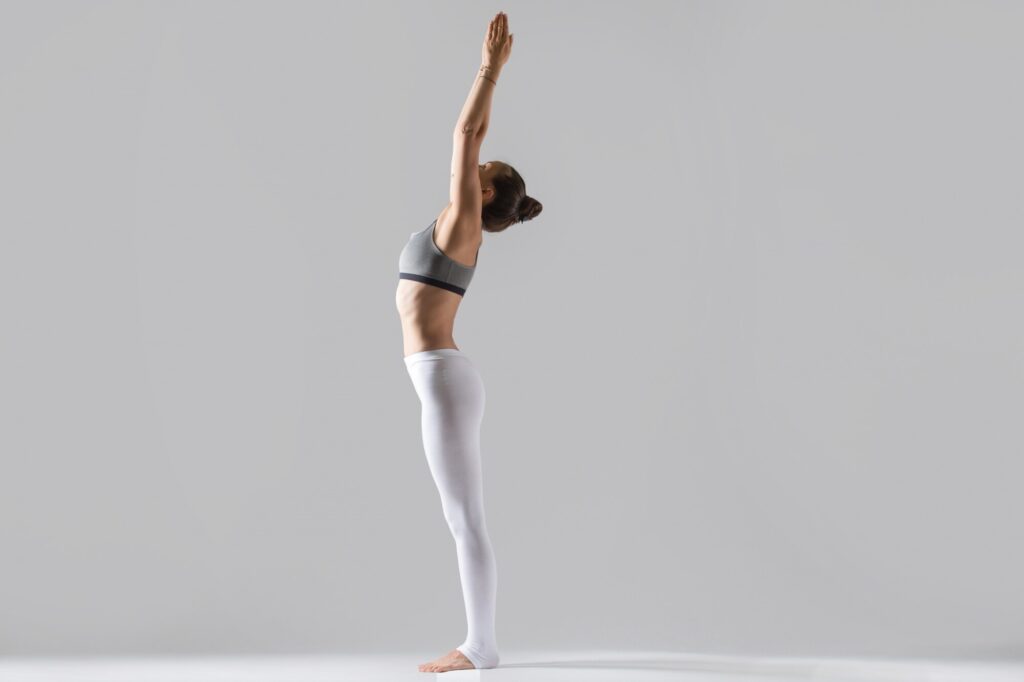
How to improve posture when sitting
Most of us work sitting at home or in offices. Since a person spends big of the day like this, it is important to understand how to sit properly. Here are a few posture biohacks for that.
- Do not stay in one position long; change it often. This will improve blood circulation and give your muscles a little warm-up.
- Pay attention to how you sit while eating. You likely tilt your head towards the plate, slouch, and strain your spine unnecessarily. Instead, try to bring utensils to your mouth, keeping your back straight.
- Take a short break for a short walk or squats. Just a few minutes of such exercises will relax the spine.
- Do not sit with your legs crossed. This can provoke swelling and curvature of the spine. It is better to keep your legs firmly pressed to the floor.
- Keep your elbows close to the body. This way, your back will automatically straighten.
How to improve posture when standing
We often do not pay attention to our body’s position when standing and walking. However, the correct posture affects the body’s weight distribution and the health of the joints. Here are some simple tips that will help relieve back pain.
- Straighten up. If you have back problems and do not feel how aligned your back is, lean against the wall. It works like a posture corrector.
- Do not forget to lower your shoulders. Watch when they rise and twist them down.
- Remember to slightly tighten your abdominal muscles. This will maintain the tone of the press and strengthen the muscular lumbar corset.
- Transfer your weight to the front of the foot and their pads.
- Carefully monitor the position of the whole body.
- Make sure that the back remains at the same level.
- Do not spread your arms by purpose; let them naturally fall along the body.
- The legs and shoulders should be on the same plane.
Exercises to improve posture
To bring proper posture to automatism, it is important to include specific exercises and to do them regularly. Even half an hour a day will help improve your well-being and put the work of the whole body in order.
It is important to remember that the pectoral muscles can block the effect of posture exercises. Therefore, before starting them, you need to perform myofascial release. This can even be done with a tennis ball; the main thing is to relax the muscles.
These posture exercises will work the neck, shoulders, back, and pelvic floor. Afterwards, you can feel how your body has become more flexible, and your breathing has become easier.
- Neck stretching to the sides. Tilt your head first to the right, then to the left, then up and down. Watch the tension of the muscles on all sides, and do not overdo it so as not to pull them. Repeat up to four times in each direction. Take a 15-second break between approaches.
- Neck extension. Here, you can approach in different directions simultaneously; the technique will be the same. Put your hand to your head and press in the opposite direction. You will feel how the neck muscles are straining; the main thing is not to move it and continue the hand resisting. Count to 6 and give yourself a little rest. After that, repeat 8 to 12 times on each side. Do the same on the other side. Repeat the technique on the forehead and the back of the head.
- Child’s pose. Lie on your knees and round your back. Then get on all fours. Repeat several times, then hold the child’s pose and release the tension in the lower back. Repeat the movements about 10-20 times in 3-4 sets. If you find it difficult to stay in such a bent pose, put a blanket or pillow under your feet. You can also rise from the child’s pose in different directions, twisting the spine and opening the chest.
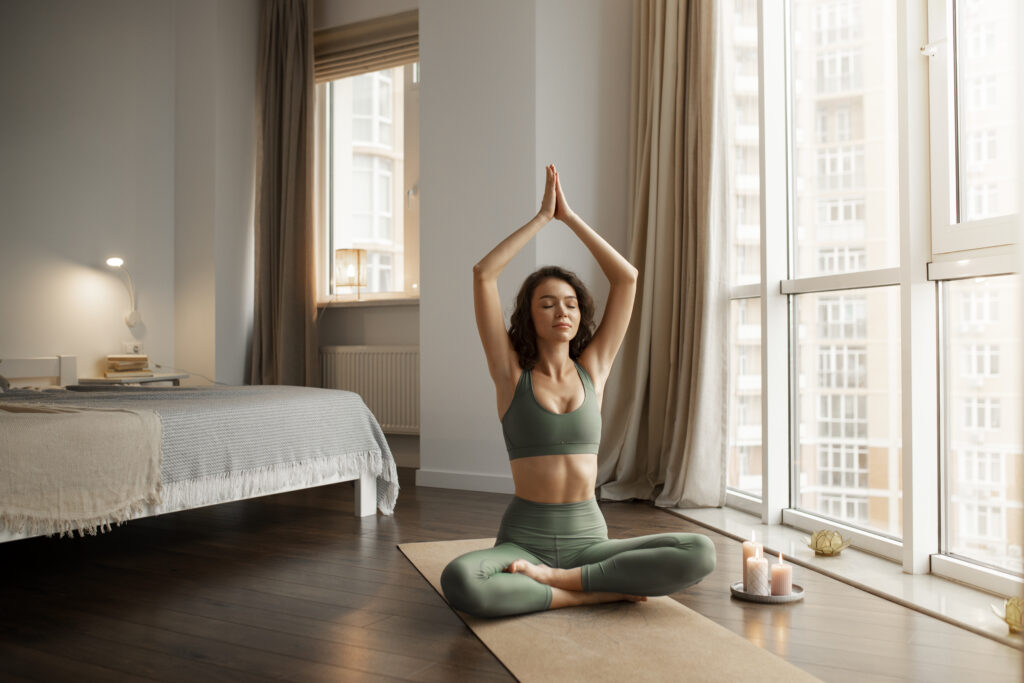
- Cat cow. One of the best posture correctors. Get on all fours and bend your back up and down, remembering to watch your breathing. When arching your back, exhale, and when bending, inhale. This exercise perfectly stretches and relaxes the lower back and helps to straighten the back. The same can be done by standing and bending the body.
- Plank to the side. It’s a great back corrector that helps you release extra tension. Stand on your right elbow, and remember that the body should create a straight line. Extending the other arm up, lift the pelvis and body. Repeat the movement with an exhalation in the upper position 10 times on each side. After a short rest, do a few more approaches.
- A worked-out pelvic floor gives us youth and flexibility. Let’s start from the lying position. Bend your legs and lift the pelvis as you exhale. Hold at the top for 10 seconds, then lower yourself and inhale. Repeat 10-15 times in 3 sets.
- While in the same lying position, bring your legs together in a butterfly pose. Bring your legs together and spread them apart, stretching the inner thigh. This exercise will help maintain tone in the hips and strengthen the pelvic floor muscles. Get on all fours. Raise your arm and put it forward. Carefully do the same with the opposite leg. Now, watching each part of the body, bend your leg and arm simultaneously. In addition to working the pelvic muscles, this exercise is great for developing focus and balance. Do it 10-15 times in 3 sets. Finish this short workout with squats. It is best to do several sets of 10 times and pause briefly at the bottom on each last squat. Watch the technique of doing the exercise. Do not arch your pelvis, but rather twist it inward.
Biohacking strategies for better posture
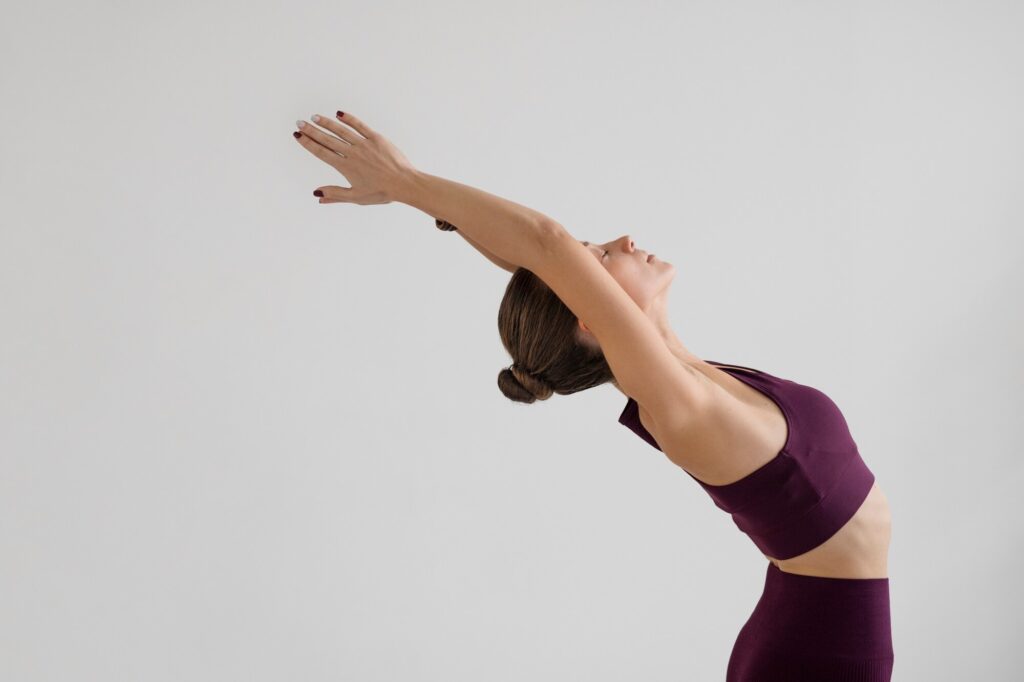
We have sorted out the physical exercises that help us biohack our posture. But this is far from the only way to improve it. Thanks to modern technologies, we have a wide range of posture support options.
Ergonomic adjustments
Proper arrangement of your workspace and the furniture around it will help you to correct your posture.
- Place a pillow or a stack of papers under your laptop so your head is not constantly tilted and the monitor is at eye level.
- Choose a chair with lumbar support. Modern furniture could contain a back corrector. It should relieve excess tension from the body.
- Be aware of your hand’s position. They should be at a 90-degree angle on the keyboard.
- Putting something under your feet, such as a small chair, is also useful. Your legs must maintain a right angle and not cross, relieving excess tension from the spine.

Wearable technology
Thanks to modern gadgets, you can track body position. These help you understand your posture and correct it in real-time. Here are just a few of them.
- Lumo Lift is a posture sensor with a vibration that reminds you to straighten up.
- Upright Go is a compact neck posture corrector that attaches to your back and tracks its position.
- The Smart Back Brace is a smart corrective corset that helps correct your posture by softly fixing it. This shoulder and back posture brace is flexible, and you can wear it for the whole day.
- A Posture Corrector Sensor is a small sensor attached to clothing that analyzes your posture and provides feedback.
Best sleeping positions and pillow selection
Sleep takes up a huge part of our lives, so it is essential to consider posture now. Of course, it is impossible to control yourself during sleep. Still, at least we can introduce useful habits into this routine.
- Choose to sleep on your back; this aligns with your spine.
- Put a pillow between your knees if you fall asleep on your side. This helps reduce the load on the lower back.
- Buy an orthopedic pillow that corrects neck posture by supporting and relaxing the cervical spine.
- Do not forget about the firmness of the mattress. It should not be too soft or hard. It is best to take a mattress of medium firmness. This option will evenly distribute the body weight and not add unnecessary pressure to the spine.

Electrical stimulation and neurotechnology
Strengthening your back muscles is not only possible physically. Nowadays, you can go further and use electrical stimulation to activate and strengthen the muscles of the back and neck. For example, TENS devices help reduce pain and strengthen muscles due to weak electrical impulses. Electrical microstimulation activates deep back muscles, improving posture and blood circulation. You can also use neurostimulators. These are special devices that send soft signals to relax spasmodic muscles.
Posture-tracking apps
People are trying to devote much more time to posture issues than before. That’s why biohack mobile apps have appeared to help track the need to straighten up and correct posture. Here are some of the most popular:
- Posture Reminder – reminders to correct posture during the day.
- Perfect Posture – posture control via the phone’s gyroscope with personalized recommendations.
- Posture Man Pat – a game app for training posture using a webcam.
- Stand Up! The Work Break Timer – an app to remind you to take breaks and change your body position.

Summary
Posture is an integral part of maintaining good condition of the whole body. To correct it, you need to pay a little attention to it: do posture exercises and monitor your body position while sitting and standing. If the latter is difficult, install several apps to track your body position during the day and remind you to straighten up when necessary. Here are some tips to help you straighten your posture here and now:
- Straighten your shoulders
- Suck in your stomach
- Slightly push your chest forward
Make a few circular movements with your shoulders, move your chest, and twist your neck in different directions. Even these few movements will help improve the condition of your back and make it more flexible. If you don’t have enough exercise, turn to gadgets. Pay attention to shoulder corsets for posture, neck correctors, or special sensors that help align the spine. Although correcting your posture may take some time, it is still worth devoting at least 20 minutes daily to this issue. Without you noticing, correct posture will improve the quality of your life.
for subscribing!