


Biohacker’s Guide to Yoga
Movement is essential to health. If you maintain the elasticity and strength of your muscles, youth will last for many years. Biohackers have long understood this and found a way to improve their wellness with various practices. One of these is yoga. It’s not only about fitness. Yoga is a set of exercises with a special philosophy and a balance of all processes in the body.
This practice combines movements, breathing exercises, concentration, and deep work with the nervous system. Many scientific studies have proven that it is anti-stress without side effects. Our experts learned the most important things about yoga: what asanas are, what breathing practices can be useful in everyday life, and what types of yoga there are. The article has yoga for everyone – from active and difficult to calming and preparing for sleep.
Highlights
- Yoga is a biohacking tool for stress, sleep, physical health and focus improvement
- Asanas (yoga poses) improve posture, strength, flexibility, and internal organ function.
- Pranayama (breathing techniques) boosts brain, reduces cortisol, and calms your nerves.
- Yoga styles vary from energizing flows to deep relaxation.
- Track your yoga impact with wearables and start with 15 min daily.

Contents
What is Yoga
Yoga is an ancient system of self-regulation of the body and mind that originated in India over 5,000 years ago. For a modern biohacker, it is a multi-level technology for optimizing physiology, neuroplasticity, and mental productivity. Yoga reduces chronic inflammation by lowering CRP, cytokine, and cortisol levels after just 10-16 days of practice.
It is practiced by many biohackers. For example, one of the movement’s prominent leaders, Dave Asprey, says that yoga was part of his daily recovery practice and is sure about its anti-aging effect. And Ben Greenfield, the author of Boundless, an expert on training and longevity, practices hatha yoga and pranayama, especially in his morning rituals. But where to start? Let’s explore basic terms and practices that will help you start your journey in yoga.
Asanas – Yoga Poses
Asana is a name for each yoga pose. These are tools for improving the autonomic nervous system’s flexibility, strength, balance, and tone. They help activate even those muscles that we do not often think about. With asana you can even improve the state of your internal organs.
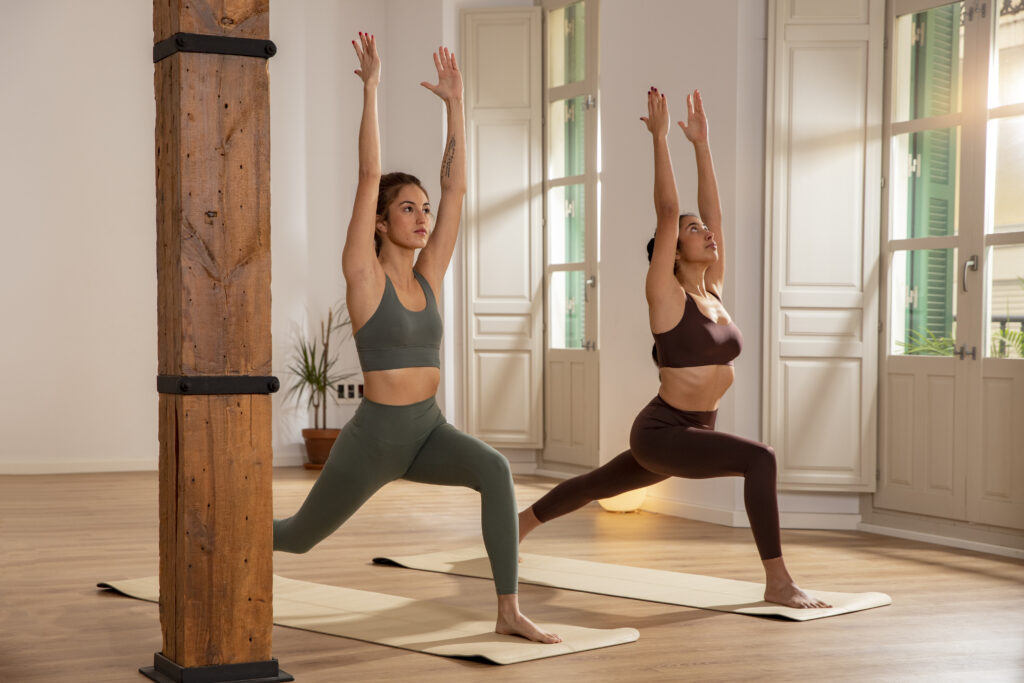
For example, inverted poses improve blood circulation in the brain, and twists stimulate digestion. Yoga could be a nice idea to spend some time with your friends; just try 2 people’s yoga. This time will be healthy and fun. But now let’s talk about more traditional asanas. Remember, you can always regulate the longevity of every practice; the most important thing is feeling good when doing it.
Here are some yoga positions for beginners:
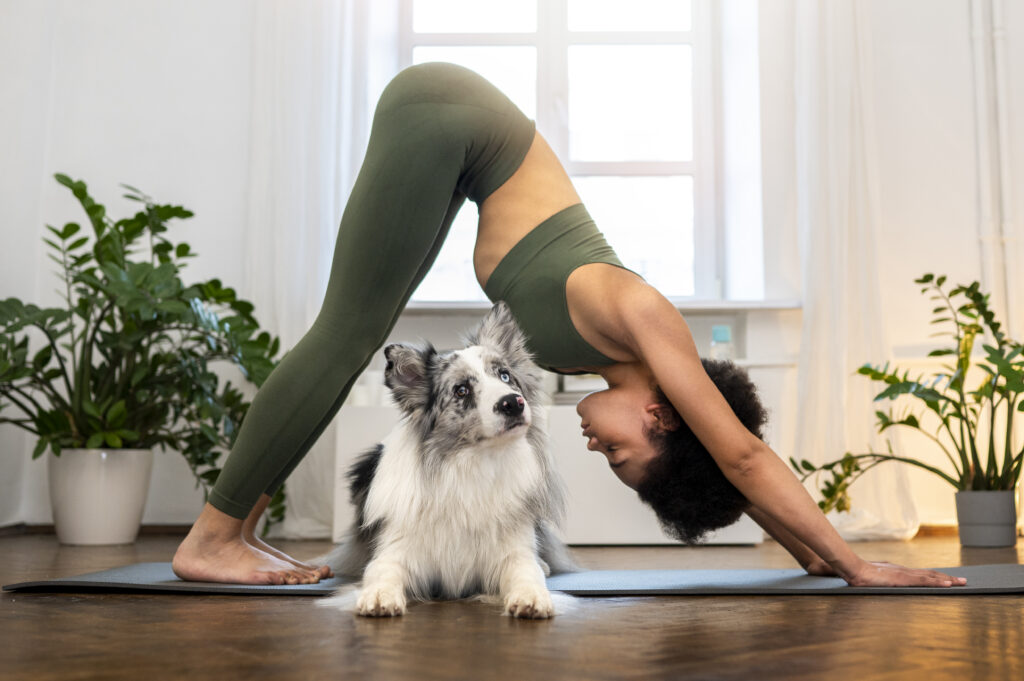
- A downward-facing Dog is a great pose for relaxing and stretching the lower back. Stand on the floor with your hands and feet, lifting your pelvis. Be aware of your knees; they should be straight.
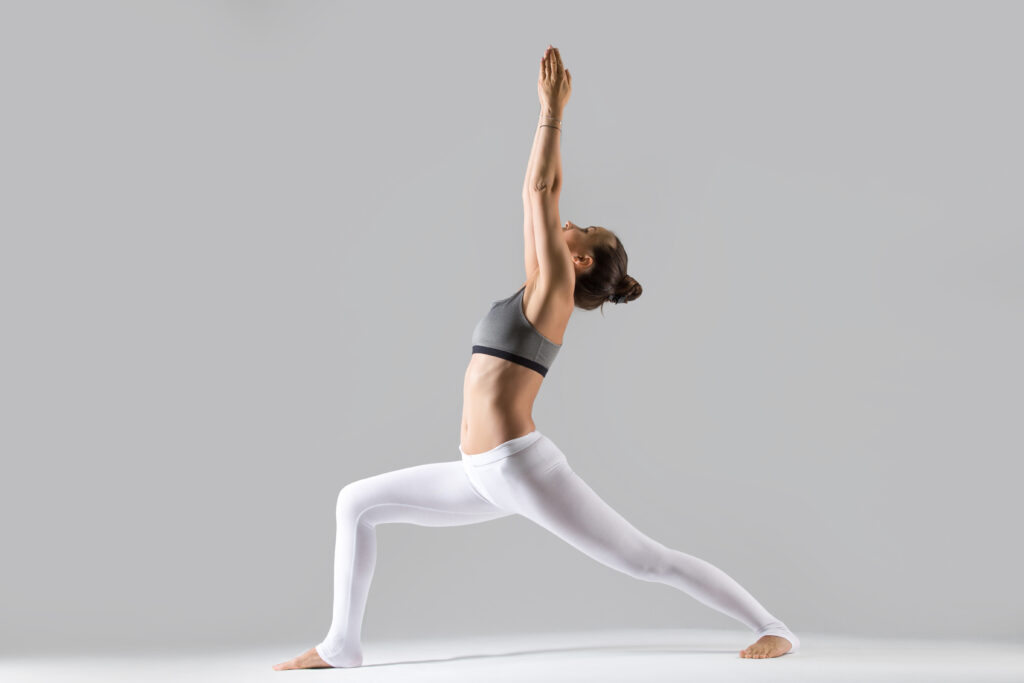
- Warrior I. This pose works on your posture and helps relieve tension from the upper body. It also works the legs and improves their endurance. Bend the supporting leg slightly at the knee in front and extend the back one, creating tension between them. Stretch your arms up, joining your palms. Maintain calm and even breathing.
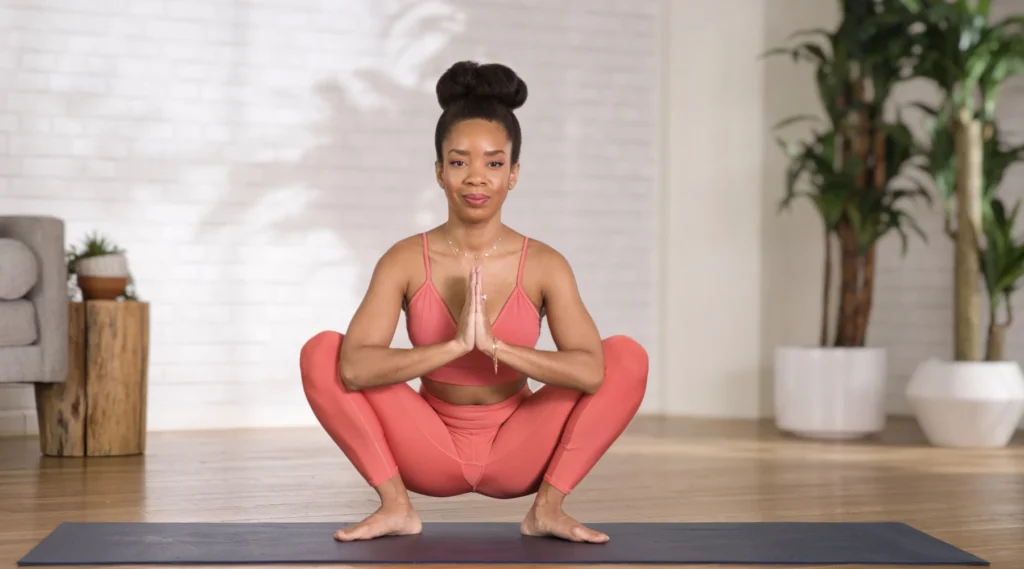
- Garland Pose. This exercise will help improve stomach function and strengthen the pelvic floor muscles. Place your palms together in front of you and put yourself into a deep squat. You need to almost lower yourself down but do not touch the floor. This position will help stretch the inner thigh muscles.
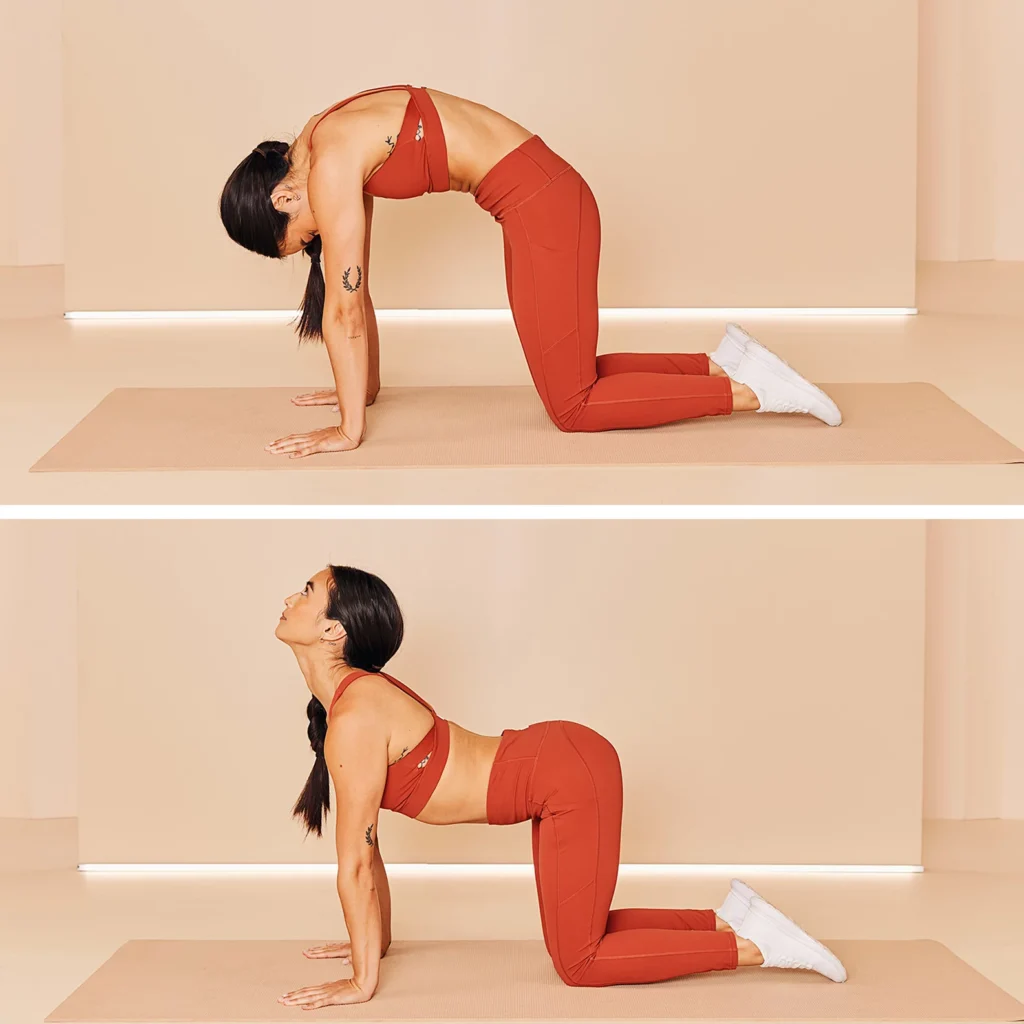
- Cat-Cow Stretch. An indispensable pose for back flexibility. Get on all fours and start moving your back up and down. Do not forget to watch your breathing: exhale as you round your back and inhale as you arch your lower back.
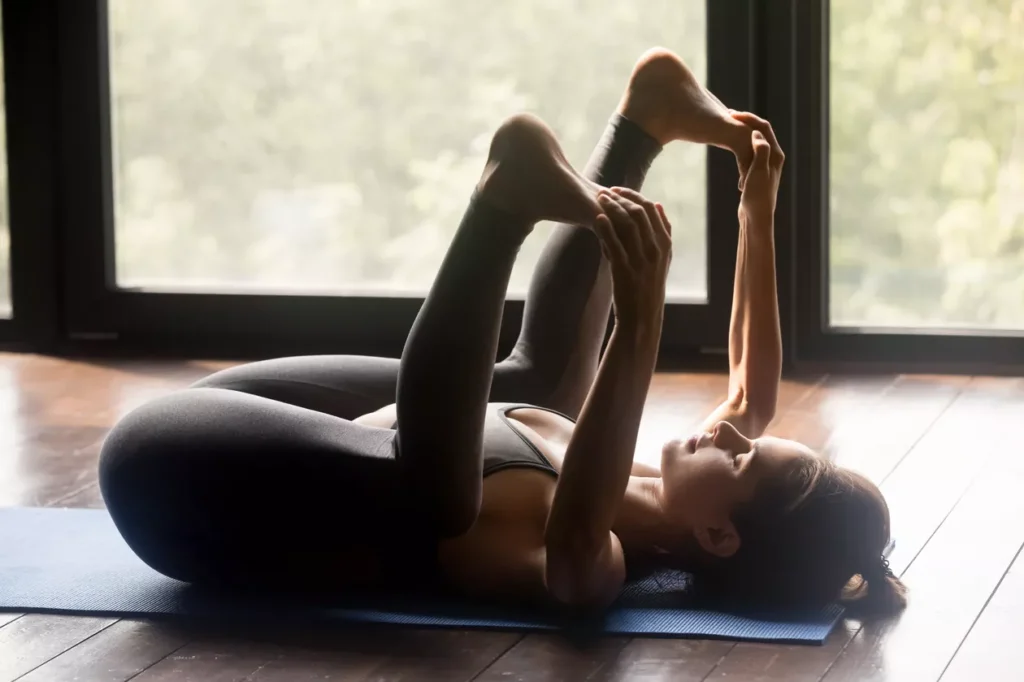
- Happy Baby Pose is an easy and enjoyable exercise that has a noticeable effect. Lie on your back and grab your big toes. In this position, roll from side to side, feeling the tension in different parts of the body. This pose helps to cope with back pain and strengthen the pelvic floor muscles.
Pranayama —Yoga Breathing Techniques
Pranayama is a breathing practice that works with the state of our central nervous system. An extended exhalation reduces cortisol levels, and alternating breathing balances both brain hemispheres. Biohackers use pranayama to improve sleep, focus, and control emotions. This simple but powerful breathing neuro gymnastics can be practiced even on an office chair. Here are some options for simple pranayamas that you can use in everyday life.
Nadi Shodhana
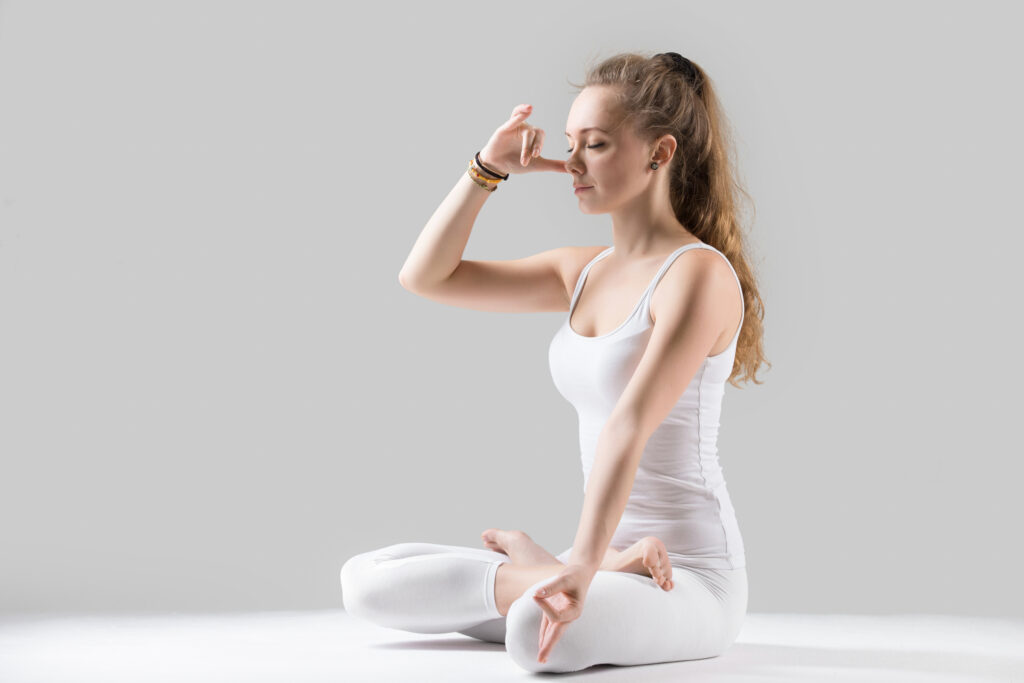
This yoga breathing technique can balance the sympathetic and parasympathetic nervous systems. It also helps with mind stabilization, improves heart rate variability, and is useful before an important meeting or sleep.
How to do: Index and middle fingers on the forehead. You must close one nostril with the thumb and inhale through the other. Close the left – exhale through the right. Then do it and vice versa, and it is the whole cycle.
Bhastrika
If you need to quickly activate your energy, turn on your brain, and speed up your metabolism – this pranayama is for you. It warms up the body and improves concentration. The morning session will be the best option for Bhastrika.
How to do: Strong, even inhalations and exhalations through the nose, emphasizing the diaphragm. Imagine that you are “blowing out” fatigue.




Ujjayi
Also known as the winner’s breath, it is often used in Hatha and Ashtanga yoga. Its main purpose is to calm the nervous system, concentrate attention, and warm up the body. By doing this, you relieve your anxiety and enter a flow state.
How to do: Inhale and exhale through the nose with a slight throat narrowing, creating a hissing sound.
Kapalabhati
This version of pranayama helps clear the respiratory tract and stimulate the stomach. In addition, kapalabhati stimulates the vagus nerve, enhances concentration, and tones.
How to do it: Sharp exhalations through the nose, drawing in the stomach, and passive inhalations that happen on their own.
Dharana, Dhyana, and Samadhi — Yoga Meditation
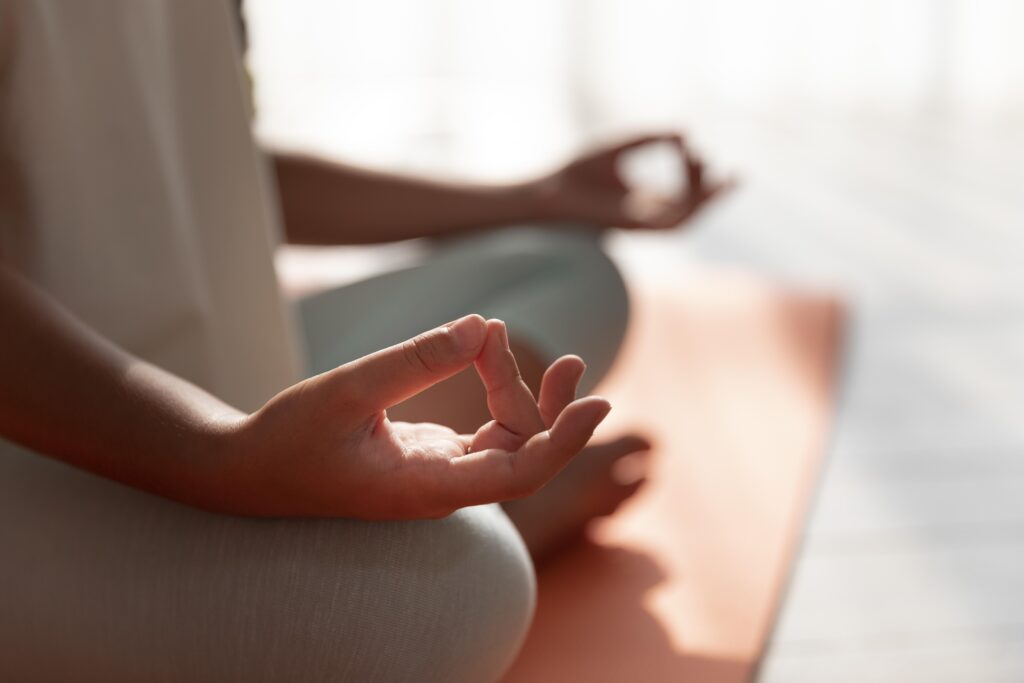
Yoga masters indicate 3 stages of yoga meditation techniques: concentration – dharana, maintaining attention – dhyana, and complete dissolution in the process of samadhi.
Dharana
Imagine that dharana is a preparatory step. It prepares the body for a deeper part of the practice. Dharana removes the noise we are surrounded with and focuses us on the inside voice. The main thing is to remain aware and in focus. Do not judge yourself, but gently return your consciousness in the right direction if you feel your consciousness is wandering in your thoughts. The main goal on this level is stress relief.
It is not necessary to perform this stage only during meditation. It is important to track your feelings during asanas. For example, if you are more distracted and your thoughts are chaotic somewhere, perhaps this is what you should pay more attention to. Try to notice if you are too distracted by other people around you.
Dhyana
This is the next step of Dharana. Here, too, a long period of concentration is important. The difference is that if the first stage focuses specifically on the process of letting go, then dhyana is already an uninterrupted period of rest when the mind stops wandering and does not require additional effort.
In this state, silence prevails, and the senses are not distracted by external noises. You no longer feel bodily awareness. It is as if you have nothing else to think about. At some point, the only thing your mind is occupied with is your position. This is how you achieve complete pleasure from the process; this is Dhyana. Then, the process turns from awkward and uncomfortable into absolutely natural.
Samadhi
This is the process of focusing on an object or mantra. When you naturally gravitate toward it and become one with it, you experience samadhi. The father of modern yoga, Patanjali, describes this eighth and final stage or branch as insight, rapture, or a state of ecstasy. In it, one merges with one’s point of focus and completely transcends oneself.
With constant practice, this state can be achieved more quickly. Samadhi is very productive. The mind and body relax into a state of profound peace. All the dramas and human experiences dissolve into the flow; joy and a sense of complete creativity remain.
Yoga styles (types)
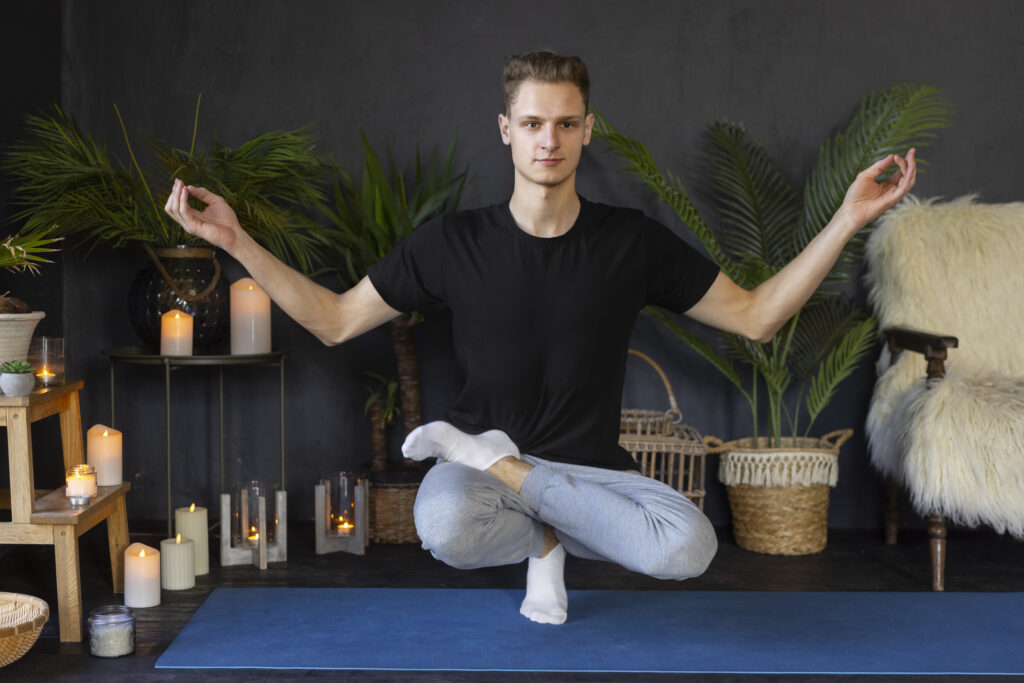
There are many styles of yoga, from soft and relaxing to intense and structured. Each affects physiology, hormonal levels, and cognitive functions differently. This is like choosing the right mode in a tracker for biohackers: recovery, activation, or unloading. Often, people who are first introduced to this philosophy think that everything is limited to hatha yoga, but this is a huge Universe where everyone will find an option for themselves, no matter if you need yoga practice for weight loss or techniques for flexibility.
Hatha Yoga
Hatha is a classic base suitable for beginners and those who want to balance the mind and body. Classes are held at a moderate pace, emphasizing breathing and holding poses. This is a great way to increase body awareness and develop discipline. This is a low-intensity load for biohackers, ideal for morning cortisol balance.
Vinyasa Yoga
Vinyasa is a dynamic style that combines asanas into smooth transitions under breathing. Increases endurance, improves cardiovascular regulation, and promotes sweating and natural detox. Especially good for biohackers who find it difficult to sit still – this is yoga with the effect of light cardio. Great as a fasting movement before mental work.
Kundalini Yoga
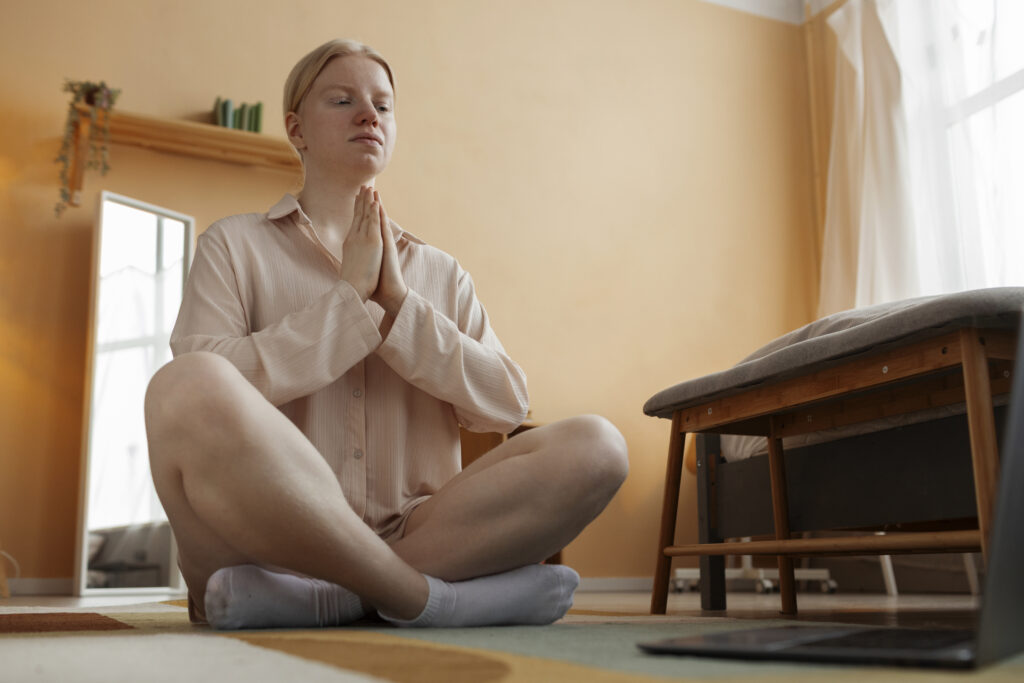
This style combines breathing, mantras, movements, and meditations to activate “kundalini energy.” From the point of view of neurophysiology – powerful stimulation of the hypothalamic-pituitary axis. Often used to work on the subconscious and emotional relief. Kundalini works with internal muscles and the nervous system. Thanks to the dynamic movements during practice, you will not be bored.
Yin Yoga
Yin is a slow, passive style with long-term posture holding aimed at working with fascia. It is ideal for post-workout recovery, improving joint mobility, and relieving deep muscle tension. Biohackers use it as an analog of muscle release and evening preparation for sleep. It is an excellent option for activating the parasympathetic system and reducing anxiety.
Ashtanga Yoga
Ashtanga is a structured and intense somatic yoga style with strictly defined sequences. It actively develops strength, flexibility, and endurance. It is suitable for those who like clear structure and progress. As in biohacking, neuroplasticity through repetition and self-training is important in Ashtanga Yoga.
Yoga Nidra
This is one of yoga relaxation techniques, also called sleep yoga. It is performed lying down with a completely relaxed body but an awake mind. Yoga Nidra activates the alpha and theta rhythms of the brain, rebooting the nervous system. It has been proven to reduce anxiety, improve sleep quality, and restore attention. It is used as a method of microsleep or “mind reboot” to quickly restore energy.
Iyengar Yoga
A style with a precise technique of performing asanas and using supports: bolsters, belts, bricks. Improves posture and body balance and safely develops strength. Suitable for people with injuries or post-operative recovery. In biohacking, it is used as “postural therapy” and increases body awareness.
Bikram Yoga
This is a fairly intense option with noticeable loads. Hot yoga takes place in a room with a temperature of about 40 °C and a humidity of 40%. It is ideal for deep sweating, removing toxins, and increasing flexibility. This variation is a thermal-stress workout that increases mitochondrial endurance.
How to Prepare to Yoga Practise
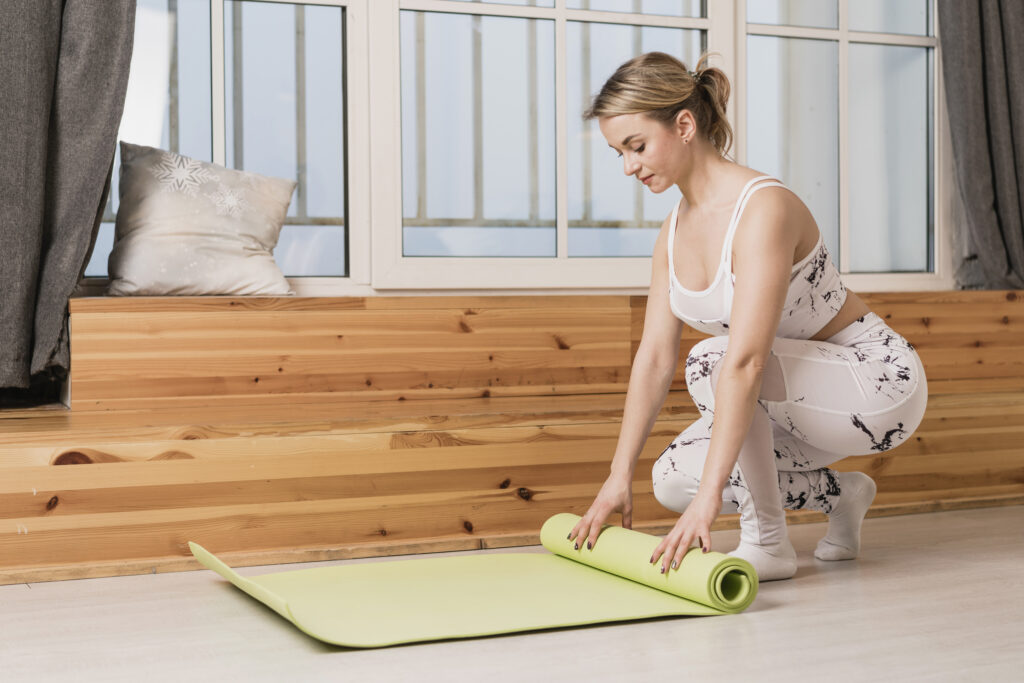
Although you don’t need much preparation to start your practice, there are still a few key points:
- You shouldn’t eat at least 1.5-2 hours before the practice. This will improve your body sensation, breathing, and add lightness to your movements.
- Your clothes should be loose and comfortable. Make sure that you can move comfortably and that nothing distracts you.
- Let some fresh air into the room before practice. This will allow more oxygen to enter your body.
- Prepare a yoga mat or towel for the practice. If you are a beginner, take care of blocks, belts, and blisters. The practice process must be pleasant and safe for you.
- If you are concerned about practicing yoga by yourself, try yoga classes. It is a nice and easy way not only to understand practice but to find your community. And yoga instructor is always there to help you with techniques.
Biohacking and Yoga
Yoga is built into the body without external interventions. It improves neurophysiological indicators, heart rate variability, sleep, and stress resistance. For biohackers, it is an ideal tool for recovery and self-regulation.
- Wearable devices for yoga. Using trackers such as Oura, WHOOP, or Apple Watch allows you to estimate how yoga affects HRV, stress, sleep, and recovery. Tracking breathing, skin temperature, and oxygen levels helps you choose the right style of practice. Some apps offer biofeedback right during breathing techniques. This turns a subjective practice into a measurable one. You could use an app to track your breath or be aware of your pulse rate. Also, it’s worth trying meditation apps with specific mantras and songs that help you concentrate.
- Combining yoga with other biohacks. Yoga combines well with cold treatments, intermittent fasting, and neurostimulation. For example, pranayama before breathing, according to Wim Hof , enhances the effect. Asanas in the morning on an empty stomach is the perfect way to start the day by activating the gastrointestinal tract and lymph. Meditation after taking adaptogens such as ashwagandha or Rhodiola enhances their anti-stress effect.
Biohacker’s Yoga Starter Plan
We have reviewed different types of yoga, asanas and pranayamas that may be useful to you. But there is a lot of information, so we offer a small plan of practices for 14 days to put it all together and not get lost. Each day takes 15-20 minutes and includes 1 type of practice. In the second week, a soft combination of breathing, asanas and meditation begins. There are days of active rest – they are important for restoring the autonomic system and strengthening new neural connections.
- Day 1 – Pranayama: Nadi Shodhana 10 minutes of breathing, 5 minutes of quiet sitting. We reduce cortisol, train breathing control.
- Day 2 — Pranayama: Kapalabhati. 2 rounds of 30 exhalations, then breathing with observation. Activation, increasing focus, stimulation of the central nervous system
- Day 3 — Asanas: basic stretching. Child’s pose, cat-cow, forward bend, butterfly. Gentle mobilisation of the spine and hips.
- Day 4 — Asanas: Surya Namaskar 3-5 cycles at a slow pace. We improve blood flow, warm up the body, and synchronise movement and breathing
- Day 5 — Meditation: observing the breath. 10 minutes in a sitting position. We develop concentration and awareness
- Day 6 — Yoga Nidra. Lie down and listen to the audio guide or script for 15-20 minutes. Rebooting the central nervous system, deep rest.
- Day 7 — Recovery day. You can also walk, sensations diary, or have an infrared sauna.
For the next 7 days try the same circle but double your time on every exercise. As a result you’ll notice a more balanced mindset and stretched body just in a few weeks.
Summary
This article discovered how yoga can become a powerful tool for biohackers. Yoga is a unique way to get along with your body. You can balance your mind with it and raise productivity. The key elements of the practice are asanas, pranayama, and meditation. Each step complements another and creates a balanced workout for your brain and body. Yoga improves heart rate variability, reduces cortisol levels, and enhances concentration. As a result, you have a balanced mind that can resist almost anything. For beginners, hatha, yin, and yoga nidra are the most suitable gentle and restorative styles.
Here are a few tips:
- Start with simple asanas and breathing techniques (for example, nadi shodhana or cat-cow).
- Use trackers or apps to track your condition, making the practice conscious and measurable.
- Incorporate yoga into your morning or evening routine to help start your day or end it gently.
for subscribing!