


Difference Between Collagen and Collagen Peptides for Skin

Every year, the biohacking community seeks new ways to improve health and preserve youth. With modern technology, we can achieve greater efficiency from our own bodies and improve the condition of our skin. Sometimes the secrets of youth lie within ourselves, and one of them is collagen. According to the Journal of Cosmetic Dermatology and Nutrients, the form, method of application, and absorption determine how noticeable the effect will be on the skin. In this article, we will examine how collagen for skin works, what hydrolysed collagen peptides are, and the benefits of collagen peptides. We discover where to find them and how to use them for maximum results.
This structural protein is one of the main building blocks of our bodies. In this article, we will look at how it affects skin condition and what distinguishes it from collagen peptides. We will also find out which of these components works best in the context of skin routines and the side effects of collagen peptides. Our experts have monitored the latest research and are ready to share it with you.
Highlights
- Collagen is a key protein for skin firmness, elasticity, and overall youthful appearance.
- Collagen peptides are smaller molecules that help skin absorb and rebuild collagen faster.
- Hydrolysed collagen peptides taken daily can improve skin texture in 6–8 weeks.
- Compared to collagen, peptides work deeper by signaling skin cells to renew and hydrate.

Contents
What Is Collagen in Skincare?
Let’s start with the basics: what is collagen? It is a fibrillar protein on which many tissues in our body depend. It is responsible for building joints, nails, hair, cartilage, and ligaments. And it is not a single protein with the same structure. To date, 28 types of collagen synthesis have been studied. Each part of the body has its own type, depending on its role within a particular organ or tissue. The largest percentage is made up of type 1, 2, and 3 proteins. They are structural proteins that also help build bones, joints, and cartilage.
What Does Collagen Do For Your Skin
When discussing the influence of collagen and its optimal levels, it is important to note that skin rejuvenation and elasticity depend on it. It is responsible for keeping the skin firm and wrinkle-free. It also heals skin damage, wounds, and post-acne. However, its production slows with age, which is why expression lines often become more noticeable after age 25. People often notice that pigmentation also appears over time after breakouts, which is also due to a lack of collagen. But the situation is not as dramatic as it may seem at first glance. Modern technologies allow us to meet our collagen needs, such as collagen supplements for skin. Albeit not wholly, because aesthetics are not its only function. Different types of collagen are responsible for bone formation, joint preservation, and improving the overall internal condition of the body.


Types of Collagen
There are three types of collagen, each responsible for specific functions in the body. Let’s take a look at each of them:
- Type 1. It forms the structure of the skin, bones, and tendons and is responsible for density. This type is key to youthful skin and wrinkle reduction. It determines how noticeable your wrinkles are and how dense your skin is. It is also responsible for the regeneration of your bones, muscles, and even your spine. It is also responsible for the condition of your nails and skin. Marine collagen is suitable for maintaining it.
- Type 2. It protects your joints and helps your spinal discs by creating connective tissue. This type primarily forms joint cartilage and also participates in lubricating and cushioning tissues. Its presence in the skin is minimal, but it indirectly affects the appearance of the face by improving the mobility of connective tissue, the structure of the neck, and the contours of the face. Type 2 collagen supplements are often used by athletes and people over 35 to support joint and spinal health. It is sometimes included in complex collagen preparations to enhance the overall effect on ligaments and soft tissues.

- Type 3. It often works in conjunction with type 1 and is responsible for the skin’s elasticity, firmness, and softness. It is especially important in the formation of thin tissues in the cheeks, eyelids, and lips. This collagen is actively produced in youth, but as we age, its production declines. This is why the skin becomes dull and loses its vitality. Supplements and cosmetics containing this type of collagen are designed to restore elastic fibres, improve skin tone, and reduce the appearance of wrinkles.
What Are Collagen Peptides
Now that we understand what collagen is and the different types, let’s delve deeper into collagen peptides. These are a broken-down form of collagen, consisting of chains from within. They stimulate the body to produce its own collagen and activate fibroblasts. These cells are responsible for skin elasticity and for increasing hyaluronic acid production. Research by Nutrients shows that regular intake of 2.5 g of collagen peptides per day improves skin elasticity and reduces wrinkle depth in just 8 weeks. Different types of peptides help to perform their functions:
- Signalling – transmits information to cells, stimulating the production of their own collagen.
- Neurotransmitters – relax muscles and thus remove wrinkles. They work similarly to botulinum toxin, blocking the transmission of nerve impulses from neurons to muscles and preventing contraction.
- Transport – responsible for transporting active substances into the deeper layers of the skin. They also help with their proper absorption.
- Enzymatic – helps protect the skin from the destruction of its own collagen and elastin.
Key Differences Between Collagen and Collagen Peptides

One of the main differences is the size of the molecule. Let’s look at the structure of each of these components. Collagen is a protein made of long chains of amino acids that form various connective tissues in our bodies. Peptides, in turn, are smaller than collagen and have shorter amino acid chains. They are also the builders of protein in the body, but not all peptides form collagen. As we mentioned earlier, each type is responsible for its own function. Therefore, although peptides stimulate collagen production, they also support the immune system and reduce inflammation. It is important to note that collagen supplements in tablet form may not always work on the skin; they may instead work on joints and cartilage. Therefore, peptide collagen can be useful as a skin care supplement. Collagen also has a fairly large molecule. This is why it can be difficult to transport into the skin using creams and serums. The effect of such products will be more moisturising than long-lasting.
Benefits of Collagen for Skin
- Increases moisture levels and reduces flaking.
- Temporarily makes the skin firmer and visually smoothes fine lines.
- Creates a protective barrier, especially in winter and dry seasons.
- Suitable for recovery after peels and retinol treatments.
Benefits of Collagen Peptides for Skin
- Stimulate the synthesis of collagen and elastin.
- Increase the density of the dermis, improve skin texture and tone
- Promote moisture retention and increase hyaluronic acid levels.
- The effect is visible after 6-8 weeks of regular use.

How to Use Сollagen Peptides for Skin
Collagen peptides can be taken both topically (externally) and internally. When it comes to external applications, these can be serums, creams, and masks for the face and body. It is best to use serums and creams with Matrixyl, Argireline, and Copper Peptides. Apply these cosmetic peptides after cleansing and toning, but before thick creams and oils. It is essential to know how to combine this ingredient correctly. Do not apply it together with acids, as they destroy peptides. The same applies to retinoids. On the other hand, niacinamide, ceramides, and antioxidants are good choices to combine.
When it comes to the internal intake of bioactive peptides, it is worth noting the hydrolysed form. They can be found in powder or shot form. They should be taken on an empty stomach in the morning or 2 hours after a meal. The classic course is 8-12 weeks and has a cumulative effect. For collagen fibres to form correctly, combine peptides with vitamin C. Without it, collagen cannot be synthesised.
Best 5 Collagen Peptides for Skin
To save you the trouble of researching and searching for the best products, we’ve done it for you. Here is a short list of skin supplements that have been on the market for several years.
Vital Proteins Collagen Peptides
Contains types I and III, enriched with vitamin C and hyaluronic acid.
Price: $30 for 284 g.
Result: improved skin density and hydration in just 6-8 weeks.

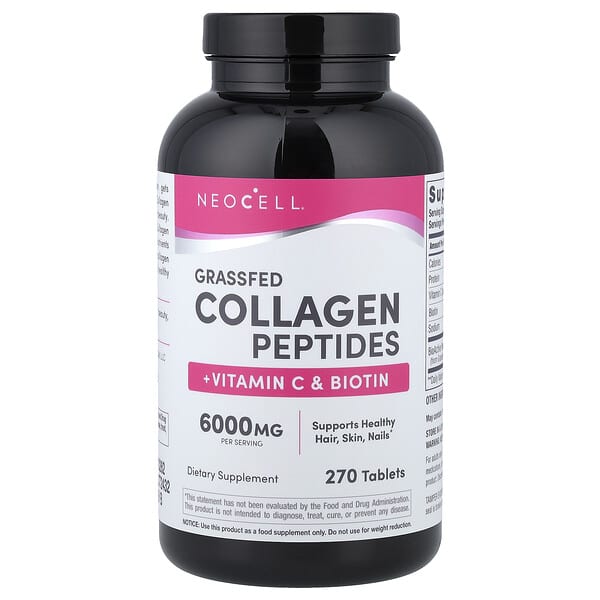
Neocell Super Collagen +C
Classic formula of hydrolysed collagen types 1 and 3, with added vitamin C.
Price: $25 for 198 g.
Suitable for daily use and prevention of age-related changes.
Revive Active Beauty Complex
Multi-complex: collagen peptides, hyaluronic acid, vitamins A, C, E, and zinc.
Price: $60 for 30 packets.
Well tolerated, noticeably improves skin texture and nail condition.

The Ordinary ‘Buffet’ + Copper Peptides 1%
Skin serum with signalling and transport peptides.
Price: $30 for 30 ml.
Ideal for local lifting and recovery after procedures.

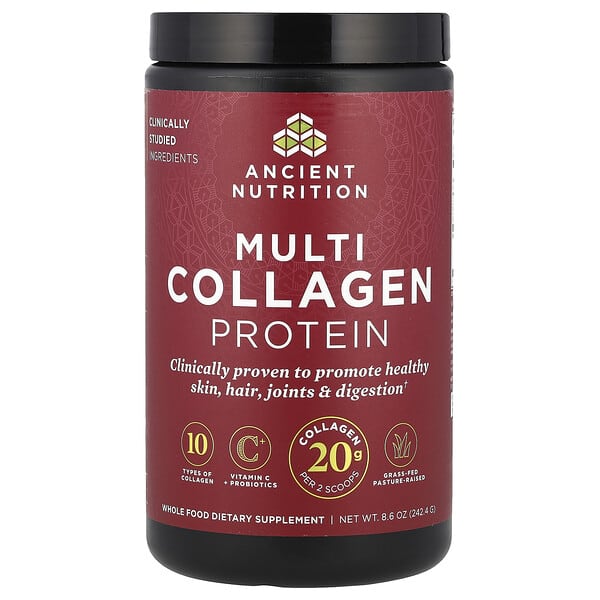
Ancient Nutrition Multi Collagen Protein
Contains collagen types 1, 2, 3, 5, and 10. A comprehensive product for skin, hair, and joints.
Price: $40 for 400 g.
Summary
As you can see, collagen is an indispensable part of our body. With age, its amount decreases, so it is critically important to consume it as a supplement after a certain age. In this article, we discussed the benefits of classic collagen. Still, its large molecule limits its absorption, and the effectiveness of oral forms depends on the condition of the body. Therefore, collagen peptides help collagen access the body. We also learned more about peptides and their key roles in human biology. Due to their smaller molecular size, they are better absorbed through the skin, both externally and internally, in tablet form. Collagen peptides act in a targeted manner: they signal cells to produce more of their own collagen, increasing skin hydration and density. Overall, if you want to keep your skin barrier and anti-ageing as long as possible, collagen peptides can help. In addition, collagen intake also affects internal tissues such as joints, cartilage, and bones.
Our experts have prepared a short checklist to help you navigate the selection of products and cover the basics you should know before use:
- For maximum effect, combine peptides internally and externally.
- Always take them with vitamin C, as it helps the peptides to be absorbed.
- Do not combine peptides with acids and retinol, as these substances can destroy the structure of the former.
- Remember that taking collagen is not a sprint, but a marathon, and the results will not be visible immediately.
- Choose type 1 and 3 peptides, as they are most effective for skin elasticity.
for subscribing!