


How to Start Intermittent Fasting for Maximum Benefits
In Silicon Valley, extreme fasting is gaining new supporters, not only for weight loss or general health improvement but also to increase productivity. Interval fasting is one of the most popular methods among biohackers for weight loss. It is based on alternating periods of eating and fasting, which helps to improve metabolism and accelerate the fat-burning process.
Highlights
- Intermittent fasting is an eating pattern that cycles between eating and fasting periods.
- The most popular fasting types —16:8, OMAD, 5:2, ADF — each with unique health benefits.
- Fasting may improve metabolism, insulin sensitivity, and immunity.
- Avoid sugary, processed foods even during your eating window.

Contents
What is Intermittent Fasting?
Intermittent fasting is not a diet but an eating pattern in which you eat only during a limited period during the day and fast the rest of the time. For example, you can only eat for eight hours, from noon to 8:00 p.m., and then there is a 16-hour fasting time until noon the next day. During the time allowed, you can eat whatever you want and in the quantities you want.
Studies show that interval fasting allows the body to burn fat stores more efficiently, normalizes blood pressure and heart rate, promotes tissue regeneration, and protects against cancer and diabetes.
However, suppose you already have diabetes or problems with blood sugar regulation, low blood pressure, eating disorders, are constantly taking medications, or are pregnant or breastfeeding. In that case, interval fasting should be treated with great caution. It is better to consult your doctor before you start practicing.
Of course, the idea of therapeutic fasting was not invented by the leaders of the world of technology. Even the ancient Greeks tried fasting thousands of years ago because it was believed to have a favorable effect on health, and almost every significant religion in the world has periods in which believers should follow a diet. Periodic fasting, or rather hunger strikes, have been used for centuries as an instrument of political protest – it was actively used, for example, by Mahatma Gandhi. Of course, starvation is also widely known as an important part of the beauty industry.

The perpetrators of another surge of interest in interval fasting claim that increased productivity during these periods may be caused by increased ketones in the body. Ketones are produced when our body begins to process fat due to a lack of calories. Ketones are said to be “super fuel” for the brain, and their production increases mental clarity and improves cognitive ability. Most scientists support this idea. Representatives of the WeFast community assure that fasting allows them to focus on work and produce better results. “Interval fasting can increase longevity, enhance cognitive ability, and improve health and immunity,” their official website states. To achieve these results, WeFast offers a 36-hour fasting system to trigger autophagy.
Intermttent Fasting Benefits
Intermittent fasting triggers autophagy mechanisms and preserves all the beneficial effects of fasting: normalizes weight, reduces sugar and cholesterol, inhibits the aging process, and reduces the risk of cancer and neurodegenerative diseases. At the same time, a person physically and psychologically does not experience significant suffering because, in the nutrition window, he can eat almost anything he wants. And, unlike rigid diets, such a mode can be very long without harm to health.
Many diets are based on the refusal of certain products, which means that they limit the intake of nutrients important for health. Because of calorie counting, torture in the gym, and deprivation of favorite foods, the brain is under constant stress. As a result, in the pursuit of a slim body, you get gastritis, depression, and decreased immunity. Doctors have long been saying about the harm of diets and the benefits of a rational diet combined with adequate physical activity. Intermittent fasting is not a diet but a food regimen that can be followed for a long time, literally for a lifetime.

Advantages of interval feeding:
- scientifically proven to accelerate metabolism, release fat stores, and convert them into energy;
- suppression of the feeling of hunger (however, it will appear only at the end of the first week);
- change in the hormonal background: reduction of glucose, which leads to the use of fats, as well as an increase in the production of norepinephrine;
- preservation of muscle tissue;
- effective loss of excess weight;
- rejuvenation effect;
- reduction in the risk of cancer;
- reduction of manifestations of arterial hypertension.
Various studies have repeatedly proven its effectiveness for weight loss. An additional bonus is health, youth, and active longevity by activating the autophagy process.
Types of Intermittent Fasting

Fasting cannot be called a super-innovative method of nutrition. Christians fast during Lent, and Muslims observe Ramadan, 30 days of not drinking or eating until sunset. The popular 16/8 interval fasting system means that a person can eat for 8 hours and then give up food for 16 hours. There are also stricter frameworks: 18/6 or 20/4. The 5/2 scheme, described in the book The Fast Diet by journalist Mimi Spencer and science-pop journalist Michael Mosley, is also popular. The essence: 5 days a week to eat as you used to, and the remaining 2 days do not exceed the limit of 500 calories. Let’s look at each method in more detail.
16/8 or 14/10
The 16/8 fasting system is the gentlest of all. Eating breakfast at 10:00 and eating at 18:00 will fit into the popular scheme of “not eating after six.” Other options are 14/10 or 24/0, where food is denied for 14 or 24 hours. However, patients with severe diabetes, anorexia, bulimia, and other disorders are not recommended to try such a regimen. The same applies to pregnant women and women during breastfeeding. In general, this method requires consultation with a specialist – do not self-medicate even for good purposes.
5:2
The 5:2 scheme, also known as Dr. Mosley’s diet, is a form of intermittent fasting. It involves eating regular food five days a week without any dietary restrictions and restricting food intake two days a week immediately after that, like unloading days.
500-600 kcal is plenty enough to not leave you hungry. In addition, an important rule protects you from feeling hungry: the unloading periods should not follow in a row. They should be spaced so that there is at least one day with a full-calorie intake in between.
In one small study, scientists found out how fasting every other day – a diet similar to the 5:2 – affects people. After 12 weeks, the participants of the experiment, on average, lost more than 5 kg of excess weight. This weight loss mainly consisted of fat mass, while muscle mass remained almost unchanged.
If you combine a 5:2 diet with regular exercise, your weight will drop even more. At least, this is true for obese people. Diet 5:2 possibly reduces the risk of coronary heart disease.
Experts of the British National Health Service (NHS) voice such observations. But again, with a note: data is still scarce, and further research is needed.
Експерти Британської національної служби охорони здоров’я (NHS) озвучують такі спостереження. Але знову ж таки, з приміткою: даних поки що мало, і потрібні подальші дослідження.
Choose low-fat, low-calorie foods high in fiber or protein to stay full. Experts at Medical News Today recommend including in your diet:
- vegetables, i.e., cabbage (white cabbage, Peking cabbage, Brussels sprouts, cauliflower), zucchini, cucumbers, tomatoes, carrots, leafy greens;
- white fish, namely hake, pollock, mackerel, sea bass, and freshwater fish species;
- chicken eggs;
- legumes, including beans, peas, chickpeas, lentils;
- unsweetened yogurt, low-fat cottage cheese;
- tofu cheese;
- dark berries (blackberries, blueberries), they help to satisfy cravings for sweets without excessive calories;
- a variety of liquid soups, such as vegetable soups.
In addition, during the off-loading days, you should drink more water and herbal tea: the liquid fills the stomach and helps maintain a feeling of satiety.
Alternate-Day Fasting
Alternate-day fasting consists of severe dietary restrictions during alternating days and as much food as necessary during eating days, such as ad libitum. Any permitted energy during fasting days is provided in a single meal. Trepanowski and colleagues compared the alternate-day fasting diet with a daily energy restriction of 25% among 69 adults with obesity in 6 months. The fasting day consisted of a single meal containing 25% of energy requirements consumed between noon and 2:00 p.m. and 125% of energy requirements on feeding days. A similar % body mass loss (fat and lean mass) of 6.8% between the 2 groups was observed. Metabolic health markers such as triglycerides, adipokines, fasting glucose, and insulin resistance were unaffected by either intervention.67–69 Thus, alternate-day fasting does not seem superior to daily energy restriction.
Eat-Stop-Eat
This method involves 24-hour fasts once or twice a week. For example, you might stop eating after dinner on Monday and not eat again until dinner on Tuesday.
- Benefits: Promotes fat loss, improves insulin sensitivity, and gives your digestive system a rest.
- Challenges: Going for 24 hours without food can be difficult initially. Staying hydrated and busy helps.
On non-fasting days, eating balanced meals is essential to fuel your body and prevent overeating. Example meal for a non-fasting day (lunch or dinner):
- Grilled salmon with lemon and herbs (rich in omega-3s);
- Quinoa or wild rice (complex carbs and fiber);
- Roasted vegetables (zucchini, bell peppers, carrots);
- Mixed greens salad with olive oil and pumpkin seeds;
- Greek yogurt with berries for dessert.
By the way, focus on whole foods, protein, healthy fats, and fiber to keep you satiated during your 24-hour fast.
One Meal A Day (OMAD)
With OMAD, you eat only one large meal daily, usually within a 1-hour window, and fasting time is 23 hours.
- Benefits: Maximizes calorie control, promotes deep fat-burning (ketosis), and simplifies meal planning.
- Challenges: It is difficult to get all the necessary nutrients in one meal. If not done correctly, this can lead to fatigue or muscle loss.
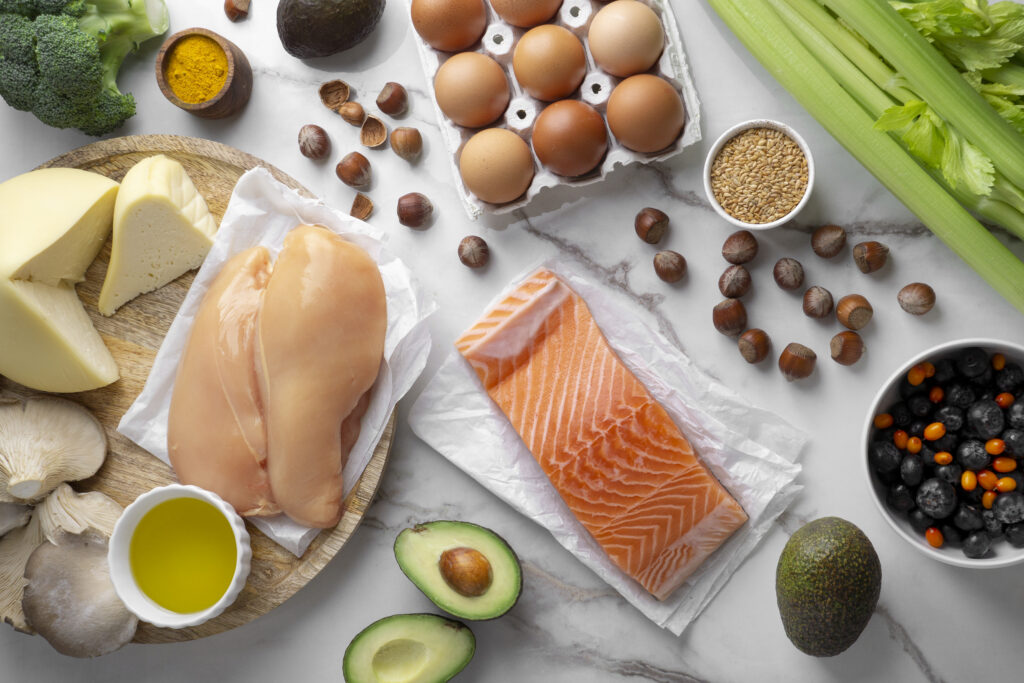
This meal needs to be highly nutrient-dense to meet daily requirements. Example OMAD fasting meals:
- Grilled chicken breast or tofu (high-quality protein);
- Sweet potatoes or legumes (complex carbs for energy);
- Steamed broccoli and kale with garlic and olive oil;
- Avocado slices for healthy fats;
- Boiled egg or small cheese portion for extra protein and fat;
- Fresh fruit salad or 85% dark chocolate for dessert;
- Electrolyte-rich drink or herbal tea (especially if fasting intensively).
Consider supplementing with electrolytes, magnesium, or a multivitamin if you do OMAD regularly.
What to Eat Due Intermittent Fasting?

During this time, you can drink water or consume fermented milk products. It should be considered that this is not a diet where you can fast for 16 hours and 8 minutes to eat whatever you want – cakes, pastries, fast food. During interval fasting, it is important to follow the regimen and calorie intake to avoid gaining even more weight. Avoid foods that are high in sugar and flour. Eat fruits, vegetables, beans, lentils, whole grains, lean proteins, and healthy fats.
Is Intermittent Fasting Safe?
Like any nutritional methodology involving extreme restriction, interval fasting can also harm the body. Starvation for more than 24 hours is harmful: a person will not have the necessary energy even for daily activities. It is also scientifically proven that starvation for 36 hours or more is harmful. Long intervals between meals can provoke exacerbation of chronic pathology or cause problems with the GI tract: constipation, nausea, gastritis, and gastric ulcers.
Interval fasting should be avoided entirely by children and adolescents, as they are still in the active phase of growth, as well as pregnant women and people with diabetes.
Summary
Interval fasting is a form of fasting in which a person gives up food by the hour. Interval fasting is becoming increasingly popular, and scientists are even interested in this fasting method. Initial small studies indicate that regular fasting can reduce the risk of chronic diseases such as type 2 diabetes, cardiovascular disease, neurological diseases, and cancer. Such fasting also has a positive effect on brain function. Clinical studies on humans have not confirmed this, but they indicate that interval fasting positively affects our health and can serve as an alternative to other diets that aim to lose weight. This means that the interval fasting method doesn’t work any better than other weight loss diets, but it does work.
Warning: pregnant people, underweight people, sedentary people, and people with eating disorders should avoid interval fasting. Aged people and people who suffer from migraines should also avoid interval fasting. It is best to consult your physician. The basic rule is: don’t give up too soon. It should take some time for the body and metabolism to adjust to the new conditions of interval fasting.
for subscribing!