


What Is Biohacking In Fitness
You can easily see the results of biohacking with the naked eye on your body, but if you prefer more “scientific methods,” you can find out how the results of your efforts have manifested themselves, for example, in your body’s hormone levels, blood pressure or microbiota composition. The levels of vitamins and minerals in the body also matter, which you can check at home. However, sports are the basis for successful results. Biohackers strive to improve their physical performance, such as endurance, strength, and speed, using various methods ranging from specific workouts to dietary decisions.
Highlights
- HIIT, stretching and strength training are key workouts in fitness biohacking.
- Proper recovery, hydration, and sleep are vital after intense training
- A mat, bike, gymnastic wheel, free weights, and expanders are the basic fitness equipment.

Contents
How Biohacking is Related to Fitness
Fitness biohacking and sports in general is a powerful method that can improve many areas of your life. For example, it can:
- reduce your risk of developing a disease to which you may be genetically predisposed;
- improve physical health;
- reduce symptoms of depression;
- lower blood pressure;
- aid in weight loss;
- Increase productivity and mood;
- Increase resistance to illness;
- boost immunity;
- improve sleep.

In the eyes of biohackers, sport’s main task is to improve well-being, increase productivity, and “pump” the body’s work as a biological machine. At the same time, physical activity must bring pleasure. Exhausting diets or mindless muscle building do not fit into the biohacking concept. Movement usually benefits both the psyche and appearance. Regular exercise burns a lot of calories, making it easier to lose weight. In addition, physical activity affects sleep, discipline, self-esteem, and health, as it can reduce the risk of developing certain diseases.
Biohacking Workout: the Best Exercises
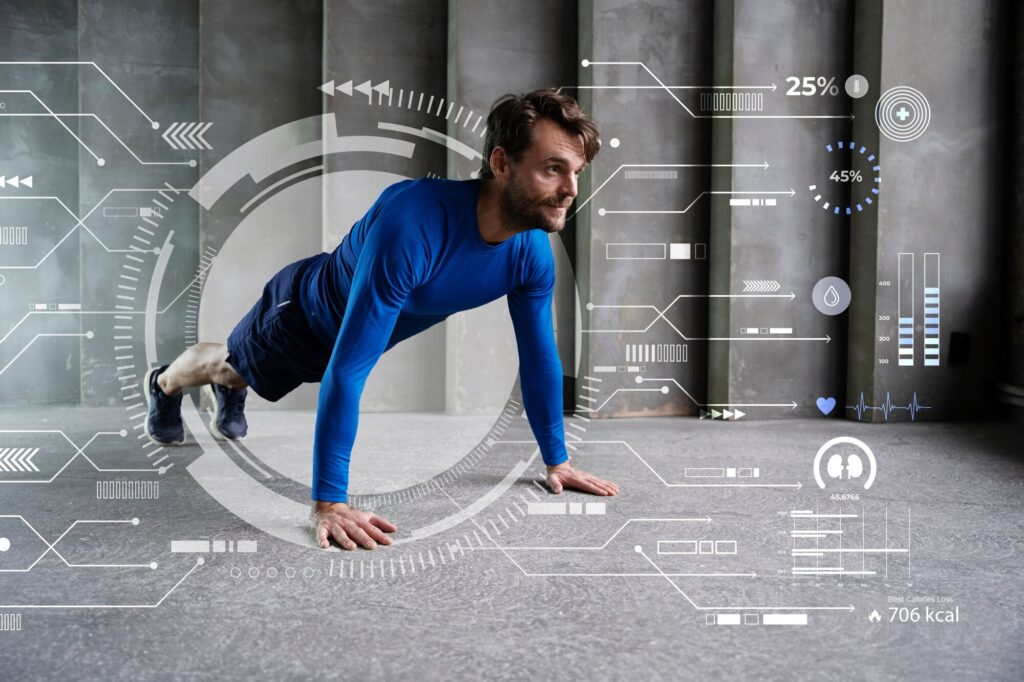
Again, don’t worry about being immediately forced to work unrealistically hard to improve your health. Not at all. In the beginning, you will need to gradually add activities and get used to regular movement. How to move more?
- Try to include at least a 30-minute walk a few times a week.
- Try HIIT.
- Go to the gym or attend a group exercise class.
- You can also practice quality cardio workouts at home.
- Strength training from the comfort of your own home.
- Go for a jog.
- Go cross-country skiing.
- Think back to your childhood and go sledding or skiing.
From the beginning, you don’t need to go to the gym to be active and reap the benefits of exercise for your body. It’s important to alternate activities to make movement varied and fun. One study even found that just 5 minutes of outdoor exercise can improve one’s mood. How can we spend more time outdoors?

- The easiest way is walking.
- Borrow a dog – walk it so you have a partner.
- Instead of having coffee with friends, go for a walk together.
- In warmer weather, you can go mushroom picking in the woods.
- Take an afternoon hike in the mountains.
- Get the right equipment and do some outdoor sports.
- Ride a bike, go ice skating, or jump on a scooter.
Stretching Exercises
With these exercises, you can do your own stretching routine and get a good stretch for all the muscles in your body. However, this will take about 60–90 minutes. For a quick stretch, choose one or two exercises for each muscle group.
Triceps and Shoulder Stretch
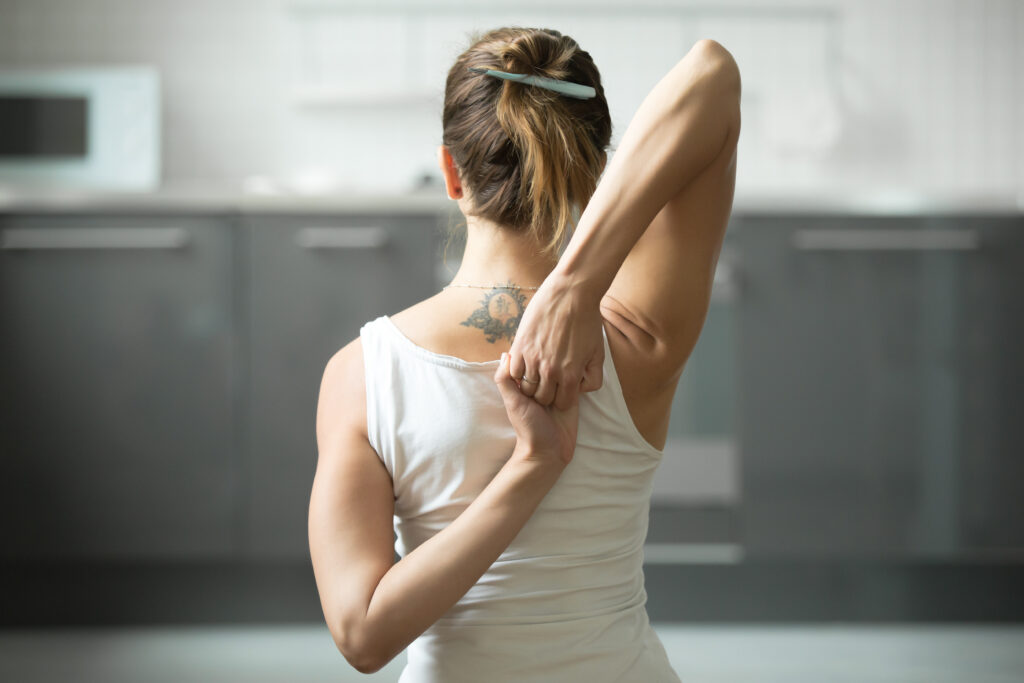
This pose allows you to stretch the triceps of one arm and the front of the shoulder of the other arm simultaneously. Bring one arm behind your back so that your elbow is facing up, and the other arm below so that your elbow is facing the floor. Try to connect your wrists behind your back at the level of your shoulder blades. Switch arms.
Head Tilt Back and Sideways
Tilt your head back, stretching the front of your neck. From this position, tilt your head to the left. For greater effect, place your left palm on the right side of your head, but avoid pressing too hard. Repeat the exercise on the other side.
Lower Back Stretch
Sit on the floor with your right leg forward and your left leg back. Bend your knees at a 90-degree angle or slightly more. Place your right hand on the floor and raise your left hand above your head. Pull your left leg down and back, lean your torso forward, and twist toward your right leg. Switch legs.
Child’s Pose
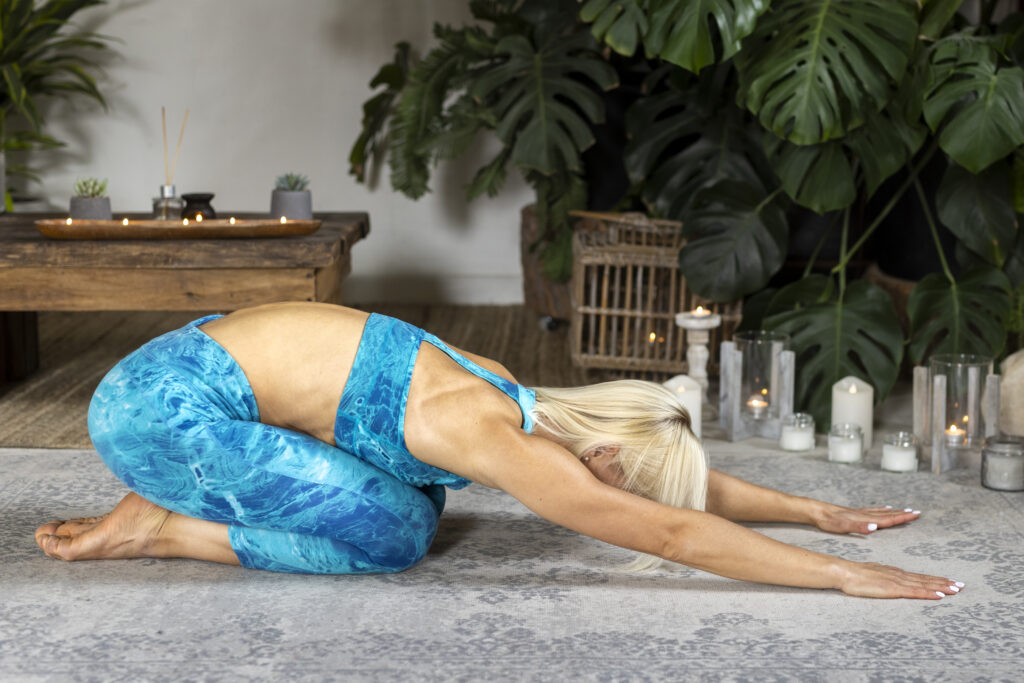
Sit on the floor with your buttocks touching your heels. Lean forward, lie down on your stomach with your knees bent, and stretch your arms out.
Strength Exercises
Strength training, also known as weight training, is a physical activity designed to improve muscle strength and physical fitness by training specific muscles or muscle groups with external resistance, including free weights, strength training machines, or your own body weight.
Pull-Ups
Pull-ups are an upper body exercise that engages several large muscle groups, primarily the back muscles and biceps, and uses your own body weight as resistance. To perform a pull-up, grasp a bar above your head and pull yourself up to the bar using your upper body strength.
You can be sure that you cannot perform a pull-up at this time, as your current level of physical fitness does not yet enable you to do so. In this case, begin by using a pull-up machine or resistance band to assist you in lifting part of your body weight through the range of motion.
Over time, you will build the necessary strength and make progress. And when you do, the sense of accomplishment you get from doing something difficult will give you tremendous self-confidence.
Push-Ups
Like pull-ups, push-ups are primarily an upper-body exercise that engages several large muscle groups and uses body weight as resistance. Push-ups work the chest, shoulder, and triceps muscles, as well as some of the core and leg muscles that provide stability.
Two main modifications make push-ups more accessible for beginners. The most common is to do push-ups on your hands and knees. This way, you transfer some of your weight to your legs, making the exercise easier to perform.
The second option is to rest your hands on a bench, box, chair, or even the edge of your desk, rather than on the floor. This modification takes some of the weight off your arms while still fully engaging your legs. This option also provides ample room to gradually increase the exercise’s difficulty as you become stronger. Remember, the higher the height, the easier it will be to do push-ups. Gradually, you can move from a table to a bench, for example, and then to a step. Over time, as you build strength, you will be able to do full push-ups from the floor.
Deadlift
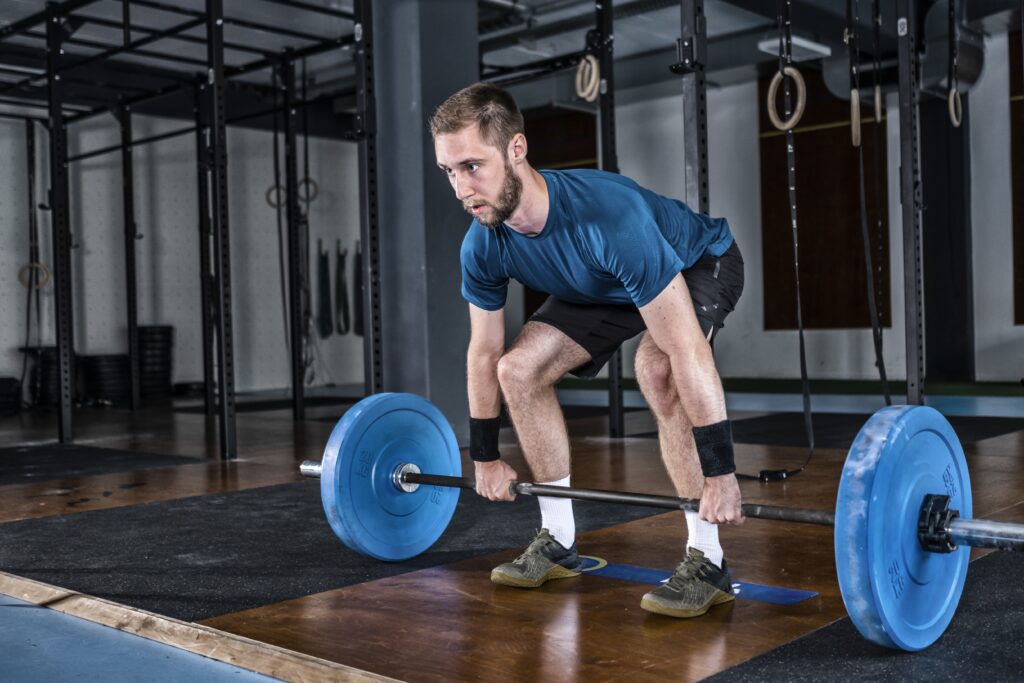
The deadlift is one of the most essential exercises for beginners to develop strength, which helps you learn how to lift weights correctly in everyday life without damaging your back. Deadlifts work the glutes, hamstrings, and core. To reduce the risk of injury when performing deadlifts, as with all weight-bearing exercises, ensure you use the correct technique. Start by practicing the movement without weight. Then slowly add weight as you build strength.
Biceps Curls
Most beginner athletes feel incredibly happy when they start to see the contours of their muscles and notice how toned their body is becoming. And the biceps are the muscle group where it is easier and faster to get the first noticeable results from training.
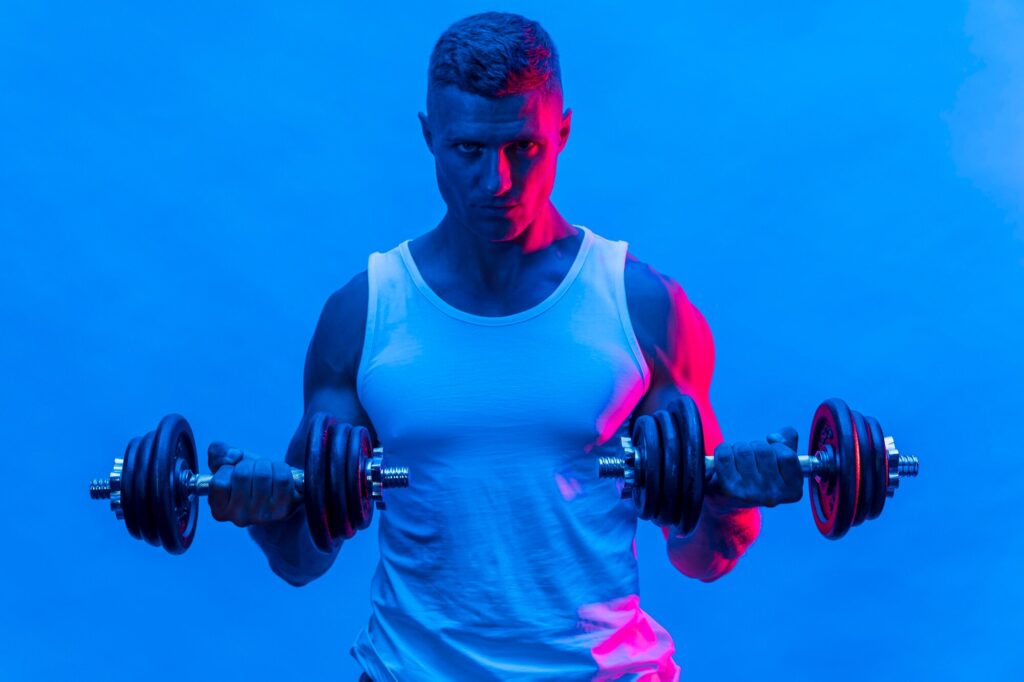
Bicep curls are an upper-body exercise that targets the muscles on the front of the shoulders. It helps beginners develop the functional strength needed to carry heavy objects. Additionally, it makes your arms look toned and beautiful. If you don’t have dumbbells or a barbell, you can do this exercise with something simple, such as a bottle of water or sand, for the first few weeks.

High-Intensity Workouts and Overall Endurance
Are you ready for adrenaline and energy flow? Because we’re talking about high-intensity workouts! These frenetic sessions will take your endurance to a whole new level. Forget boring stereotypes — high-intensity workouts have long gone beyond boring approaches. Just a few minutes of intense running or cycling can incredibly impact your fitness and promote effective fat-burning!
MetCon Workouts
The term “metabolic conditioning” first appeared in an article by Arthur Jones in 1975. He defined metabolic conditioning training as the ability to work at high intensity for a long period.
When training with this system, athletes must transition smoothly from one exercise to the next with minimal rest, adhere to a clear repetition pattern, and maintain proper technique.
MetCon simultaneously trains strength and endurance, characterized by little to no rest time, and allows you to build muscle faster than regular strength training.
Fran
21–15–9 repetitions of the following exercises: thrusters with a 42.5 kg barbell; pull-ups. You do 21 thrusters and 21 pull-ups, then 15 thrusters and 15 pull-ups, nine thrusters and nine pull-ups. There is no rest.
Intervals on an Exercise Bike
This is one of the original Tabata workouts researched by Dr. Izumi Tabata. First, warm up by pedaling the exercise bike at a relaxed pace. Then do the complex: pedal the exercise bike for 20 seconds, rest for 10 seconds, and repeat eight times, which will take approximately 4 minutes.
It is important to understand that you are pedaling at your maximum capacity for 20 seconds. Imagine that your life depends on your speed, and give it everything you’ve got.
AMRAP Workout
Ten minutes of AMRAP. No equipment, just a pull-up bar.
- 5 reverse grip pull-ups;
- 10 Hindu push-ups;
- 15 jump squats.
Post-Workout Recovery Techniques
Proper recovery after exercise is just as important as the workout itself.
It supports muscle repair, prevents injury, and optimizes performance.
Sleep Regime
Quality sleep is the cornerstone of recovery. During deep sleep, the body produces growth hormone, which aids in muscle repair and tissue regeneration. Aim for 7–9 hours of uninterrupted sleep per night, and try to maintain a consistent sleep schedule to support your circadian rhythm. Avoid screens before bed, and create a calming bedtime routine to enhance sleep quality.
Sauna

Heat therapy, such as regular sauna sessions, promotes circulation, reduces muscle soreness, and accelerates the removal of metabolic waste. Sauna use also increases the production of heat shock proteins, which help protect and repair cells. Just 15–20 minutes in the sauna after a workout can enhance relaxation and support muscle recovery.
Cold Water and Cryotherapy
Cold exposure methods, such as ice baths or cryotherapy, can help reduce inflammation, muscle soreness, and swelling. These techniques constrict blood vessels and decrease metabolic activity, limiting tissue breakdown. After the cold exposure, rewarming causes a rush of fresh blood, bringing nutrients and aiding in repair. Use cautiously and avoid right after strength training if your goal is hypertrophy, as it may blunt muscle growth signals.
Basic Biohacking Fitness Equipment
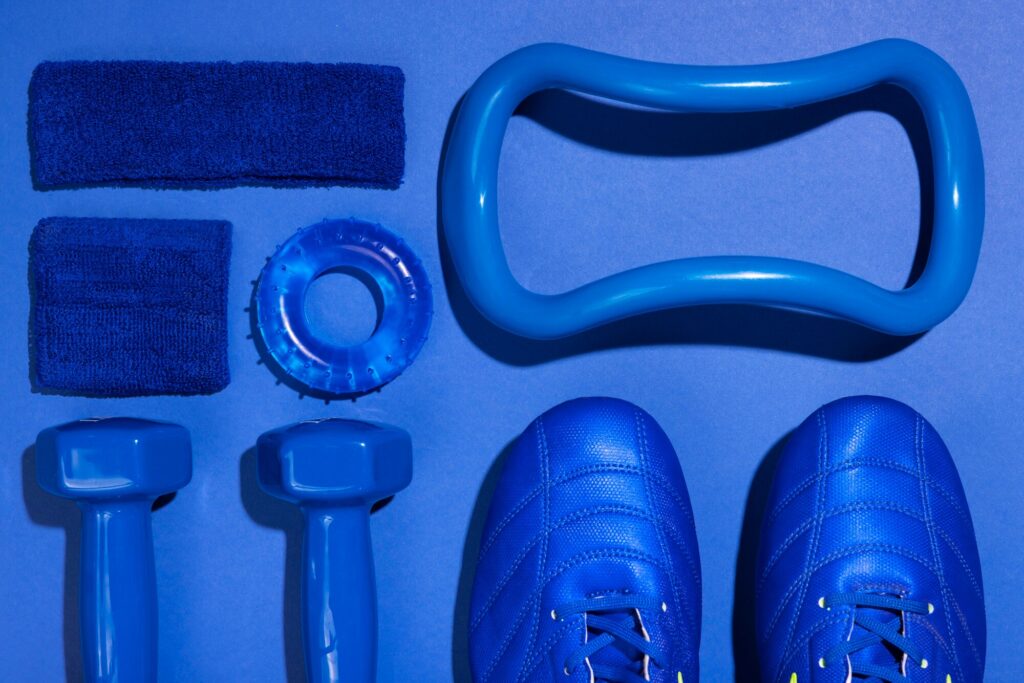
Creating a biohacking workout corner in your home is a great way to start getting in shape. Being physically fit has many benefits, including energy, improved heart health, and high self-esteem. It’s important to start with essential exercise equipment and gradually add new items to your home gym as needed. Let’s start with standard equipment for biohacking exercise.
Fitness Exercise Mat
A healthy body is flexible, and you need a mat to stretch and do yoga. You can also use it to do push-ups, squats, and other movements.
Exercise Bike
Cardiovascular health is key to getting fit; an exercise bike is small enough to fit in any room. The faster you pedal, the more energy you expend. You can increase the load and tone your legs at your own pace.
Free Weights
Good barbells and dumbbells are the foundation of strength and fitness. With this equipment, you can easily perform a variety of movements, including arm bends, overhead presses, and many others. Free weights are great for toning, supporting, and building muscle mass for biohacking athletes.
Gymnastic Wheel
The gymnastic wheel is considered one of the best tools for working on the abs. In addition to the abs, the muscles of the back, chest, arms, and legs are also worked on. In addition to the standard version with one wheel, there are other modifications: two or four wheels, a return mechanism, and an offset center of gravity.
Expander
An expander is a sports device that helps work muscles by compressing and stretching them. There are a vast number of expanders (wrist, shoulder, tubular, harnesses, and multifunctional). Still, we focused on one of the simplest and most universal — a harness and tape expander. The harness is better for working out arm muscles, while the tape is ideal for working on legs.
Wearable Fitness Trackers
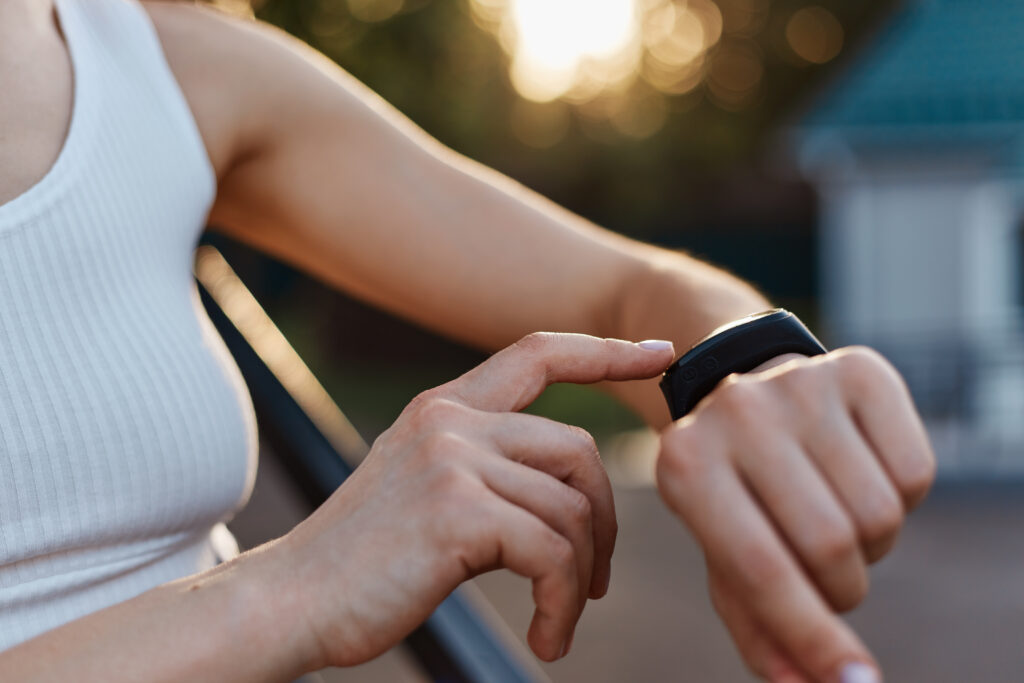
A fitness tracker is a convenient modern assistant for sports activities. The device reminds you to warm up and complete your activity circle, and also suggests breathing exercises and effective workouts. At the same time, the gadget helps you monitor your health, notifies you of calls and SMS messages on your phone, and has a long battery life.
Fitness Bracelets
A convenient device that tracks the number of steps using a pedometer, your heart rate using special sensors, the number of calories burned, and even your sleep patterns. They have a very comfortable shape, allowing you to wear the bracelet on your wrist for extended periods.
In addition to health monitoring, fitness bracelets have a built-in function to display notifications and incoming calls on the screen. Thanks to this, you no longer have to take out your phone to read a message or see who is calling you.
Moreover, in addition to the basic functions, fitness bracelets can have additional, exclusive features that allow you to count not only the number of calories burned, but also the number of calories absorbed by the body.
Smart Watches
These devices are larger in size and have a greater number of additional features. Smartwatches have more durable glass and straps, which give them a more expensive look. In addition to monitoring activity, smartwatches allow you to answer calls and make calls using the watch’s microphone and speaker, use voice assistants, play music, and even access the Internet.

Nutrition for Fitness Biohackers

One of the most popular diets today is the FMD, or fast-mimicking diet, which mimics fasting. It is also known as the biohackers’ diet, referring to people who believe in prolonging life through supplements and dietary changes. The modern scientific view is as follows: you need to undergo regular medical examinations, eat a moderate and varied diet with an emphasis on vegetables, fruits, greens, and grains, maintain physical and mental activity, and establish a healthy sleep pattern — and then you won’t have to torture yourself with fasting to keep your body working correctly and serving you as long as possible.
You need to change your diet and eating habits gradually. Any diet (prescribed by doctors or found on bloggers’ websites) and specific eating styles (such as intermittent fasting) require a smooth transition. Next, it’s all about technique: chew your food thoroughly and eat calmly, allowing yourself to savor the taste of unfamiliar foods. Step by step, you will be able to replace your old preferences with new, healthier ones.
It is also necessary to limit sugar consumption. The WHO recommends that sugar should not exceed 10% of the total daily calorie intake. Over time, this figure can be reduced to 5%. This is approximately 25 grams (six teaspoons) of free sugars.
It is essential to maintain a balance of water and salt. Water and salt balance is the ratio of salts (electrolytes) and fluids in the body. Their harmonious coexistence is important for normal cell function. The strategy for maintaining water and salt balance is based on four points:
- a balanced diet;
- eating fruits and vegetables that are rich in potassium;
- replenishing fluids lost during the day;
- reducing salt intake.
The World Health Organization website notes that an adult needs to consume just under 5 grams of salt per day (less than a teaspoon). WHO experts also advise choosing foods low in sodium (less than 120 milligrams of sodium per 100 grams of product), eating more fresh ingredients (such as raw vegetables and fruits), and using herbs and spices without salt to enhance the flavor of dishes.
There are no precise recommendations regarding water consumption. Much depends on climatic conditions, daily activity levels, athleticism, and individual physiological characteristics. A good guideline is 1.5–2.3 liters of water per day.
To Sum Up
All you need is the determination and desire to care for our health. Sports and physical activity are the way to a better version of ourselves. So turn on your favorite tracks, choose the right activity, and start moving towards your goals today with biohacking enthusiasts worldwide!
for subscribing!