


What is EWOT — Guide for Beginners
Breathing is a quite mandatory part of our lives. How often do you think about this process? Mostly, it happens without our participation and is part of the routine. After all, without oxygen and breathing, a person cannot function. But did you know that the breathing process during exercise can be improved? Biohackers often try to improve their daily activities, and breathing is no exception. During training, you can try EWOT (oxygen therapy) sessions. Such manipulations help improve the endurance and efficiency of your workout. And this affects the quality of life outside of sports. Studies show that supplemental oxygen during exercise in patients with chronic obstructive pulmonary disease increases the duration of physical tests. It also increases the time to fatigue compared to the same exercises without EWOT exercise.
Our experts have analysed the latest information about EWOT training and are ready to share their insights with you. In this article, we will learn more about the EWOT protocol and the equipment needed to try it. We will also discuss the safety of this procedure and how to prepare for it. At the end of the article, you will find a few books that will further immerse you in this topic.

Contents
Highlights
- EWOT is a training method where people exercise while breathing oxygen-rich air.
- During EWOT, higher oxygen levels help blood deliver more oxygen to tissues.
- This improves endurance, reduces fatigue, and supports faster muscle recovery.
- EWOT is most effective with cardio exercises like cycling or walking.
- Short sessions of 15–20 minutes, done several times a week, give best results.
What is EWOT
This abbreviation stands for “Exercise With Oxygen Therapy”. With this type of workout, a person receives greater oxygenation because they breathe air with a higher oxygen content. If the normal percentage is 20, in this case, we get 90-95% O₂. And the EWOT system has a historical background. The concept first appeared in the 1970s in rehabilitation hospitals. There, increased oxygenation was used for recovery from injuries, strokes, and chronic diseases. Today, such a treatment is increasingly used in biohacking and sports medicine to improve cognitive function, endurance and cellular metabolism.

How Does Exercise with Oxygen Therapy Work
During exercise, the body requires more oxygen than it can obtain through normal breathing. Our blood circulation increases due to rapid breathing. EWOT raises the concentration of O₂ in the blood, improving oxygen transport to the muscles, brain, and internal organs. When you increase the amount of oxygen in the air that you breathe in a short period of time while you exercise, it repairs the lung arteries and the capillaries, and it perfuses the tissue with oxygen. And this rebuilding of your own body helps you stay young and flexible, not only on the outside but also on the inside. Physiologically, this reduces lactic acid levels, accelerates tissue recovery, and increases mitochondrial energy production.
According to the Journal of Applied Physiology, increased oxygenation improves microcirculation and cellular metabolism after just 15-20 minutes of practice.
Benefits of Exercising With Oxygen
The main EWOT benefits are increased effectiveness of your physical activity. It is also worth mentioning that recovery after intense workouts is faster. By optimising energy metabolism, the endurance and strength of the entire body grow. Improvements in cognitive function have also been noted, as the brain also receives more oxygen. It is also important to note the benefits for blood vessels, as well as a reduction in inflammation. In addition, EWOT training can help people with chronic fatigue and reduced exercise tolerance. A study in the International Journal of Sports Medicine showed that training with supplemental oxygen improves VO₂ max and reduces recovery time by 25-30% compared to conventional training.

Types of Physical Activity for EWOT
This training method is suitable for a variety of exercises, but it is most effective for anaerobic exercise. You can try: fast walking, cycling, elliptical trainer, rowing, light running, breathing, and rehabilitation practices. Usually, one EWOT session lasts 15-20 minutes, and the optimal frequency is 3-4 times a week. Of course, exercising with oxygen can be helpful for weight training, too. Still, the most significant difference you will notice is in cardio.
How to Do EWOT at Home
The home format EWOT machine is suitable for those who are not trying oxygen therapy for the first time. To do this, you need to purchase an oxygen concentrator, a tank, a hose, and a mask. Before training, connect the system, turn on the oxygen supply, and perform aerobic activity for 15-20 minutes. The problem with this method is that you are essentially responsible for the procedure yourself, so it is better to ask professionals for help, at least for the first few times. It is also important to ensure that the room is well ventilated.

EWOT Equipment
To approach EWOT correctly, you need to understand how the system works and what you will need for it. These can be special barometers, concentrators, and masks. Each of these devices helps to increase the percentage of oxygen. Let’s take a look at the most popular ones.
Oxygen Concentrator (Generator)
This device separates oxygen from nitrogen and other gases in ambient air, producing a stream of air with a high oxygen content. Inside the concentrator, a filter system captures and retains nitrogen. It allows enriched oxygen to pass through to the reservoir and mask. The concentration of oxygen affects the saturation of arterial blood and, accordingly, the delivery of oxygen to the muscles during training.
EWOT Reservoir
This is a large bag or cylinder that stores oxygen from the concentrator before training. Such a concentrator produces oxygen continuously, but during exercise, it is important to maintain a reserve to prevent the flow from dropping during increased consumption. The reservoir acts as a buffer, smoothing out pressure fluctuations. When choosing, it is important to consider the reservoir’s volume, as the larger it is, the more stable the flow will be. The optimal range is 800-1200 litres for home and commercial systems. Usually, the material of such tools is composite fabrics with high air permeability.


EWOT Mask
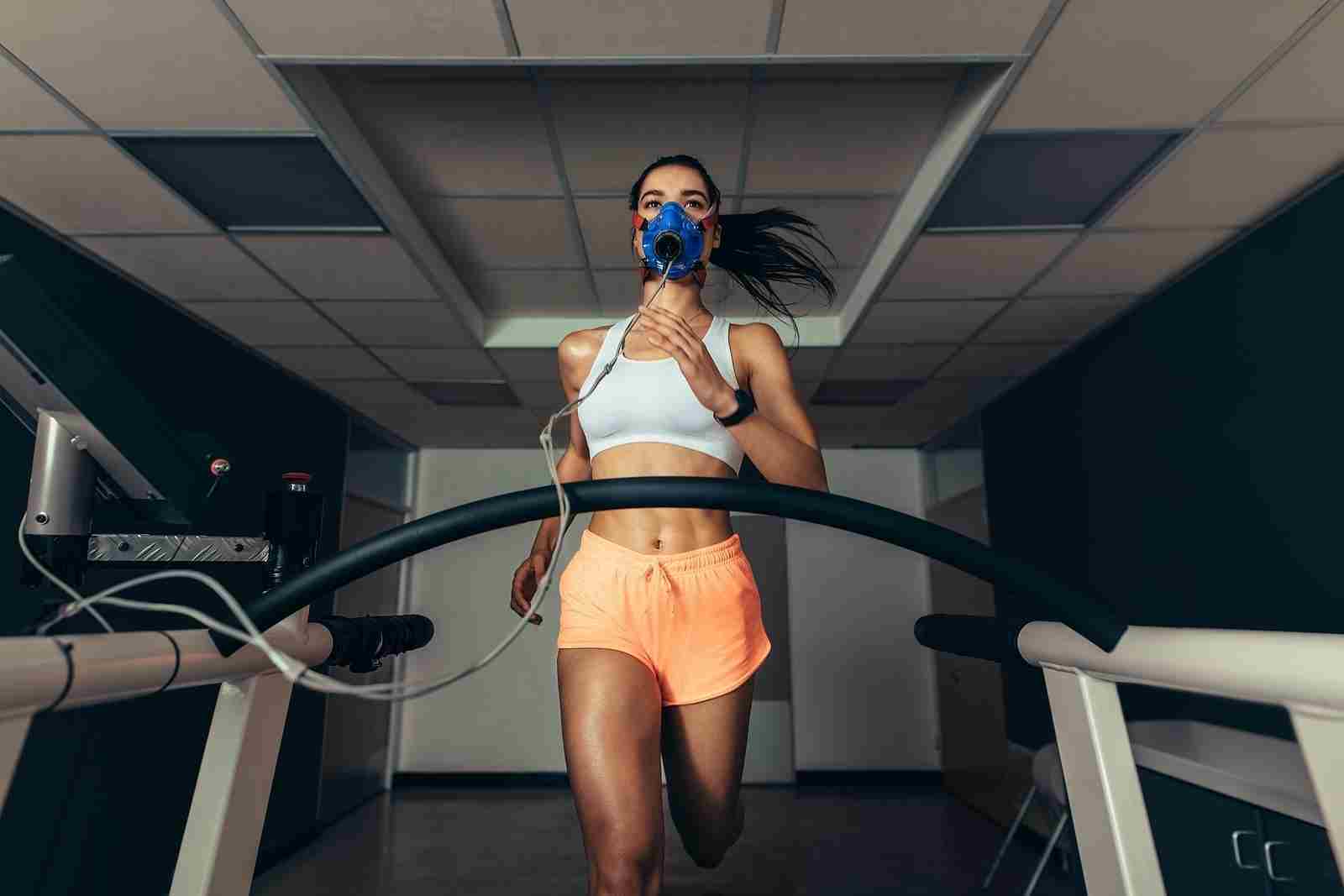
This is a mask through which you breathe oxygen during training. It differs from medical breathing masks in its airtightness, its valves to regulate airflow, and its comfortable fit. It is essential to choose such a mask carefully, as the effectiveness of EWOT depends on its airtightness. It is also crucial that there are no air leaks during this time. That is why the mask must fit your face completely. Medical silicone and soft seals are usually used for such masks. Choose options with adjustable straps to fully personalise the mask.
A Hose Connecting the Reservoir to the Mask
This flexible hose connects the reservoir to the mask. The stability of the oxygen flow depends on its quality. If it is too narrow or not airtight, the procedure will not be effective. This can be especially noticeable during the exercise’s intense phases. Choose hoses without PVC and latex to eliminate unnecessary allergens and odours. Also, make sure it is long enough so that your movements on the simulator are not restricted.
Training Equipment
And, of course, it is important to choose the right exercise equipment that suits you. Base your choice on your preferences and also take into account any injuries you may have. The most popular exercise machine is the treadmill, but it is far from the only one.
Good options for EWOT:
- Spin bike. This is an excellent option for beginners. It has controlled speed and steady breathing, which helps to improve endurance gradually.
- Rowing machine. Engages the upper and lower body, good for endurance.
- Elliptical trainer. Low impact on joints and steady breathing rhythm.
EWOT Reviews
There are plenty of reviews on how to exercise with oxygen therapy (EWOT) and its effects on the human body. Most of them you can find on YouTube, and some biohackers show how it works on themselves as well. For example Dr. Jason Sonners has his own channel where you can find information from beginners to advanced EWOTers. Dave Asprey, one of the leaders of the biohacking community, interviewed Brad Pitzele, who shared how EWOT changed his life. He was diagnosed with a serious illness, and EWOT helped him to renovate himself.
According to user reviews on Biohacker News, after 3-4 weeks of regular EWOT sessions, sleep quality improves, fatigue decreases, and concentration increases.
A few pieces of feedback from users who tried EWOT:
- “After COVID, it was hard for me to get back into exercise. EWOT helped me regain normal breathing and energy in two weeks.” Review from Biohacker.News
- “EWOT helped me improve my VO₂ max and reduce inflammation after a knee injury.” Biohackers Forum Review
- “I use EWOT after strength training. The fatigue goes away almost instantly, and my sleep has become deeper.” @NeuroRecovery, Biohackers Forum
Is EWOT Safe?
EWOT is a fairly safe practice. The main thing is to use the equipment correctly and take contraindications into account. Unlike hyperbaric therapy, the oxygen concentration here is moderate, and the pressure does not exceed atmospheric pressure, so the risk of oxygen poisoning is minimal. Before starting oxygen therapy, it is best to consult with your doctor to completely rule out any risks. Here are a few tips before you start EWOT:
- If you feel unwell, have a cold, pneumonia, or an ear infection, you should not resort to this therapy.
- Do not forget about hygiene, clean the equipment after each session.
- If you feel dizzy, lower the intensity or interrupt the training.
- Do not exceed 20 minutes per session.
EWOT Side Effects
Side effects are rare and are usually not related to the oxygen itself, but to improper use of the equipment or excessive exertion. The most common complaints are mild dryness of the mucous membranes, dizziness, and skin irritation at the point of contact with the mask. All of these can be eliminated by adjusting the duration and intensity of the training session and regularly disinfecting the equipment. A study by Nonoyama ML et al. (2007) reports that even in patients with chronic lung disorders, EWOT did not cause serious side effects, provided that SpO₂ levels and pressure were monitored.

Books for EWOT
To dive deeply into the topic, it is worth reading specific literature. Here are a few exercises from an oxygen therapy book for you.
- “Oxygen Multistep Therapy” Manfred von Ardenne
A work by a German physicist who first described the idea of multistep oxygen therapy, which later developed into EWOT. The author explains in detail the physiology of oxygenation, metabolism, and cellular respiration. - “The Oxygen Advantage” Patrick McKeown
A bestseller on how breathing practices and oxygen control affect endurance, stress, and brain function. Although the book is not directly about EWOT, it helps to understand the role of oxygen in athletic and cognitive performance. - The Science of Oxygen Therapy by Dr William Campbell Douglass
A practical guide to the use of oxygen therapy for medical and restorative purposes. Describes the results of using oxygen in rehabilitation and sports training.

Summary
As you can see, EWOT is an opportunity to broaden your understanding of your body and improve its condition. Such training is invaluable for capillary inflammation or any deterioration of the respiratory system. Although at first this procedure may seem difficult and even a few minutes may seem like an eternity, in the end you will achieve a completely new state of health. Oxygen therapy will also help you improve the condition of your brain and nervous system by increasing the percentage of oxygen in your blood and saturating your brain with it. In this article, we learned more about EWOT therapy and how to use it on your own. This procedure is considered quite safe, which makes it ideal for chronic diseases. It is precisely because of the low oxygen levels in certain tissues of our body that inflammation occurs; therefore, such O2 saturation will work on them.
The main thing is to remember a few basic rules that will help you improve your workouts:
- Start with 10-12 minutes and gradually increase the duration to 20 minutes.
- Use only certified concentrators and check the oxygen level (90-95%).
- Clean the mask and hoses after each session.
- Train in a well-ventilated room and monitor your heart rate with a fitness tracker.
- Do not attempt to increase the oxygen concentration above the recommended level.
- For maximum results, combine EWOT with quality sleep, proper nutrition, and moderate physical activity.
- If you feel tired or dizzy, stop training and rest.
for subscribing!