


AI-Powered Health Optimization: How Artificial Intelligence Is Transforming Longevity
The rapid advancement of AI is already transforming medicine, offering incredible benefits in disease diagnosis, treatment, and medical research. Healthcare professionals must integrate artificial intelligence into their practice while ensuring that these tools meet strict safety and efficacy standards. And people should be empowered to better manage their health through AI-assisted coaching, with the confidence that these technologies are reliable and that their personal health data will be handled with the utmost responsibility.
Highlights
- AI makes healthcare proactive — shifting focus from treating illness to preventing it through continuous, personalized data analysis.
- Genomic intelligence for longevity — artificial intelligence accelerates genetic research, helping decode aging and tailor treatments.
- Smart biohacking tools — wearables and AI platforms integrate real-time data to optimize nutrition, recovery, and performance.
- Personalized health revolution — machine learning transforms medicine into a data-driven system designed uniquely for each individual.

Contents
A staggering number — 129 million Americans — have at least one serious chronic condition. At the same time, 90% of annual healthcare spending (namely, $4.1 trillion) goes toward treating these physical and mental health conditions. According to some projections, this financial and personal burden will continue to grow, which is unacceptable to people. But there are solutions, because health depends not only on medical care or genetics. Artificial intelligence can be a powerful tool for both preventing diseases and optimizing their treatment, thanks to its high level of personalization and constantly improving algorithms.
What Is AI-Powered Health Optimization?
Health optimization using AI involves algorithms and machine learning to analyze medical data, diagnose diseases early, and develop personalized nutrition, exercise, or treatment plans. This is a new approach to biohacking, in which smart algorithms continuously analyze bodily data not just to treat illnesses, but to maximize energy and productivity. Conventional medicine is reactive; for example, we go to the doctor only when we’re already feeling sick. Optimization with artificial intelligence is proactive. As modern research in precision medicine shows, AI transforms medicine from a one-size-fits-all approach to one that’s personalized for you, helping to prevent bodily imbalances long before they arise.
Artificial intelligence technologies are widely used in the healthcare sector, including computer vision for analyzing medical images, machine learning and deep learning for processing big data, algorithms for genetic and epidemiological research, tools for developing new drugs, and so on.
According to Statista estimates, the market for AI solutions in healthcare is currently valued at approximately $28 billion. The market is expected to grow at an average annual rate of 37% in the coming years, reaching nearly $188 billion by 2030.
Why AI Matters for Longevity
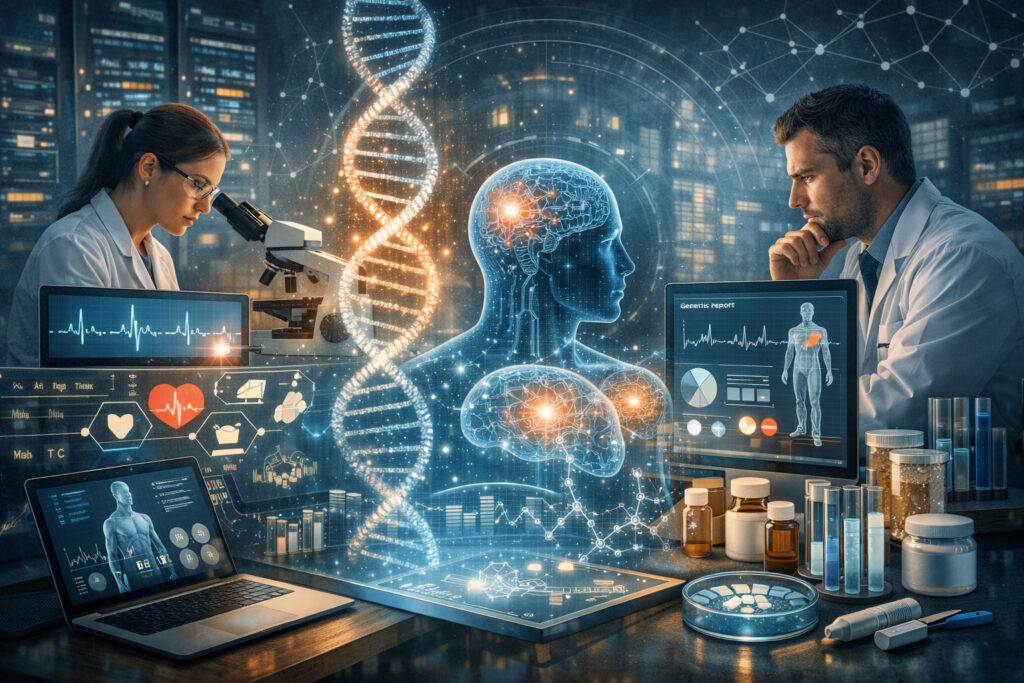
The human genome holds the key to numerous medical breakthroughs: this includes data on the sequence of molecules in genes, as well as on gene functions, interactions, and expression in the body, and so on. Biologists, geneticists, and data scientists around the world are working on genome research. This research requires processing entire exabytes of data, so studying the genome without AI models is practically impossible.
Scientists are already using specialized neural networks in genomic research to analyze DNA sequences. Artificial intelligence can process enormous amounts of data to identify correlations between protein properties and the genome. Analyzing a patient’s genetic information allows, at a minimum, for the best possible personalization of their treatment and provides guidance on inherited conditions and potential health risks. For example, in cancer research, Roche uses AWS HealthOmics to reduce analysis time from one year to three months. With AWS HealthOmics, they gain valuable insights from genomic, transcriptomic, and other omics data to develop more effective therapeutic solutions. In the future, genomic research will pave the way for treating the most dangerous diseases, which are currently considered incurable, thereby extending people’s lives, improving their quality of life, and advancing technologies for the treatment and prevention of many ailments.
Moreover, in healthcare, AI technologies help process the vast and diverse amounts of data collected by medical institutions, opening up a wide range of innovative possibilities. Medical staff can use AI applications to improve the accuracy and efficiency of their work and speed up decision-making.

Key Ways AI Is Transforming Longevity
|
Key Area |
How AI Is Transforming Longevity |
|
Personalized Nutrition |
AI analyzes complex health data to identify dietary patterns and nutritional strategies tailored to individual biological needs. |
|
Predictive Disease Risk Assessment |
AI detects subtle patterns in health records, biomarkers, and imaging data to identify disease risks before clinical symptoms emerge. |
|
Continuous Health Monitoring |
AI processes large volumes of physiological data to detect changes in health status and support early intervention. |
|
Biological Age Assessment |
AI integrates biomarkers and physiological data to estimate biological age and track aging processes more accurately than chronological age alone. |
|
Personalized Supplement Recommendations |
AI evaluates individual health profiles to identify potential nutrient deficiencies and guide targeted interventions. |
|
Exercise and Recovery Optimization |
AI analyzes physiological responses to physical activity to help determine optimal exercise and recovery strategies for healthy aging. |
How AI Analyzes Health Data
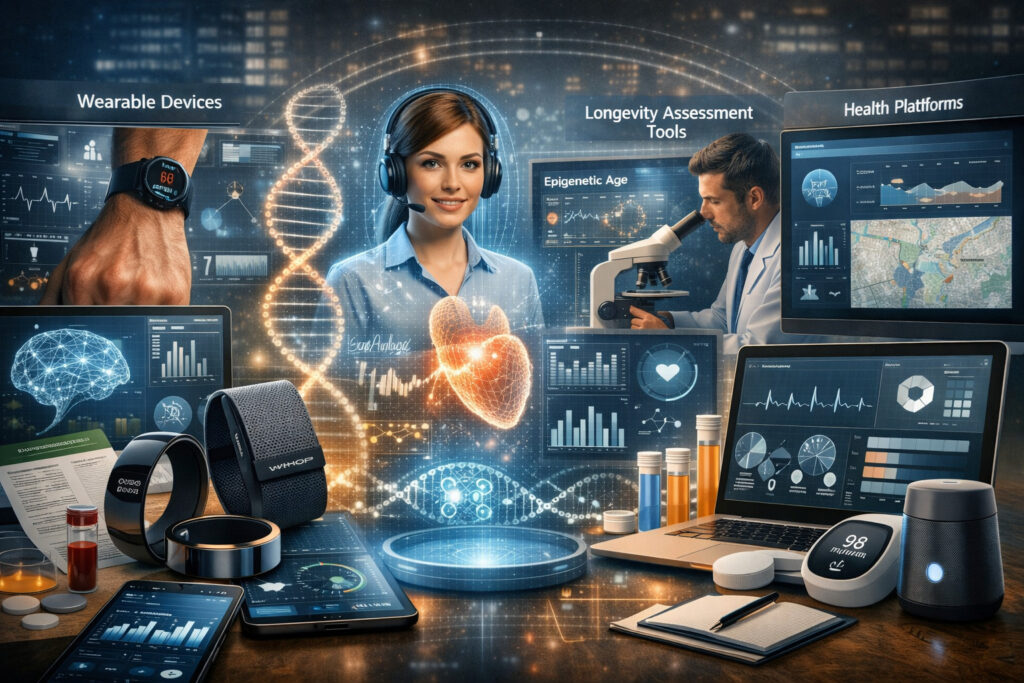
Typically, a doctor assesses your health using a traditional approach: you have a blood test, your results are within the normal range, you’re healthy. But artificial intelligence views health as a dynamic, continuous process, gathering vast amounts of data: your genetic code, the composition of your microbiome, sleep quality from your Oura ring, and your heart rate from your Apple Watch, for example. By analyzing this data, machine learning algorithms create an accurate digital model of you and look for microtrends that a person simply wouldn’t notice. For example, AI compares your metrics not to population averages, but to your own baseline. It understands exactly how a cup of coffee, work-related stress, or every hour of sleep affects your specific physiology. It helps your doctor create a personalized treatment plan for you.
This is best illustrated by the example of metabolism and nutrition. Let’s say you decide to have oatmeal for breakfast. According to general dietary recommendations, this is a healthy complex carbohydrate. However, as major studies in precision nutrition have shown, everyone’s response to the same food is unique. A standard fitness tracker will simply record that you had an active day, but an AI optimization system linked to a continuous glucose monitor (CGM) will reveal the bigger picture. It will notice that it was specifically after eating oatmeal that you experienced a sharp spike in blood sugar, followed by a crash in energy and brain fog. It will send you a notification that your metabolism is overloaded today due to yesterday’s lack of sleep. Add a spoonful of coconut oil and a handful of nuts to your oatmeal to slow down carbohydrate absorption, or swap it out for scrambled eggs with avocado. This is precision biohacking in real time.
Artificial intelligence helps optimize health by simultaneously analyzing multiple independent data streams: laboratory biomarkers, wearable device metrics, and genetic code. Machine learning algorithms integrate multiple medical parameters into a single predictive model.
Biomarker Analysis: the AI evaluates key laboratory markers over time and identifies their mutual influence, determining deviations from the individual’s optimal levels:
- ApoB (Apolipoprotein B): the AI analyzes this parameter, along with the lipid profile and inflammatory markers, to assess the risk of vascular changes.
- HbA1c (Glycated Hemoglobin) and Fasting Insulin: algorithms correlate these data to detect hidden carbohydrate metabolism disorders at an early stage.
- hs-CRP (High-Sensitivity C-Reactive Protein): the system monitors this marker to detect systemic low-grade inflammation, which affects the rate of aging.
- Omega-3 Index: AI calculates the exact level of fatty acids in cell membranes to personalize nutraceutical dosages.
Wearable Device Data: algorithms continuously process streaming data from smartwatches and rings, converting it into real-time recovery metrics:
- Heart Rate Variability (HRV): AI uses this metric to assess the balance of the autonomic nervous system and stress levels.
- Sleep Metrics: the system analyzes sleep-phase structure and body temperature to monitor central nervous system recovery.
- Resting Heart Rate: changes in resting heart rate serve as an indicator for the AI of overtraining or the onset of an inflammatory process.
- Activity Levels: algorithms correlate the volume of physical activity with the quality of subsequent rest.
Genetic Data Processing: genomic data requires analyzing exabytes of information on DNA sequences and gene expression. Specialized neural networks can instantly compare these sequences with the results of global clinical studies to identify hidden correlations.
Artificial intelligence interprets this complex information as follows:
- predicts individual risks of developing hereditary conditions before the first clinical symptoms appear.
- identifies genetic characteristics of metabolism and the absorption of macronutrients, vitamins, and medications.
- enables the selection of personalized preventive therapy options based on individual receptor sensitivity.
- assesses cells’ innate resistance to oxidative stress and physical exertion to develop precise protocols for longevity.
AI Tools Being Used in Health and Longevity Today
Using artificial intelligence in this way will make it possible to scale up and make accessible to everyone the vital benefits associated with improving daily habits and monitoring one’s health. Through personalized behavioral changes guided by artificial intelligence, we have a chance to finally reverse the rising trend of chronic diseases.
The modern precision biohacking market offers a wide range of tools that operate at the intersection of big data and predictive AI. These technologies can be divided into four key categories based on their role in analyzing and optimizing health.
- Wearable Devices. The technological foundation of wearable gadgets consists of optical heart rate sensors, accelerometers, and temperature sensors, from which a continuous stream of data is processed by neural networks.
- WHOOP: uses machine learning algorithms to calculate cumulative stress every second and assess the body’s readiness to handle stress by calculating the balance between the sympathetic and parasympathetic nervous systems.
- Oura Ring: uses miniature sensors for overnight tracking. AI models analyze sleep stages, temperature trends, and heart rate variability to generate a recovery index.
- Apple Watch: uses complex AI classifiers, trained on millions of ECGs, to detect signs of atrial fibrillation, as well as to automatically recognize activity types and detect falls.
2. Health Tracking Platforms (Data Aggregation Platforms). The main goal of these platforms is to eliminate data fragmentation across various devices and laboratories. The platforms use AI to integrate information via APIs, converting disparate metrics into a unified mathematical model to identify long-term correlations.
- InsideTracker: an AI platform that correlates data from blood tests, DNA tests, and wearable device metrics (such as Apple Watch or Garmin) to create a unified biomarker chart and provide personalized nutrition recommendations.
- Gyroscope: an aggregator that uses AI to combine information on heart rate, sleep, workouts, computer productivity, and locations, creating a comprehensive visual map of the user’s life and health.
- Wellatory: a service that uses AI algorithms to analyze heart rate variability data from dozens of different apps and gadgets to assess levels of clinical stress and fatigue.
3 . Longevity Assessment Tools. These tools are based on bioinformatics and predictive modeling. Neural networks analyze epigenetic markers, glycan profiles, or basic blood biomarkers to calculate a person’s biological age.
- Elysium Index / TruDiagnostic: AI-powered epigenetic age tests that analyze DNA methylation patterns and compare them to vast databases to determine the actual rate of cellular aging in the body.
- GlycanAge: a system that uses machine learning algorithms to analyze glycan molecules (complex sugars) in the blood, allowing for an assessment of chronic inflammation levels and the biological age of the immune system.
- PhenoAge / Aging.AI: AI calculators that estimate the aging trajectory based on standard blood biomarkers (such as albumin, creatinine, and glucose), identifying which specific body systems are aging faster than normal.
4. AI-Powered Health Coaches. This field is advancing thanks to large language models (LLMs) trained on rigorously vetted medical literature and clinical protocols. An AI coach has context: it knows your genetics and can view your current sleep patterns and activity metrics.
- Whoop Coach: a built-in text-based assistant powered by a large language model that analyzes a user’s individual workout and sleep metrics over months and answers specific questions about why performance may be dropping.
- Lumen: an AI assistant that works in tandem with a portable metabolic tracker (breath analyzer). The algorithm instantly determines what your body is burning at that moment — fats or carbohydrates — and generates a personalized daily meal plan.
- Ultrahuman / January AI: AI coaches that connect to continuous glucose monitoring (CGM) sensors. The algorithms predict how blood sugar will react to specific foods even before the user eats them, providing precise, real-time activity recommendations.
Pros and Cons of AI-Powered Health Optimization
|
Benefits of AI-Powered Health Optimization |
Challenges and Limitations |
|
More Personalized Insights – AI can analyze large amounts of individual health data to provide tailored recommendations. |
Data Privacy – The collection and storage of sensitive health information raise privacy and security concerns. |
|
Better Health Decisions – AI helps identify patterns and trends that may support more informed lifestyle and healthcare choices. |
Data Quality – AI systems are only as reliable as the data they are trained on and receive. |
|
Early Detection of Problems – AI can recognize subtle changes in health data that may indicate emerging risks. |
Accuracy Limitations – Predictions and recommendations are not always correct and may produce false positives or missed signals. |
|
Improved Healthspan – By supporting prevention and early intervention, AI may help people maintain health and function for longer. |
Human Oversight – AI should complement, not replace, healthcare professionals and clinical judgment. |
|
Better Use of Health Data – AI can integrate information from multiple sources, turning complex datasets into actionable insights. |
Ethical Considerations – Issues such as bias, transparency, accountability, and equitable access remain important challenges. |
|
More Efficient Healthcare – AI can automate routine tasks, improve resource allocation, and support faster decision-making. |
Implementation Challenges – Integrating AI into existing healthcare systems can be complex and resource-intensive. |
Can AI Help Increase Lifespan?
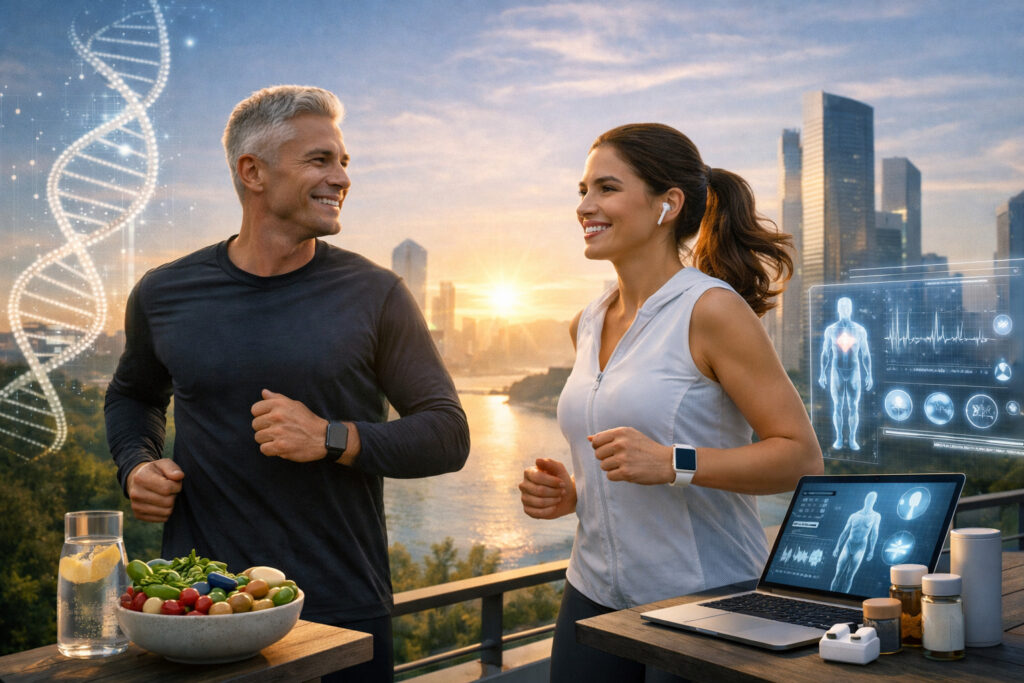
Nowadays, artificial intelligence is viewed not only as a tool for automation, but also as one of the most promising drivers of progress in the field of longevity medicine. Thanks to its ability to analyze vast amounts of data, AI helps scientists identify the biological mechanisms of aging more quickly, discover new drug compounds, and develop more accurate models for predicting disease. Some experts believe that it is precisely the combination of artificial intelligence, personalized medicine, and biotechnology that can significantly accelerate the emergence of methods capable of extending a person’s healthy lifespan.
Today, AI algorithms are already being used to analyze biomarkers of aging, assess biological age, identify risks of chronic diseases, and develop personalized recommendations for nutrition, physical activity, and prevention. This approach allows a shift from reactive to preventive medicine, in which potential problems are identified before the first symptoms appear.
Despite optimistic forecasts, experts emphasize that artificial intelligence alone is not a “cure for aging.” However, it has the potential to significantly accelerate scientific discoveries, improve diagnostic quality, and make personalized healthcare more accessible, but only in combination with human intelligence. This is precisely why AI is increasingly viewed as a tool that can influence not only life expectancy but also long-term health outcomes.

Practical Ways to Use AI for Health Optimization Today
Most of the discussion surrounding artificial intelligence focuses on how much time it will save us and how much more productive we will become. But AI has the potential to go far beyond efficiency and optimization, touching on something much more important: improving both the length and quality of our lives.
We have long been interested in how our behavioral habits can contribute to our health and the full realization of human potential. Sam Altman has learned from his own experience the importance of prioritizing five habits: getting enough sleep, eating right, exercising, spending time in nature, and meditating. This has helped him manage stress and anxiety, as well as remain calm in the most challenging situations.
AI diagnostics have already reduced error rates and improved patients outcomes. Now, by focusing artificial intelligence on promoting healthy habits and leveraging its ability to process potentially billions of data points, we gain a powerful tool for positive change, ensuring that technology works for our well-being, not against it.
While AI-driven longevity science is evolving, there are already practical ways to apply it in everyday health optimization:
- Track key biomarkers
Regularly monitor indicators such as glucose, heart rate variability (HRV), resting heart rate, and inflammation markers to understand how your body is responding over time. - Use wearable devices
Wearables can continuously collect physiological data, helping identify stress patterns, cardiovascular trends, and early signs of imbalance. - Monitor sleep quality
AI-powered analysis of sleep cycles can reveal how deep sleep, REM phases, and sleep consistency affect energy, cognition, and recovery. - Analyze recovery metrics
Instead of focusing only on training intensity, use recovery data (HRV, sleep, fatigue levels) to avoid overtraining and support long-term performance. - Follow personalized health recommendations
AI can synthesize lifestyle, activity, and physiological data to suggest individualized adjustments in nutrition, exercise, and recovery routines. - Review trends, not single data points
The real value of AI lies in pattern recognition over time — long-term trends are far more meaningful than daily fluctuations.
To sum up
The rapid advancement of artificial intelligence is already transforming medicine, offering incredible benefits in disease diagnosis, treatment, and medical research. Healthcare professionals must integrate artificial intelligence into their practice while ensuring that these tools meet strict safety and efficacy standards. And people should be empowered to better manage their health through AI-assisted coaching, with the confidence that these technologies are reliable and that their personal health data will be handled with the utmost responsibility. This collective effort, backed by robust privacy and security measures, has the potential to transform healthcare and biohacking, benefiting millions of people worldwide.
for subscribing!