


How Vibration Therapy Can Improve Your Health
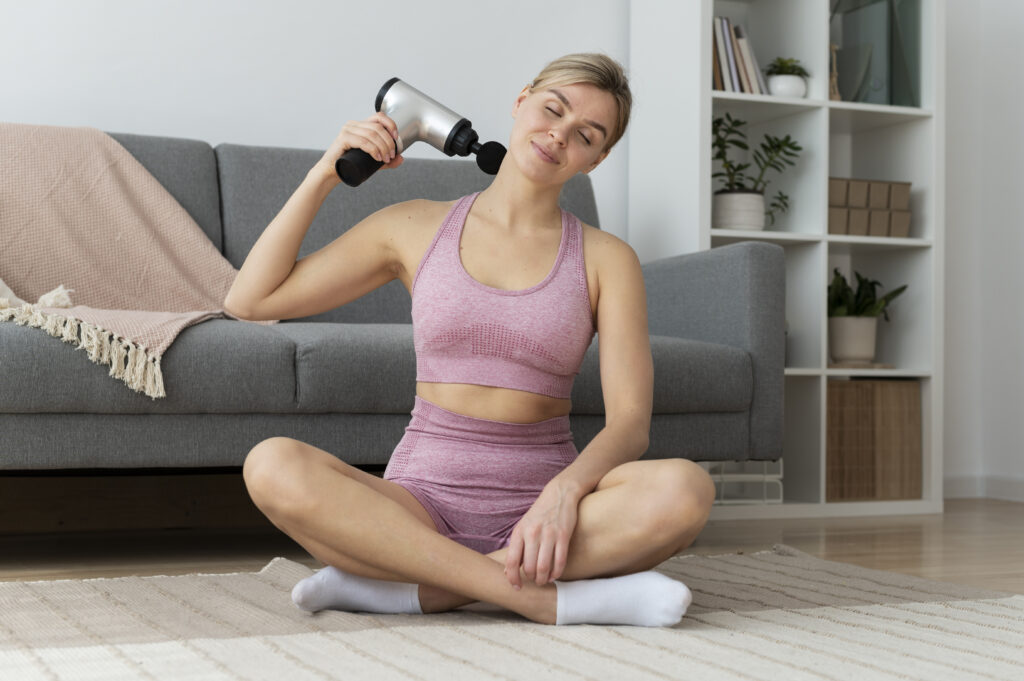
Looking to try vibration therapy? Learn everything about its benefits, risks, and best practices. Find expert tips for choosing the proper method for your goals! Every year, biohackers find new ways to change their bodies and improve their appearance. Vibration therapy has become one of the tools for this. It is a method of influencing the body with mechanical oscillations. The Medical Journal of Sweden writes, “In a 12-week randomized controlled trial involving 50 patients with non-specific chronic low back pain, low-frequency vibration therapy led to a significant improvement in postural stability and pain reduction.” Researchers also discuss the potential help of vibration therapy for people with diabetes.
This process positively affects the lymphatic system, promoting more efficient removal of toxins and excess fluid from the body. Vibration stimuli also help maintain and increase bone density, reducing the risk of osteoporosis. In addition, low-frequency vibrations are observed to have a calming effect on the body, reducing stress levels and activating the parasympathetic nervous system, which promotes overall relaxation and improved sleep quality. Our experts have analyzed all the data on biohacking vibration therapy and identified the most important points that everyone needs to know to use this technique and why everyone should examine it closely.
Highlights
- Vibration therapy uses mechanical vibrations to stimulate muscles, improve circulation, and relieve pain.
- There are whole-body and localized devices like massage guns, rollers, and vibration platforms.
- Low-frequency vibrations enhance blood and lymph flow
- High-frequency vibrations target muscle stimulation and bone health.

Contents

What is Vibration Therapy?
Let’s start with what is “vibration therapy”. This is one of the physiotherapy techniques that uses vibrations to stimulate muscles and tissues in our bodies. To implement it, a special device that creates vibrations is needed. This massage technique has been known since the 19th century, but it gained popularity after modern devices began to be used. Vibration therapy positively affects the central nervous system and muscles due to the transmission of mechanical oscillatory movements of the device of varying frequency and strength to the soft tissues of a human body: muscles, fascia, and tendons. There are sensitive nerve endings mechanoreceptors. They react to vibration, stretching, and touch.
Due to this, the muscles relax, and myofascial pain syndrome disappears. Vibrations increase blood and lymph circulation. The trophic function of tissues improves, and metabolism increases.
If we talk about scientific research on this topic, it is worth considering the following. In a randomized controlled trial involving women suffering from fibromyalgia, whole-body vibration training for 6 weeks led to an increase in the level of brain-derived neurotrophic factor, improved muscle strength of the lower extremities, aerobic capacity, reduced pain and depression, as well as improved sleep quality and overall well-being. Vibration massage will also be helpful for athletes. It increases the effectiveness of physical exercises during training and relieves tension and muscle fatigue. It promotes faster recovery after training and competitions. Dr Jena, a specialist in vibration technologies, notes that vibration therapy can improve blood circulation, reduce pain, and speed up recovery after training. In addition, vibration massage is performed on patients with paralysis at moderate vibrations.
Recently, massage devices have become popular in sports medicine and fitness and are widely used by doctors, trainers, massage therapists, and even athletes themselves. The production of such massagers has reached a new level, making these devices mobile, compact, and easy to use. Such massagers perform small-amplitude tapping and have a percussion-vibration effect.
This is a way to improve your health through vibrations with the human body. Such physical impact helps the body tissues create a specific movement that affects the entire body. Vibration therapies use specialized devices that apply therapeutic vibration waves at specific frequencies to the body. These waves cause rapid muscle contraction and relaxation cycles, which helps improve muscle strength and endurance and speeds up the removal of metabolic waste.
Types of Vibration Therapy
The technique can be applied to the entire body or localized in certain areas that require special attention. Everything depends on the individual’s needs and specific goals.
Whole-Body Vibration
Usually, such procedures are carried out by specialists with the whole body vibration machine. They can be prescribed for rehabilitation after injuries, bone fractures, and surgical interventions, including plastic surgery. The patient is standing on the platform, creating vibration throughout the body. Or lying down and having a specialist use a device to manipulate muscles and other tissues. The technique is used in sports medicine for the rapid recovery of athletes after training. The procedure consists of working with the deep muscles of the back, shoulder girdle, lower back, and legs. Throughout several sessions, it is possible to completely relieve muscle tension, release pinched nerves, and stimulate fiber regeneration.


There are two vibration therapy techniques: labile and stable. With labile, the specialist slowly moves the device handle over the target area, moving in the direction of the lymph and blood flow. The nozzle is fixed in one area for 3-5 seconds, after which it is moved to another. The treatment starts with the vibrating foot massage and goes through the lymphatic vessel zones to the upper body.
Vibration plate physical therapy is also popular. It is used both during the training process during stretching and after training during the recovery period, as well as compression micro-vibration devices for recovery procedures.
Some devices are suitable for procedures on the whole body:
- Power Plate is one of the most famous brands. It is used in fitness clubs, rehabilitation centers, and even in NASA;
- LifePro Waver is a more affordable home analog with different vibration modes;
- Hypervibe G17 Pro is professional with a high range of frequencies and amplitudes.
Localized Vibration Therapy
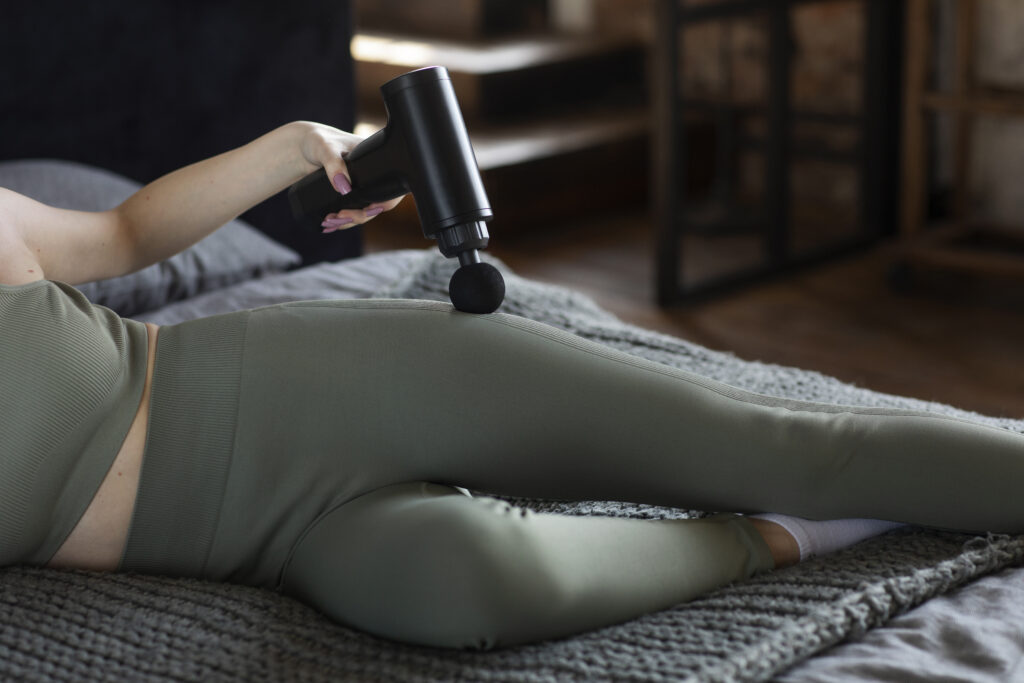
With local vibration therapy, the work concentrates on problem areas – for example, cellulite, fat deposits, muscle clamps, or post-workout recovery. The back, legs, buttocks, and abdomen are treated in a lying position, while other areas can be massaged while sitting on a couch or table.
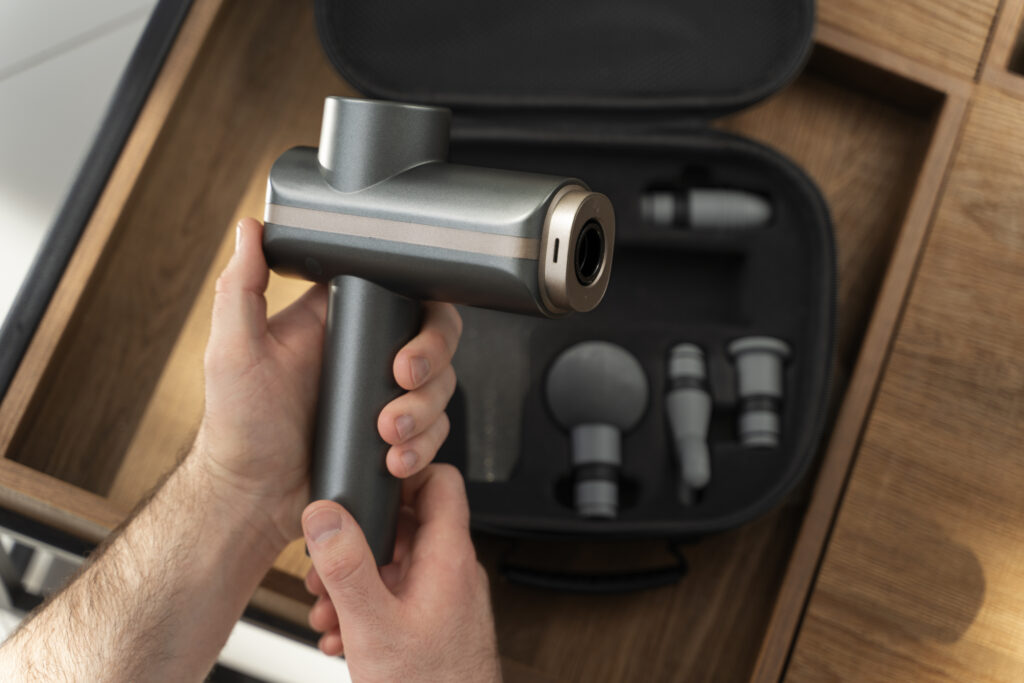
It is also worth paying attention to special vibration therapy devices that can be used independently. Such percussion massage devices are a real trend in sports medicine and massage. The following brands stand out: Theragun, Hyperice, Achedaway, and Myovolt.
Percussion guns or massage guns are simple and easy to use. They allow you to warm up your muscles, increase the range of motion before training, and relieve fatigue after. Or just relax after a hard day at work and sedentary work. But these are far from the only massagers for local therapy. Such devices are diverse. You can find guns with a round nozzle, leg and knee braces, and even pillows.
Here are some of the massage vibration machines you could pay attention to:
- Theragun by Therabody is an advanced device with adjustable depth and amplitude;
- Hypervolt – quiet and powerful, popular among athletes and physical therapists;
- Achedaway Pro – clinical grade with high vibration amplitude (up to 16 mm);
- Compex Fixx – combines shock and vibration therapy;
- Myovolt – wearable vibration therapy is possible thanks to this belt/elbow pad used for joint pain and muscle stimulation;
- Vyper 3.0 – vibration roller with 3 intensity levels;
- Theragun Wave Roller – foam vibration roller with Bluetooth control;
- VibraBall – vibration massage ball for working with trigger points.
Passive VS Active Vibration Therapy (Combining with Exercises)
We have figured out what vibration therapy is and what its options are. Now, it is worth talking about its types. Experts distinguish two:
- Passive vibration therapy. In this option, the patient remains motionless, and vibrations affect the body without his active participation. It is more aimed at relaxing muscles and relieving tension.
- Active vibration therapy requires movement. A person performs exercises on a vibration platform, which enhances the effect of training. The active type helps improve muscle tone and increase efficiency during training.

Low-Frequency VS High-Frequency Vibration
The vibration frequency affects the final effect of vibration therapy.
- Low-frequency vibration (20-50 Hz) excites mainly the mechanoreceptors of the skin, muscle endings, and autonomic nerve conductors. This leads to the expansion of muscle-type vessels, increased local blood and lymph flow, activation of tissue tropism, and a decrease in muscle tone.
- High-frequency vibrations (50-200 Hz) excite secondary muscle endings, which leads to the relaxation of mainly smooth muscles of internal organs and vessels, peripheral blockade of the pain focus, activation of the vasomotor center, increased vascular tone, activation of the hypothalamic-pituitary system and mobilization of the body’s adaptive reactions.
Simply put, the lower the vibration frequency, the deeper it penetrates. Pay attention to low-frequency vibration therapy if you need to affect internal organs and vessels. But high-frequency vibration is your best friend if your primary concern is muscle stimulation, coordination, or bone tissue.
Plus, research shows that both options are beneficial. A meta-analysis of 14 randomized controlled trials involving 559 patients found that whole-body vibration therapy combined with strengthening exercises significantly reduced pain, improved physical function, and increased knee extensor strength in patients with knee osteoarthritis. Both low-frequency (10–30 Hz) and high-frequency (30–40 Hz) vibrations were effective.
Benefits of Vibration Therapy
One of the procedure’s main advantages is its versatility. The benefits of vibration massage are noted in many areas. It is often combined with drug therapy and physiotherapy procedures.
In addition to the already listed improvements in quality of life and health, it is worth noting the benefits for posture, reducing swelling, and reducing the severity of scars and stretch marks. Specialists also noticed improvement in balance and coordination after procedures. Reducing discomfort with osteochondrosis and eliminating pain in various parts of the spine is possible.
The vibration massage is carried out to prevent diseases such as varicose veins, digestive system pathologies, and nervous disorders. It is also suitable for improving the condition of mature skin when the first signs of flabbiness and aging appear.
Therapy waves affect fat deposits. Under their influence, fat decomposes and is gradually removed from the body. Vibration activates metabolic processes, which helps burn calories more intensively and get rid of excess weight. Stimulation of lymph flow promotes rapid removal of excess fluid and toxins. You could also feel relief from chronic conditions using vibration therapy for pain. The benefits of hardware vibration massage for the body are achieved by ensuring the following processes in the body:
- stimulation of blood circulation, active supply of oxygen and nutrients to tissues;
- relief of spasms, tension, and pain in muscles; improvement of their mobility;
- stimulation of the lymphatic system, acceleration of the elimination of toxic substances;
- destruction of fat deposits, increase in elasticity and firmness of the skin;
- activation of immune processes in the body;
- eliminating symptoms of chronic fatigue, relieving stress and psychological tension, and providing a general effect, it benefits a person’s emotional sphere.
- stimulation of the production of one’s collagen and elastin.
Risks and Contraindications
Although vibration therapy is a valuable addition to your lifestyle, it still has contraindications, like many procedures. You should refrain from the method if your medical history includes:
- infectious diseases in the acute stage, accompanied by an increase in body temperature and general weakness;
- increased risk of thrombosis;
- severe forms of cardiovascular pathologies;
- renal failure;
- the presence of malignant tumors;
- varicose veins;
- the presence of extensive skin damage at the site of the intended impact.
Due to physical movements during therapy, diseases may worsen or cause a relapse, so it is better to consult specialists before starting the course.
Tips for Beginners
If you are suitable for vibration therapy and there are no contraindications, here are some tips for beginners that may be useful.
- Don’t forget to drink before and after the therapy. This will help the vibrations penetrate better and add elasticity to the skin.
- After the procedure, take a warm bath with sea salt. Sea salt contains magnesium sulfate, which accelerates the body’s cleansing from toxic substances.
- Refrain from heavy food a few hours before the procedure and immediately after. You should avoid eating flour products, fatty meats, sweets, alcoholic, caffeinated, and carbonated drinks, as they slow down the metabolism and can cause dehydration.
- Gradually increase the intensity. Do not immediately take the maximum. Vibration therapy is not a sprint but a marathon. In order not to leave bruises on the body and get the maximum benefit from the procedure, let the body get used to it. Usually, one procedure takes 15-25 minutes, starting with 10 low-intensity vibration therapy. When you feel ready, increase the intensity and frequency of sessions.
- Listen to your body. If you experience discomfort during a session or notice a deterioration in your health after starting therapy, consult a doctor.
Summary
As you can see, vibration therapy is an interesting and growing trend in biohacking. In this article, we have analyzed different types of therapy and concluded that each deserves attention. It all depends on your goal.
We have looked through the main types of therapy – local and general, passive and active, and the differences between low- and high-frequency vibration. Research results show that two kinds of frequencies have a positive effect: low-frequency therapy helps improve lymph and blood circulation, reduces stress, and improves sleep. At the same time, high-frequency is effective in stimulating muscles and strengthening bone tissue. Thus, the appropriate type of therapy depends on specific goals. Wearable vibration therapy and handheld devices are great for developing your muscles after a workout and giving pain relief to your body. They are portable and suit almost everyone.
After considering the possible risks and benefits of the method, we can conclude that consultation with a doctor for vibration therapy is mandatory. Despite the benefits, there is not enough confirmed data on the effect of vibration on internal organs in chronic diseases, so you should be careful. Here are a few tips to make your sessions more effective:
- Start with low intensity and gradually increase the load.
- Drink water before and after the procedure to improve the effect.
- Avoid heavy food before the session and listen carefully to your body.
for subscribing!