


Personalized Biohacking Health Plans: How to Build a Plan for Your Goals
Quite often, people who want to improve their health are faced with numerous optimization plans and specific steps on how to do so. This is particularly evident in the areas of nutrition, exercise and supplements. It is often thought that 2-3 health plans can easily work for everyone, but this is not entirely true. The biohacking and medical communities are increasingly coming to the conclusion that the more personalized your approach to health is, and the more precisely it is tailored to your habits, the greater the benefits it will bring in the future. Copying someone else’s routine may be ineffective, as each of us has our own pace of life and nutrition habits. Genetic traits, which vary from family to family, are also a factor worth paying attention to. Furthermore, some people start tracking their metrics whilst already in fairly good physical shape, whilst others are only just beginning their journey towards change. Each of these situations requires a different approach. The main rule to follow is: Goal → Measure → Optimise → Track → Adjust. It helps you define the precise goal of your health plan and, going forward, achieve results more efficiently.
Highlights
- Learn how to build a personalized biohacking health plan based on your unique goals, habits, and health data.
- Discover the Goal → Measure → Optimize → Track → Adjust framework for sustainable health improvement.
- Explore the best biohacking tools, biomarkers, and wearable metrics to track meaningful progress.
- Avoid common biohacking mistakes and create a long-term plan focused on sleep, nutrition, fitness, and longevity.

Contents
Personalized biohacking plan at a glance:
- Define your main goal
- Establish your baseline
- Choose the right biohacking tools
- Build your foundation first
- Add targeted interventions
- Track results and run small experiments
What Is a Personalized Biohacking Health Plan?

Biohacking is a way to improve your health and get the most out of your body. More often people in this community come together to search for the best optimization and quality longevity. To do this, experts review strategies, test new supplements, and invest large budgets to find a unique formula. But increasingly, the community is coming to the view that the most effective way to improve one’s health is personalized. The better you know your body and understand its strengths and weaknesses, the easier it is for you to create a plan to maintain your health.
It is also worth noting that there is a difference between maintaining a healthy routine and a data-driven approach. If the first option is based more on a set of known facts, such as taking 10,000 steps or 8 glasses of water per day, then the second takes into account solely your performance and is also based on DNA tests. This makes it possible not to drink vitamins and supplements blindly for example, but with an understanding of their deficiencies. In long-range projection, such an approach provides a more stable health picture and allows predictions of condition not only after a week, but also for several years. Still, it’s important to remember that this is a potential benefit, but you should always consult a professional and not build a personalized plan on your own.




Step 1: Define Your Main Goal
If you want to improve your overall health and don’t understand a specific goal, this may not be the most productive strategy. The first step in biohackers for beginners is to realise what is your main routine inconvenience. In this way you are more likely to scatter everything at once, losing the common vector. At the beginning of building your biohacking personalized plan, it is best to focus on one or two goals. Here are a few options that can help you decide:
- Improve sleep
- Increase energy
- Improve fitness
- Reduce stress
- Improve metabolic health
- Support healthy aging
- Improve cognitive performance
For example, you chose to improve your sleep and get rid of stress. You try to go to bed at the same time, remove screen use for hours before sleep and drink magnesium as an auxiliary supplement for both purposes. This is how you translate your wish into action. Such actions help you change your routine and see the results later.
Step 2: Establish Your Baseline

After setting a goal of your biohacking health plan and starting to work on it, you can add supporting materials. This will help you improve the efficiency of your actions and track results in more detail. There are several data points to explore. Each of them helps with a specific goal.
Lifestyle Data
These are basic indicators to personalized health optimization. Some of which do not even require assistive devices. So you can easily track your diet and exercise routine with a journal or special apps. Here are the metrics that relate to the data line:
- Sleep duration
- Exercise
- Nutrition
- Stress
- Resting heart rate
Health Data
This is data that may be useful to your therapist for creating a health optimization plan. They can be measured in special laboratories. Such data need not be interpreted on their own, as it requires additional education in medicine and sports. Here are a few examples of such data:
- Blood pressure
- Weight/body composition
- Relevant blood biomarkers
Wearable Data
You can measure these indicators with bracelets, rings and other special gadgets. They can be both for a permanent nose and combine multiple reading detectors, as well as single point detectors. For example, special sleep bandages will help you know your sleep metrics. They should only be worn during sleep. There are also permanent items to wear that will be with you both during curling and in the shower. Here are a few key dates you can choose:
- HRV
- Resting heart rate
- Sleep metrics
- Activity
Don’t track all your metrics together, especially if you’re just starting out on a personalized longevity plan. Better to spend time and attention on the three key metrics for your goal. This way, you won’t get confused and will get maximum benefit from optimizing your body.
Step 3: Choose the Right Biohacking Tools
For a gadget to benefit you, it must match your goal. Not everyone, and not always, needs complex, expensive devices. Look at the data you can get from this tool and which biohacking goals it may achieve.
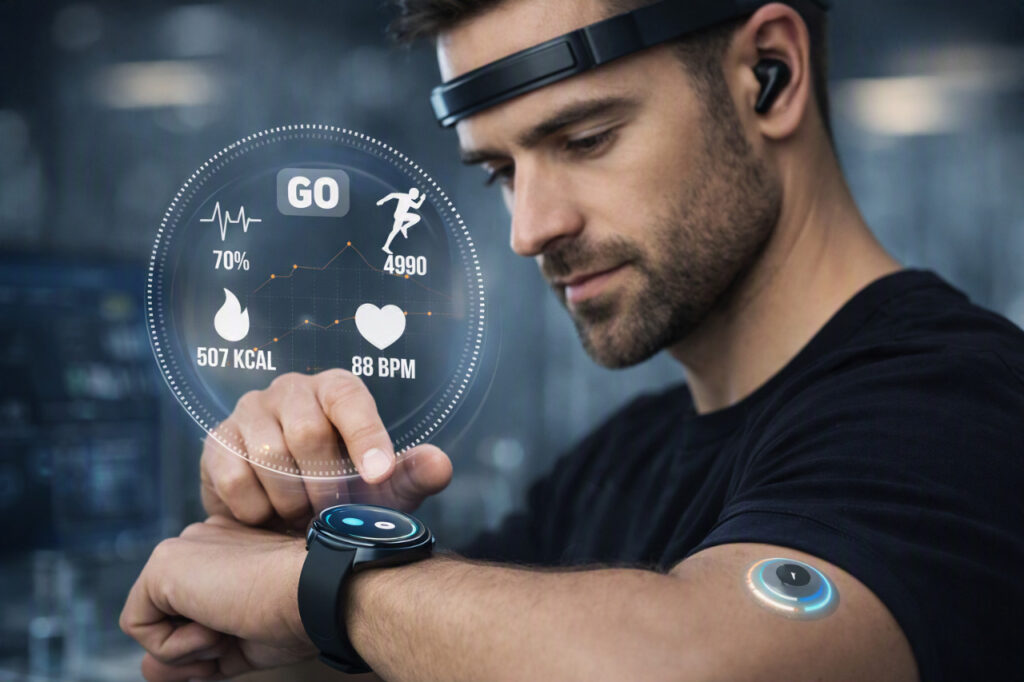
- Wearables – help you in consistency of health tracking. This gives a complete picture and helps you understand at which moments of life your stress is rising.
- Sleep trackers – designed to improve the quality of your sleep, as well as track each phase.
- CGMs help track blood sugar levels and identify when they significantly increase.
- Blood testing – helps you get an overall picture of your body. They show which processes you should pay attention to and how better to adjust dietary principles.
- Biological age testing – these measures provide an understanding of your biological age and how quickly the body ages. So you can correct certain habits to slow down the process.
- Nutrition tracking – helps you understand your eating habits and why you are gaining or losing weight.
- Fitness testing – allows you to understand what load your body needs. And also adjust your weekly workouts.
Step 4: Build Your Foundation First
One should not aim at complex schemes and a large number of little-known experimental methods such as the injection of peptides or supplements. First, it is worth paying attention to the basic parts of biohacking strategy such as:
- Sleep
- Nutrition
- Exercise
- Stress management
- Recovery
- Social connection
Any advanced methods should follow the above. The fact is that expensive technology and equipment cannot replace a well-built, healthy routine. They may be useful as additional tools, but the main work is still to be done exclusively by you, the women.
Step 5: Add Targeted Interventions

Suppose that you already understand your goals and have figured out which basic habits you should acquire or change. Now let’s try to identify more precise and concentrated implementations. This helps to get the most out of planning and improve future performance. Scientifically proven methods include strength training to maintain muscle mass and cardio loading in the second zone to develop mitochondria endurance. To achieve the maximum effect, it is necessary to properly dose the load and only choose time-tested tools. Exercise strength not only strengthens the bones, but also significantly increases the overall sensitivity of tissues to insulin. Zone 2 exercises activate fat exchange and lay a solid foundation for the longevity of your cardiovascular system.
Sleep optimization helps improve overall body health and cognitive function. The best way to wake up and sleep at the same time is to help your body build a clear discipline and remove unnecessary stress. Also worth noting is the amount of light before going to sleep, especially blue light from screens. It has an adverse effect on melatonin production and further sleep. For this, you can add to the sleep gadgets special glasses that block blue light. In the morning, try to introduce a contrast shower into your routine. Thermal swings help train blood vessels, improve blood flow and immunity, and provide energy.
It is also worth paying attention to the diet. Even if the body does not care what time it is, a certain schedule works better for your brain. You should also be careful with the use of substances. Interventions such as taking complex biological additives or extreme starvation are still in the category of developing techniques. Before adopting any new habits, it is important to clearly separate basic medicine and experimental approaches.
Step 6: Track Results and Run Small Experiments
The concept of individual N-of-1 studies involves conducting a scientific experiment. In it, you, as the primary and only subject, are given different treatment options. During the first stage, you record your baseline health and collect baseline data. Then, you consciously change just one selected variable in your usual lifestyle. This could be a sleep schedule, the addition of gadgets, a specific diet, or an exercise plan. After this, your health outcomes are assessed. Throughout the entire trial, you carefully monitor a strictly defined and relevant marker of effectiveness. Subsequently, a specialist or you yourself analyze what worked and which intervention proved most effective. This approach ensures personalization, objectivity of results, and demonstrates significant practical benefits. Any new intervention must be given sufficient time to produce real biological changes. At the end of the experiment, you compare the obtained data with the baseline data and make a final decision
Here is the potential scheme:
- Establish a baseline.
- Change one variable.
- Track the relevant metric.
- Give the intervention enough time.
- Compare results.
- Decide whether to continue.
Still, do not introduce 5 new habits into your life. This blunts the results and gives an incomplete picture, as you don’t understand what exactly caused the change. Your body may react to a specific supplement, diet change or new exercise regimen. Without isolating one variable, you risk drawing false conclusions and wasting resources. Clear adherence to the protocol of successive steps ensures the safety and accuracy of your personal program.
Example Personalized Biohacking Plans
|
Goal |
What to Track |
First Steps |
Advanced Tools |
Evidence-Based Recommendation |
|
Better sleep |
Sleep duration, sleep consistency, resting HR, HRV |
Consistent sleep and wake schedule, regular daylight exposure, reduce evening light, manage caffeine timing |
Sleep wearable, sleep-stage tracking, sleep-environment monitoring |
Prioritise consistent sleep habits and sufficient sleep duration before using advanced tracking devices. |
|
Better fitness |
VO₂ max, resting HR, strength, recovery |
Regular aerobic exercise, progressive strength training, daily movement |
VO₂ max testing, performance testing, advanced fitness wearables |
Build a sustainable combination of aerobic and muscle-strengthening activity which suits you day to day. |
|
Metabolic health |
Fasting glucose, HbA1c, waist circumference, triglycerides |
Balanced nutrition, regular exercise, adequate protein and fibre |
Continuous glucose monitor (CGM), advanced metabolic blood panels |
Focus first on regular physical activity, balanced nutrition and sustainable lifestyle habits rather than relying on continuous monitoring. |
|
Healthy aging |
Blood pressure, lipids, glucose, HbA1c and other relevant biomarkers |
Regular exercise, balanced diet, sufficient sleep, stress management, avoiding smoking |
Biological-age testing, DEXA scan, comprehensive biomarker panels |
Use established health and lifestyle measures as the foundation; advanced biological-age tests should complement, not replace, standard health assessments. |
|
Better focus |
Sleep quality, productivity, attention, cognitive performance |
Adequate sleep, regular exercise, structured work periods, reducing distractions |
Cognitive-performance testing, reaction-time tracking, digital cognitive assessments |
Improve sleep, physical activity and daily routines first; use cognitive tracking as an optional tool rather than a requirement. |
Common Biohacking Mistakes
Quite often, biohackers miss the key points that can make a health plan less effective and its optimization less. For example, one such mistake is to ignore sleep and adequate food. These simple points are fundamental in the overall picture of the organism’s work. Sleep is free and a large number of studies have shown that it is most important for the functioning of an organism. So it’s better to make time for him sometimes than to try too many interventions at once. This in turn can worsen your performance.
Some studies have shown that treading your body data too closely can lead to anxiety, which increases stress levels and directly affects the quality of your health. Nor should a single measurement be treated as a diagnosis. The same applies to overinterpretation of wearable data. Your physical performance can change over the course of a week, and that is perfectly normal. Our world does not create ideal conditions every day. We can work more or have more flights, travel time and so on. This is especially true for women whose hormonal background changes throughout the month, during periods, ovulation and luteal phases. Therefore, one should not diagnose oneself on the basis of metrics. It is better to consult a specialist if you feel that certain changes need to be checked.
Be careful with your supplies. Sometimes we spend too much money and take it just because some social-media blogger said that his hair grew and his skin improved from this bank. But it’s important to understand the real goals when taking food supplements. For example, you need to close certain deficiencies or level out your mental environment. You must understand what each substance you take is intended for. Trending is not central to improving our health and building a long-running plan for optimizing health.
How to Keep a Biohacking Plan Sustainable

Now that we know how to build a biohacking plan, we will figure out how to stick to it. The most important thing to understand is constant action. You just create a new routine in your life and stick to it. Once your brain realizes that this is a regular thing, it will be easier for you to think about the optimization plan.
- Try to keep it simple, don’t just beat up on everything. You’ll just get confused and give up without starting.
- Set a mandatory day for review progress. This will give your brain a sense of control and completion. As if at the end of each month you are rewarded with an understanding of how your condition has changed.
- Remove interventions that provide no meaningful benefit – if after a few months some principles of the plan do not work, don’t be afraid to change them. You may not be suitable for certain health techniques based on your individual characteristics.
- Focus on long-term health rather than short-term optimization – best to look at the future. Don’t chase after the health optimization tools that offer you lightning fast results. More importantly, how your body will feel in 5-10 years.
- Adjust the plan as goals and circumstances change. Consider how your behavior, goals, habits, lifestyle and environment are changing. All of these factors change the biohacking plan. Remember that your body and you yourself are not a photo, it changes as your state is not static.

As you can see, it doesn’t take much effort and not a lot of money to create an effective personalized longevity plan. It is enough to understand several factors:
- Your goal
- Ways in which it is achieved
- The tools you can use to achieve it
- Discipline and built routine that will like and suit you specifically
Remember that the best biohacking plan is not the most complicated one. It is the one built around your biohacking goals, measured objectively, and adjusted based on results. Don’t try everything at once, make your program more complicated gradually, aware of each step. If you have difficulty creating such an approach on your own, contact a specialist. Especially when it comes to blood tests, biomarkers and everything related to medicine. You shouldn’t decipher the test results yourself. Do not prescribe treatment or diagnose yourself. Sometimes, the best thing for your body is to allow it to sleep and do enough exercise with a good diet.
for subscribing!