


Full-Body Stretching Exersices and Tips
Stretching is a special complex aimed at training the entire muscular framework of the human body and is a subset of aerobics. Stretching exercises were in demand in ancient Rome. As a separate type of sports direction, stretching was formed in Sweden in the 1950s. Now, its popularity is only slightly inferior to yoga. Let’s look at the usefulness of stretching, what kind of stretching it is, and how to start it correctly.
Highlights
- Regular stretching reduces cramps, injury risk, and improves posture.
- Dynamic stretches are best before workouts to warm up muscles.
- Static stretching after training boosts recovery and flexibility.
- PNF stretching is the most effective method to gain deep flexibility.

Contents
What is Stretching?
The name “stretching” comes from English, generally. In America in the 80s of last century, under this term, circular gymnastics was popular for weight loss with elements of stretching. Even later, medics recognized the usefulness of such exercises for recovery from injuries.
Now, stretching is included in mandatory training programs before and after the main load, as it has been proven that the maximum result human muscles give out is not due to their volume and strength but due to elasticity.
The main goals and benefits of stretching can be described in several points:
- Reducing the risk of injury. As the ligaments and muscle sheath lose elasticity with age, the human body becomes susceptible to various kinds of injuries. Sometimes, an awkward or sudden movement with a loss of balance is enough to lead to dangerous consequences.
- Getting rid of cramps. Stretching becomes a real salvation for people who suffer from night cramps in their legs. After a week of regular classes, they got the result, although the struggle with the ailment only brought short-term fruits. After a month’s course in the gym, they can conduct short 15-minute sessions twice a day at home and forget about their problem forever.
- Productive workouts. Stretching is important for muscles to work productively. In any sport, it is the basis of proper training. Stretching allows the body to utilize muscle reserves while reducing the risk of injury.
- Good posture. Stretching allows you to evenly work the back corset, abs, and lower back. Static exercises make muscles smooth and elastic and evenly distribute the load on the spine, allowing it to maintain symmetry. In this way, scoliosis at an early stage and pinches that make the figure deform sideways are corrected.
- Slimness. Exercises aimed at stretching muscles also help fight fat deposits and lose weight. The body is better supplied with blood and oxygen. Thanks to this full “nutrition,” muscles become more relaxed, and the limbs and waist, on the contrary, are thin. The best result is a combination of stretching and cardio exercises.
- Prevention of joint diseases. Regular exercise reduces the risk of arthritis, enriches joint tissues with oxygen, improves mobility, and reduces salt deposits.
- Strengthening immunity and stress resistance. Complexes of exercises normalize sleep, make you less sick in the off-season, and easily tolerate viruses. The constant influx of fresh blood and oxygen to the tissues increases the release of endorphins, allowing you to forget about bad moods.
Types of stretching
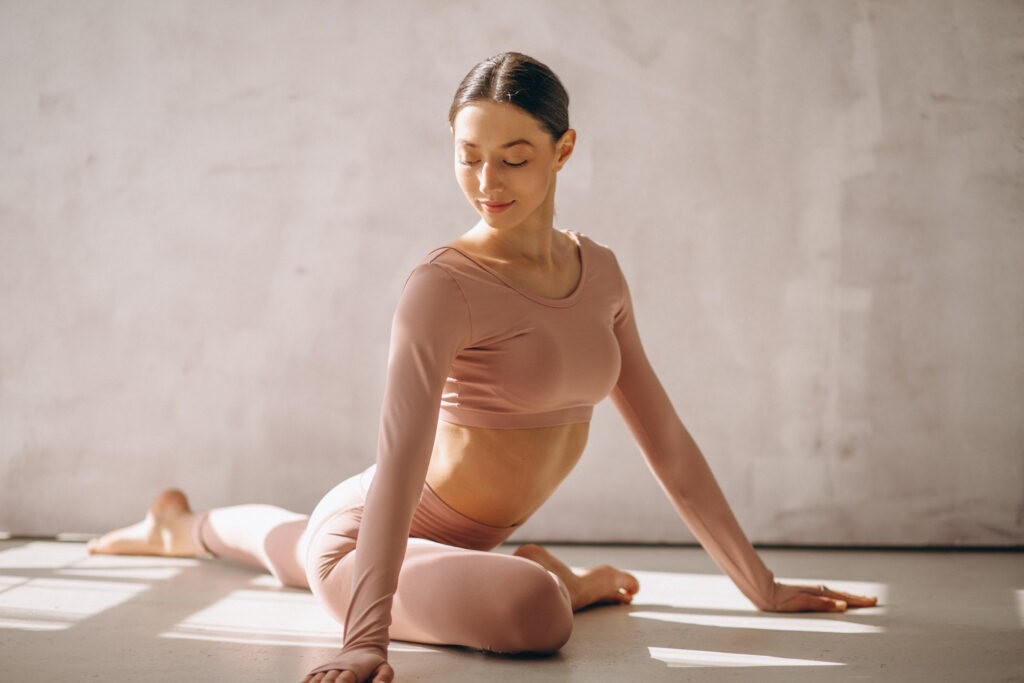
Stretching includes three sets of stretching exercises:
- static;
- dynamic;
- PNF stretching.
Stretching owes its origin to the first type. Static stretches full body smooth, slow movements with moment durations of up to a minute formed their basis. They come to the forefront during the body’s recovery after injuries and childbirth, during pregnancy, to obtain maximum elasticity and deep workout of the entire muscle skeleton and tendons. They are considered to be the most effective.
The second type is performed with a certain amplitude, creating the effect of a sprint with the completion in the static element of the rack.
Proprioceptive neuromuscular facilitation (PNF) stretching relies on reflexes to produce deeper stretches that increase flexibility. PNF stretching can improve your range of motion or ROM. It can also boost your muscle flexibility and strength. By the way, PNF is a therapeutic approach that promotes the response of the nerve impulses to recruit muscles through stimulation of the proprioceptors.
Also, complexes can be aimed at one muscle group and several at once. It is the alternation of all types that gives an effective result in losing weight and fighting cellulite. What flexibility training to choose? Here is a tip!




Choose Dynamic Stretching
- When: before a workout or athletic activity.
- Why: warms up muscles, increases heart rate, improves range of motion and blood flow.
- Muscle stretching exercises: leg swings, arm circles, walking lunges.
Choose Static Stretching
- When: after a mobility workout or during cool-down.
- Why: improves flexibility, helps muscles relax, and reduces soreness.
- Muscle stretching exercises: touching your toes, quad stretch, seated hamstring stretch (held for 15–60 seconds).
Choose PNF (Proprioceptive Neuromuscular Facilitation) Stretching
- When: for advanced flexibility training, ideally with a partner or coach.
- Why: one of the most effective methods to increase flexibility and strength.
- Muscle stretching exercises: contract-relax stretches (e.g., hamstring stretch with partner resistance).
Benefits of Body Stretching
All biohackers and professional athletes resort to stretching. Thanks to stretching, the muscles of the whole body are warmed up evenly, the male organism adjusts to greater efficiency in strength complexes, and high results are achieved in training. In addition to weight loss and tighter skin, the exercises will allow you to:
- get rid of cellulite;
- work all the muscles of the body;
- perfect posture, firm buttocks;
- improve flexibility;
- improve metabolism and blood supply;
- increased metabolism;
- even muscle loading and muscle definition;
- increased blood circulation prevents stagnation and improves blood flow in the extremities.
The latter has a favorable effect on the pelvic organs and helps to get rid of painful menstruation.
Exercise prolongs youth, allows biohackers to feel a burst of strength and energy, and allows you to perform exercises with ease.
Pro Tips for Stretching for Newcomers
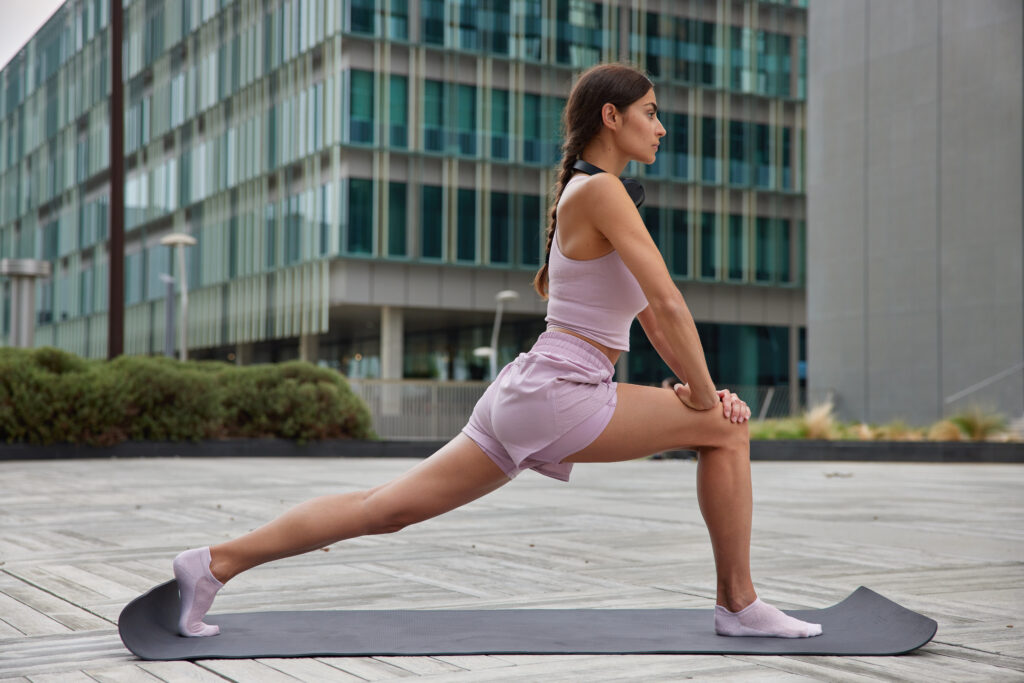
Beginners will find full body stretching routine more satisfying if they follow a few rules:
- Warm up your body before stretching with simple exercises;
- Pay attention to your breathing – it should be calm and even;
- do not stretch injured muscles – wait for full recovery;
- do not immediately try to hold your body in a static posture for a minute – 5-10 seconds is enough at first;
- start with the simplest exercises, gradually complicating the elements and increasing the time;
- relax when stretching, and do not stretch to the point of soreness;
- be regular and systematic in your exercise;
- increase the load if you no longer feel tension afterward;
- do not get distracted by household chores while performing the complex;
- end the exercise with relaxation exercises.
Conclusion
Despite the fast pace of life, a person must spend too much time sitting. This leads to loss of joint mobility, clamping and pinching of nerve endings, and weakening of the muscle corset, which, in turn, causes deterioration of posture, osteochondrosis, and back and lower back pain. The complex stretching exercises return elasticity and mobility to tendons and muscles and improve blood supply to the whole body and brain. Everyone has a different muscular structure and degree of muscle elasticity. Some people need more time to get a good stretch, but even if you wait for the results, they eventually please you. Stretching helps to keep the body in shape, accelerates the process of weight loss, and facilitates the restoration of mobility after injuries. Not only for biohackers – we recommend everyone to try stretching!
for subscribing!