


How to Fall Asleep in 5 Minutes

Everyone occasionally struggles to fall asleep and relax. Stress, anxiety, exhaustion, jet lag, and a heavy workload can disrupt your body’s natural rhythms, making it harder to drift off. We’ve compiled a few effective techniques and life hacks to help you fall asleep quickly.
Highlights
- Some people fall asleep easier with muscle relaxation, breathing exercises, or calming visualization Techniques.
- Keeping the same bedtime each night trains the body to switch into rest mode more naturally.
- Cooling mattresses, ergonomic pillows, and sleep masks are designed to make nighttime rest more comfortable.
- Even small evening changes can improve sleep quality and make nights feel less exhausting.

Contents
Best Techniques to Fall Asleep Faster
Sleep problems can lead to additional physical ailments: headaches, digestive disorders, and immune system issues. The longer this condition persists, the harder it is to overcome. Special exercises, breathing techniques, calming activities, and certain foods — there are many ways to restore healthy sleep.
Progressive Muscle Relaxation
Progressive muscle relaxation (Jacobson’s progressive muscle relaxation) is a technique for relieving stress and muscle tension. It involves alternating between maximum tension and complete relaxation of various muscle groups, allowing the body to “remember” a state of rest and release accumulated tension.
Perform the basic routine in a quiet setting, either sitting or lying down. Tense each muscle group for 5–10 seconds as you inhale, then relax it abruptly as you exhale, focusing on the sensation of warmth and lightness.
- Face and neck: Squeeze your eyes shut tightly, wrinkle your nose, and clench your jaw (3–5 seconds). Relax. Press your chin to your chest, tensing your neck, then relax.
- Arms and shoulders: Clench your hands into fists, tense your biceps, and bring your shoulders up to your ears. Lower them and relax.
- Chest and abdomen: Take a deep breath and tightly contract your abdominal muscles. Exhale and relax.
- Legs: Tense your calves and thighs, and point your toes. Lower your legs and let them go completely limp.
4-7-8 Breathing
The 4-7-8 technique is a popular breathing exercise method developed by Dr. Andrew Weil. It is designed to stimulate the parasympathetic nervous system, which helps quickly relieve anxiety, manage stress, and fall asleep.
The basic technique involves inhaling through the nose for 4 seconds, holding your breath for 7 seconds, and exhaling through the mouth for 8 seconds (the tip of the tongue should be positioned behind the upper front teeth).
The effects of controlled breathing practices in general (which include the 4-7-8 technique) are described in several scientific studies: in 2016, researchers from S-VYASA Yoga University in Bangalore analyzed scientific articles published since 1988 on the effects of breathing practices on the human body. According to their findings, slow, controlled breathing has a beneficial effect on the cardiovascular system and on autonomic nervous system parameters.
In 2019, using a sample of 40 people with moderate obstructive sleep apnea syndrome, scientists investigated the effectiveness of oropharyngeal exercises and breathing practices on sleep quality. The results suggest that controlled breathing reduces snoring frequency and daytime sleepiness, and improves sleep quality.
Official mental health guidelines and platforms recommend starting with four cycles per session, gradually increasing to eight.
Visualization Techniques
Visualization for sleep is a method of shifting your attention from daily worries to calm, repetitive images. It helps the brain relax by mimicking the transition to sleep and reducing stress levels.
So, close your eyes while lying in bed. Allow yourself to relax a little. Think of something good, pleasant, and soothing, because thoughts shape your mood and feelings. These could be upcoming events for tomorrow or memories from the past. Perhaps even just some positive fantasies.


Top 3 effective techniques:
“Safe Place”
- The idea: imagine a place where you feel as comfortable and safe as possible.
- Details: Mentally recreate the scene: the sound of the surf, the rustling of leaves, the warmth of the sun, the scent of pine trees.
- Result: your brain stops scanning the environment for threats and shifts into rest mode.
The “Endless Landscape” Method (or “Counting Sheep”)
- The idea: imagine a monotonously repeating process that requires no logical effort.
- Details: this could be a cloud bobbing on the waves, a train passing by mountains, or falling autumn leaves. Focus on the movement of a single object.
The “Relaxing Rays” Technique
- The idea: combining visualization with physical relaxation.
- Details: imagine that you are gently enveloped by warm, soft light (or pleasant warmth). Mentally direct it from top to bottom: from the crown of your head, down your face, through your shoulders, and all the way to the tips of your toes.
The Military Sleep Method
The “Military Method” is a popular 5-step technique that helps relax the body and clear the mind, allowing you to fall asleep in just 1–2 minutes. It was originally described in the book Relax and Win: Championship Performance in Whatever You Do (1981) and developed for fighter pilots.
The “Military Sleep Method” was developed by sprint coach Lloyd Winter. During World War II, he trained U.S. Navy pilots in effective recovery techniques. The key to his method was learning to fall asleep in 120 seconds under any conditions.
Winter’s method proved effective: 96% of pilots who tried it fell asleep within 2 minutes after 6 weeks of practice.
What should you do?
- Lie on your back or get as comfortable as possible (on a bed, in a car, or in an office chair).
- Breathe slowly and deeply, while trying to relax every muscle in your face — your mouth, forehead, cheeks, jaw, tongue, and eyes. The moment this happens, your brain will receive a signal that it’s time to sleep.
- Then do the same for your entire body: start with your shoulders and slowly move to your neck and arms, relaxing each one in turn (from your shoulders to your fingertips). After that, move on to your torso, hips, and legs (each part separately: knees, calves, ankles, feet, and toes). You should feel as if your body is turning into jelly.
- Once your muscles are relaxed, clear your mind. To do this, you can visualize soothing images.
- Focus on them and don’t let any distracting thoughts in. Hold these images for at least 10 seconds.
- If you feel yourself getting distracted, repeat to yourself several times: “Don’t think” (for about 10 seconds).
According to a 2021 study published in Evidence-Based Complementary and Alternative Medicine, various forms of relaxation, such as progressive muscle relaxation, meditation, breathing exercises, and visualization, can help people reduce stress in their daily lives and improve their overall well-being.
White or Pink Noise
Both white and pink noise can help you sleep by masking disruptive background sounds, but they have different sound profiles.
- Pink Noise: features lower, deeper frequencies that sound softer and more natural (like a steady rainfall or rustling leaves). It is often preferred by people who find white noise too harsh, and some studies suggest it may help stabilize deep, restorative sleep.
- White Noise: distributes sound evenly across all frequencies, creating a static-like hum (like a TV fuzz or a running fan). It is highly effective at masking a wide variety of sudden, disruptive sounds.
|
Feature |
White Noise |
Pink Noise |
|
Sound Profile |
Even volume across all frequencies; static-like. |
Higher frequencies are quieter; deeper, rhythmic hum. |
|
Sounds Like |
TV static, a running fan, or a vacuum cleaner. |
Steady rain, wind blowing, or rustling leaves. |
|
Best For |
Heavy background noise, as it masks sounds very effectively. |
Light sleepers who find high-pitched frequencies irritating. |
|
Sleep Quality |
Helps you fall asleep by muffling jarring noises. |
Linked by some studies to deeper slow-wave sleep and better memory. |
The best option comes down to personal preference and your sleep environment. If you live in a noisy area (like a busy street) and need to block out external sounds, white noise is highly effective. If white noise sounds too sharp or gives you a headache, pink noise is a great, soothing alternative.
Recent sleep research suggests that continuous exposure to broadband noise throughout the night might reduce REM sleep. If you’d like to experiment, you can test both sounds using free sound apps on the Apple App Store or the Google Play Store.
Paradoxical Intention
Paradoxical intention for sleep is a behavioral technique where, instead of trying to fall asleep, you deliberately try to stay awake. Removing the “performance anxiety” associated with insomnia allows your mind to relax and natural sleep to occur.
For many chronic insomniacs, the dread of a restless night creates a feedback loop of stress. Studies show that utilizing paradoxical intention can significantly reduce sleep-onset latency (the time it takes to fall asleep) and decrease sleep-related performance anxiety.
Habits That Make Falling Asleep Easier
There are several popular and proven lifehacks and advice for falling asleep easier and maintaining your sleep routine. Let’s glance at some of them.
Build a Micro-Routine Before Bed
Your brain loves patterns. A simple 15-30 minute “wind-down ritual” helps signal that the active part of the day is over. Sleep is coming next. Over time, the body starts associating these small repeated actions with relaxation and melatonin release.
- Examples: taking a warm shower, dimming the lights, reading 10 pages of a book, stretching or breathwork, making herbal tea, listening to calm music.
- Why it works: consistent pre-sleep cues help lower nervous system activity and reduce “mental scrolling” — the state where the brain stays alert even when the body is tired. This makes falling asleep feel more automatic instead of forced.
Keep a Consistent Sleep Schedule
Going to bed and waking up at roughly the same time every day helps regulate your circadian rhythm — the body’s internal clock. Sleep becomes easier when the brain knows when to expect it.
- Examples: waking up within the same 30–60 minute window even on weekends, avoiding dramatic “catch-up sleep” after late nights, setting a fixed bedtime alarm, not only a morning one.
- Why it works: regular sleep timing improves melatonin production, energy levels, and sleep efficiency. Irregular schedules can create a “mini jet lag” effect, making it harder to fall asleep even when exhausted.
The 10-3-2-1-0 Rule
This is a simple framework designed to reduce the most common lifestyle habits that interfere with sleep quality. 10-3-2-1-0: what does it mean?
- 10 hours before bed: no more caffeine,
- 3 hours before bed: no heavy meals or alcohol,
- 2 hours before bed: stop working,
- 1 hour before bed: avoid screens,
- 0: no snooze button in the morning.
The rule targets the biggest sleep disruptors: overstimulation, blood sugar swings, stress hormones, blue light exposure, and fragmented sleep cycles. It also helps create stronger boundaries between “day mode” and “sleep mode,” which is especially useful for people with busy schedules or high screen time.
Sleep Tools That May Improve Sleep Onset
Improving sleep onset can be effectively achieved using evidence-backed tools ranging from smart wearables and temperature-control devices to proven relaxation routines. These devices may help your body transition quickly into a restful state by aligning your circadian rhythm and calming your brain.
SOMO Sleep Fitness Mask
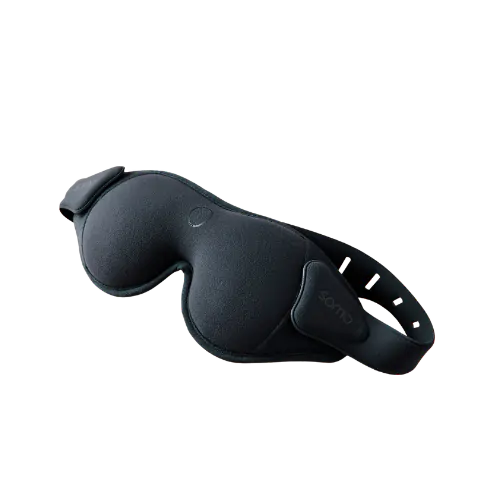
Features the patented SOMOsphere acupressure point, SOMO Sleep Fitness Mask clinically shown to reduce stress and induce calm by applying gentle pressure to the Yin Tang acupoint located between the eyebrows. Premium eye shade with advanced light-blocking and convex dome shape to minimize eyelash contact and promote air flow. Uniquely engineered, anatomically contoured eye mask for improved fit and comfort.
YOUP Pillow
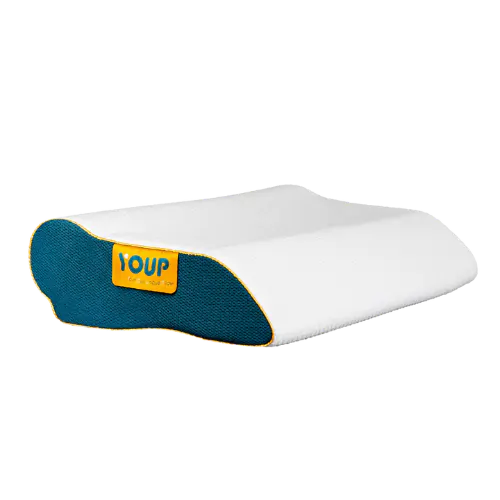
YOUP pillow delivers personalized solutions designed just for you. Every custom-fit pillow starts with precise measurements. You can choose between PillowScan™, an advanced scanning technology that maps and analyzes your body’s contours, or a manual measurement with a simple measuring tape. Whichever method you prefer, the device uses your personal data to create a pillow that aligns and supports your cervical spine, giving you the balance of comfort and support for truly restorative sleep.
Pod 4 Ultra
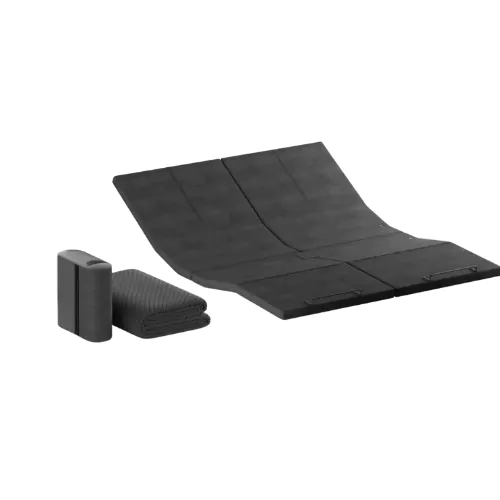
Experience unparalleled comfort and cutting-edge technology with the Pod 4 Ultra by Eight Sleep. This revolutionary smart mattress is designed to optimize your sleep quality through advanced temperature regulation, sleep tracking, and personalized insights.
To sum up
Getting a good night’s sleep directly affects the functioning of the entire body. Basic recovery, immune system health, mental clarity, and emotional balance all depend on this process. Good sleep improves cognitive function, strengthens the immune system, and promotes emotional balance. It is during sleep that the body recovers. Maintaining a regular sleep-wake cycle and a balanced diet can help reduce the risk of various diseases.
This article is for informational and educational purposes only and should not be considered medical advice, diagnosis, or treatment. Sleep problems can have many underlying causes, including stress, lifestyle factors, hormonal imbalances, neurological conditions, or other health issues. If you experience persistent insomnia, frequent night awakenings, daytime fatigue, or long-term sleep disturbances, consult a qualified healthcare professional or sleep specialist for proper evaluation and support.
for subscribing!