


How to Meditate like a Pro with Biohacking
Meditation and mindfulness practices are important biohacking techniques that help improve mental health and emotional balance. Regular meditation can help reduce stress, improve concentration, and strengthen the immune system. Biohackers often incorporate meditation into their daily lives to improve overall health and productivity. In addition, mindfulness practices can help you better understand your body’s signals and respond to stress more effectively. Let’s discover more with biohacking experts!
Highlights
- Biohackers use meditation daily to reduce stress, improve focus and enhancing self-control.
- Types of meditation include mindfulness, mantra, breathing, movement, and observation.
- Start small with daily 5–10 min sessions and create a dedicated meditation space.
- Top meditation apps include Headspace, Calm, Happier, and Insight Timer.

Contents
What is Meditation
Meditation is a practice that typically involves focusing attention and mindfulness to achieve inner harmony, peace, and psychophysical well-being. It has been around for thousands of years. It came to us from ancient philosophical and spiritual teachings. The practice of mindfulness was primarily developed in Buddhism and Indian yoga, from where it seeped into the general public.
Today, doctors and psychologists actively use meditative methods to recover the soul and body in their work. There are many types of meditation, including traditional techniques such as zen, transcendental meditation, and vipassana, and new approaches such as meta-meditation and mindfulness-based meditation.
What Science Says About Meditation
Usually, people think of meditation as something connected to the spiritual and religious world, or discuss it from a metaphysical perspective. We can’t see how it opens the chakras and works with the aura, but science has also studied meditations. And it could provide us with more down-to-earth and tangible evidence of its benefits.
There are several studies of how meditation affects the human body. One such study, published in the journal Evidence-Based Mental Health, shows that mindfulness techniques are as effective as cognitive behavioural therapy. It alleviates chronic pain symptoms in fibromyalgia, rheumatoid arthritis, and osteoarthritis.
Your memory can be developed by meditation as well. According to another study in the Journal of Alzheimer’s Disease, meditation may reduce the risk of dementia. Senior researcher Dr. Helen Lavretsky asserts, “Regular yoga and meditation may be a simple, safe, and inexpensive solution to improving brain function.”

Robert Wright, an author and former visiting lecturer at Princeton University in New Jersey, writes about how mindfulness and meditation practices help people overcome anxiety and other mood disorders.
Difference Between Classical Meditation and Biohacking Meditation
This isn’t really about differences, but rather about refining meditation methods and finding new approaches. By combining biohacking with ancient meditation techniques, we achieve a symbiosis of the past and high-tech technologies. This allows us to get the best of both worlds. Your concentration can increase exponentially, and your effectiveness can improve. It’s also a great way to get to know yourself better. Using various gadgets, music, and even aromas, we’ll unlock the full potential of meditation. You’ll learn how to do this a little further down in this article.
Why do Biohackers Practice Meditation
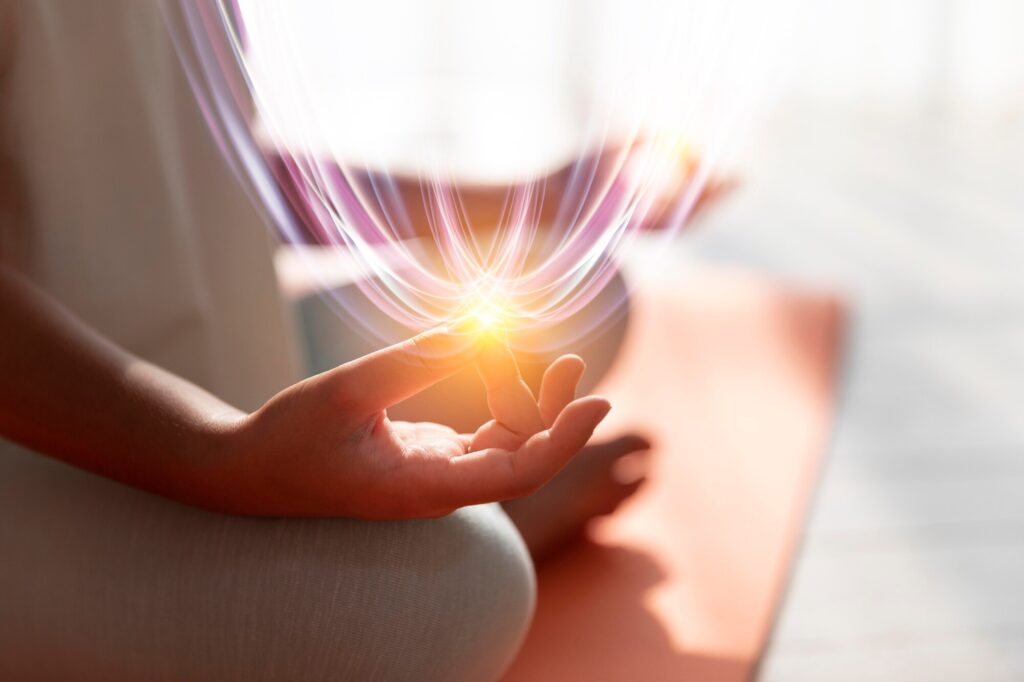
The main benefits of meditation are numerous and well-documented — it may help reduce stress and your risk of developing Alzheimer’s disease; it may slow down the cognitive aging process; it increases your focus and emotional intelligence; and it may help you age actively. Health effects of meditation are:
- Stress reduction. Meditation is often associated with reduced stress levels. Studies show that regular meditative practice helps to reduce cortisol (stress hormone) levels and activate relaxation responses in the body.
- Mental health support. Many studies confirm that meditation can effectively support mental health. It has been linked to reducing symptoms of depression and anxiety. Also, meditation can be incorporated into holistic treatment for people suffering from post-traumatic stress disorder (PTSD).
- Improved cognitive function. Several studies suggest meditation may improve cognitive functions such as attention, concentration, memory, and information processing. For example, meta-analyses of studies on mindfulness meditation indicate cognitive improvement.
- Changes in the brain. Neurophysiological studies demonstrate that meditation can cause structural and functional changes in the brain, such as an increase in gray matter volume in areas associated with self-control and emotional regulation.
- Improved sleep quality. Some studies also link meditation to improved sleep quality. Regular meditation can help relieve stress and improve sleep, affecting overall physical and mental health.




The Synergy of Meditation and Biohacking
- Stress Management
Meditation: meditation can reduce stress levels and activate relaxation responses in the body.
Biohacking: Sensory devices and technologies can help monitor stress-related physiological indicators, alerting users to apply stress relief strategies such as meditation.
- Improving mental well-being
Meditation: Promotes emotional well-being and reduces symptoms of anxiety and depression.
Biohacking: Neurotechnologies such as transcranial magnetic stimulation (TMS) can be combined with meditative practices to improve emotional regulation.
- Improving cognitive function
Meditation: Improves attention, concentration, and cognitive processes.
Biohacking: Neurotechnologies such as electroencephalography (EEG) and brain stimulation devices can be used to optimize cognitive function when combined with meditation.

- Sleep and relaxation
Meditation: Helps relaxation and improves sleep quality.
Biohacking: Sleep monitoring technologies can provide information about sleep cycles, and sound therapy devices or bio-reversal technologies can support deep and restful sleep.
- Self-reflection and personalization
Meditation: Allows a better understanding of yourself, your emotions, and your needs.
Biohacking: Genetic testing and biometrics tracking technologies can provide personalized health information and tailor biohacking strategies to individual needs.
- Self-regulation and energy management
Meditation: Teaches self-regulation and energy management.
Biohacking: Energy-monitoring technologies and devices to optimize biorhythms can enhance energy management and performance.
What are the Types of Meditation
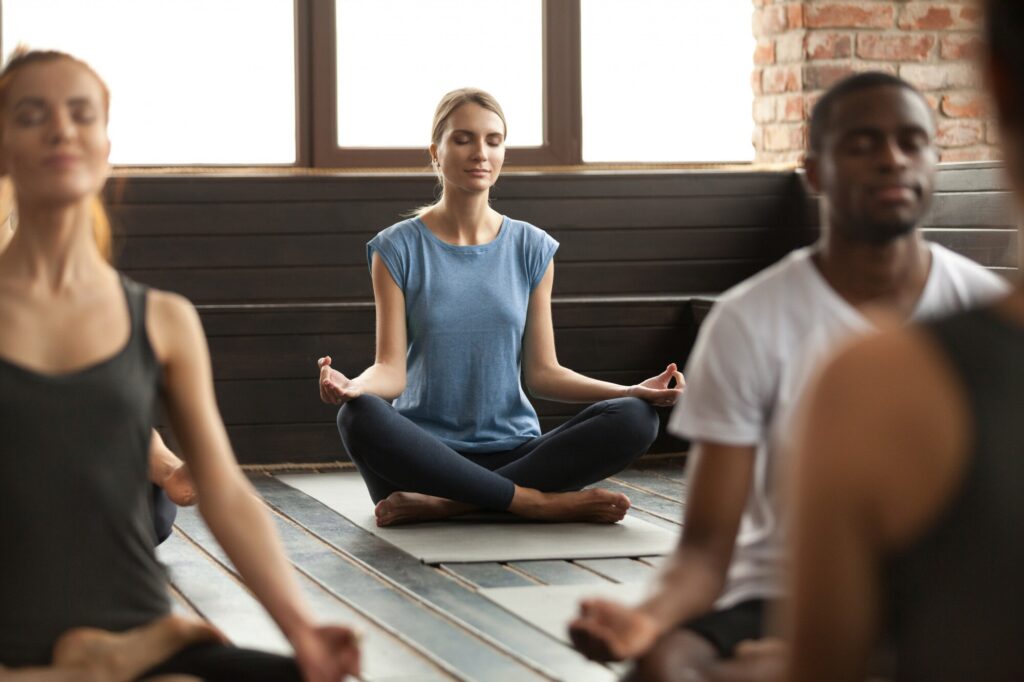
There are many ways to meditate for biohackers. It all depends on your free time, requests, preferences, and physical fitness. Any meditation aims to learn about yourself — spiritually and physically — the main thing is choosing something enjoyable.
Mindfulness Meditation
Mindfulness meditation is the art of managing attention. It is based on Buddhist traditions and uses techniques that are effective in treating anxiety, phobias, and insomnia. Practices use meditative tools such as gongs and Tibetan singing bowls, aromatherapy, and minerals for deeper insight and immersion. Each session is dedicated to working through breathing and mental and physical mindfulness techniques.
How to Practice Mindfulness Meditation
This is working with awareness of your body and mind. Try to stay in the moment and not lose focus. Don’t forget to sit with a straight back. This makes your posture better and, most importantly, helps you breathe properly. If your attention wanders, just get focus back and don’t judge yourself.
Mantra Meditation
Mantra meditation is prominent in several traditions, including Hindu and Buddhist traditions. It was popularized in the West through the development of Transcendental Meditation. This technique uses repetitive sounds (mantras) to clear the mind and give you something to focus on. A mantra can be a word, phrase, or sound.
How to Practice Mantra Meditation
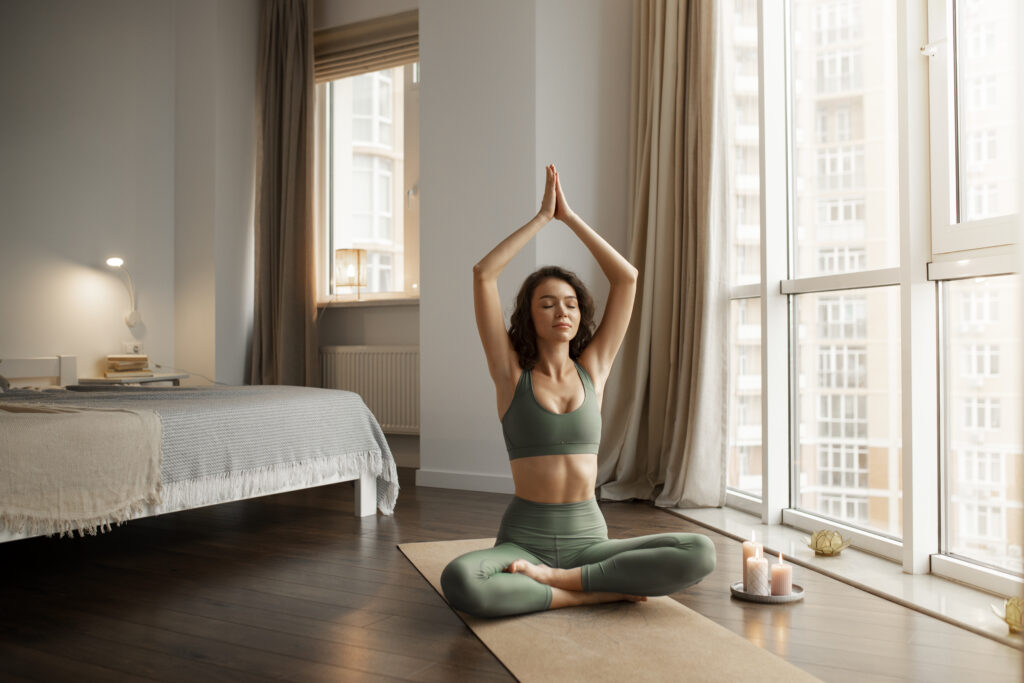
Mantra meditation is usually done sitting down. In it, you repeat a particular sound for a certain period of time, either loudly or softly. Repeating a mantra gives our mind a task that helps us separate from our thoughts so that we can slip into the spaces between them.
Chanting mantras helps you focus on the sound and synchronise your breathing. You can also infuse it with your desired meaning, thus tuning your brain to positive energy.
Breathing Meditation
This active meditation uses deep, rapid breathing and body movement to open and bring awareness, vibrancy, and stillness to each of the seven chakras and, thus, to your life. Accompanying music and bells energetically support the process and indicate the beginning of each stage.
How to Practice Breathing Meditation
They usually revolve around a specific breathing pattern. For example, try inhaling through your left nostril and exhaling through your right. While doing this, close each nostril alternately with your thumb. This technique helps balance the energy of the two hemispheres of the brain and alleviate anxiety.
Movement Meditation
It combines meditative concentration with physical movements such as walking, yoga, or tai chi. This practice is ideal for those who feel more comfortable in movement than in the quiet of sitting meditation. Consciously performing each movement helps to achieve a state of mental calm, improve physical health, and achieve harmony of body and mind.

How to Practice Movement Meditation
This option is suitable for those who have difficulty sitting still or who spend most of their time working in a sedentary position. For example, sit in a Turkish pose and begin rapidly moving your arms as if you were hitting two large baseballs. Focus on your breathing: exhale as your arms move down, and inhale as your arms move up. This shifts your focus from thoughts to movement, relieving stress.
Observation Meditation
Observation meditation includes observing yourself, your thoughts, and the world around you. Whenever you practice observation meditation, you self-reflect and view yourself about the world around you.
How to Practice Observation Meditation
In short, observation meditation is whenever you meditate on your observational thoughts. Though this may seem odd, it is very common. It utilizes your stream of thought for meditative purposes, combatting the myth that meditation requires emptying your mind.
Observe everything that’s going on in your head, but don’t get involved – let it flow through you without judgment. This is best done while sitting with your eyes closed.
How to Biohack Your Meditation
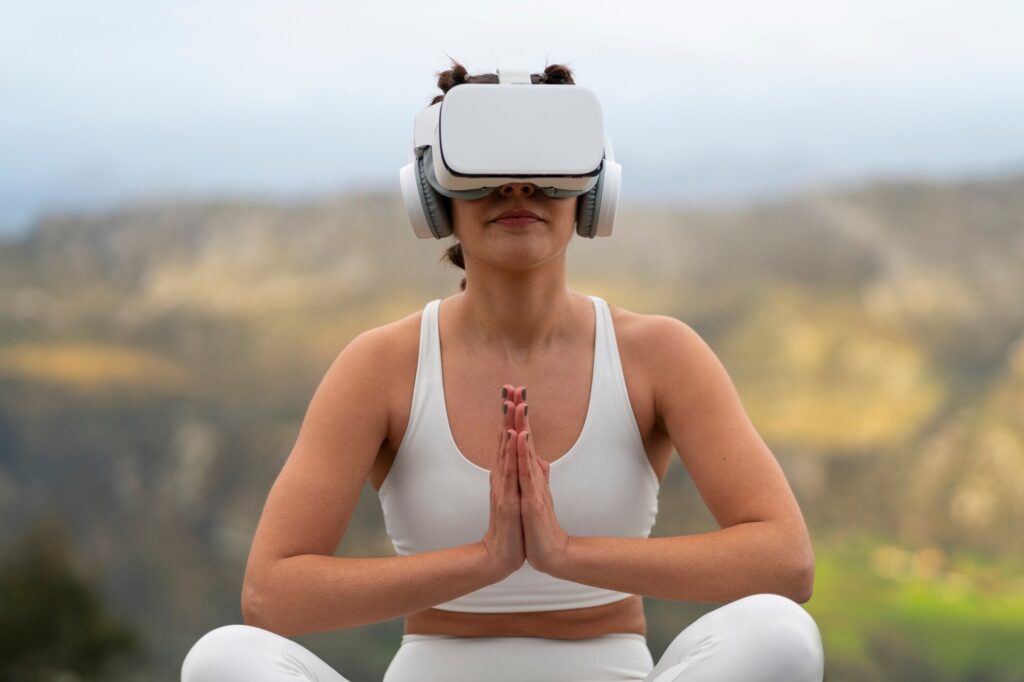
The fusion of technology and meditation has opened new frontiers for optimizing mindfulness practices. By leveraging biofeedback, sensory enhancements, and light-based interventions, individuals can more effectively deepen their meditative states, improve focus, and enhance relaxation.
HRV Tracking
Heart Rate Variability (HRV) tracking tools like Oura Ring, Whoop, and Polar provide real-time insights into physiological responses during meditation. Monitoring HRV helps individuals understand their relaxation levels, optimize breathing techniques, and track progress, making meditation more data-driven and personalized.
Sound Therapy
The vibrations created by sound help release tension throughout the body. This also impacts a person’s emotional state. This type of meditation is also called sound healing, and for good reason. Sound can help resolve crises and even uncover traumas that have been buried in the subconscious. For such a therapy, you can use special singing bowls, gongs, or recorded mantras. It’s important to concentrate on the sound to feel its effect. At this point, sound waves will modulate your brainwaves, and you will achieve maximum relaxation.
Vibroacoustic Technology
Vibroacoustic technology uses low-frequency sound vibrations to stimulate the body and mind, enhancing relaxation and focus. Devices such as sound therapy mats or resonance-based chairs deliver soothing frequencies that can synchronize brainwaves, reducing stress and deepening meditation.
Sensory Deprivation
Floatation tanks, or isolation chambers, create an environment free from external stimuli, immersing users in a weightless, silent, and dark space. Similar to the sensory experience of a fetus in the womb, this state promotes profound relaxation, mental clarity, and altered states of consciousness. Benefits of sensory deprivation include:
- Reduced stress and anxiety
- Enhanced creativity and problem-solving skills
- Improved sleep quality
- Deepened mindfulness and meditation experiences
Light-Blocking Mask
Sleep masks and specialized meditation gadgets like Opus and Mindfold enhance concentration by eliminating visual distractions. Blocking out light helps the brain transition more quickly into a meditative state, promoting deeper relaxation and heightened mental focus.
Light Therapy Meditation
Devices such as Re-Timer, Luminette, and LED light panels harness specific wavelengths to influence brainwave activity. Exposure to blue and green light can increase alertness and energy, while red and near-infrared light can aid in relaxation and stress reduction. By incorporating light therapy into meditation, practitioners can tailor their sessions to invigorate or calm the mind, optimizing their overall experience.
Aromatherapy
Scents are one of the most powerful triggers for our brains. Essential oils act through receptors in the nose, activating areas of the brain associated with memory, emotions, and mood regulation. This is an easy and quick way to relax your nervous system, and it’s also pleasant. Try adding a few drops of lavender essential oil to a diffuser, and you’ll feel how it relaxes your entire body. Or rub some peppermint and orange oils between your palms. This will not only invigorate you but also improve your breathing if you have a runny nose. If you want to work on your concentration, add a little sandalwood before meditating. It will help you focus your mind and make the process more successful.
Cold Therapy (The Wim Hof Method)
It is a combination of specific breathing exercises with exposure to a cold environment. It could be an ice bath, a shower, or a cryotherapy room. Such exercises reduce inflammation, make your immune system healthier, and even improve sleep. To try it at home, you just need some courage and cold water. Don’t forget to breathe deeply during the procedure; use your belly for it. The best option is to concentrate on it and focus on the sensations in your body. This will help you improve your self-control even in the most critical situations. But don’t get carried away: 1-3 minutes of cold therapy is enough; the important thing is to strengthen yourself without getting sick.
Apps to Help You Get Started in Meditation
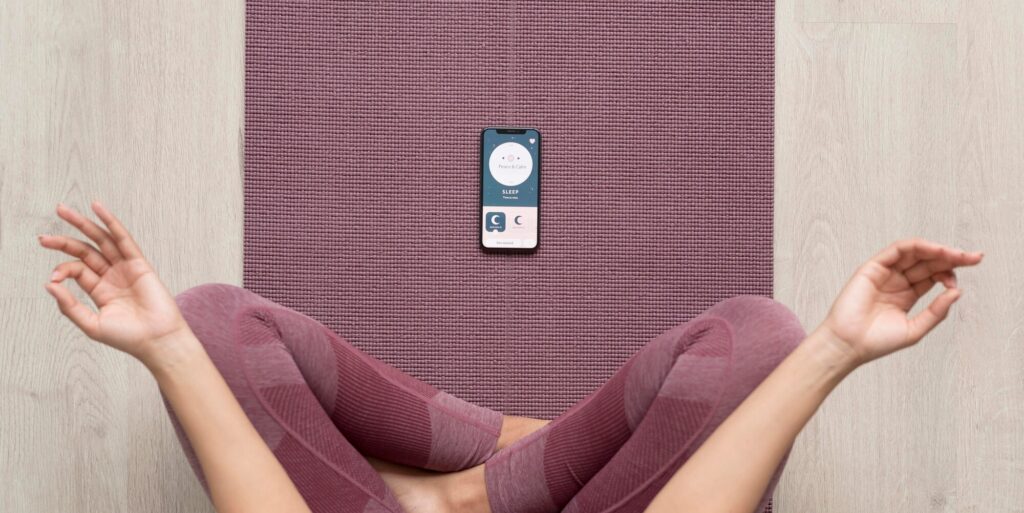
We have rounded up the best meditation apps based on criteria like evidence-based design, expert involvement, practitioner level, ease of navigation, variety of meditations offered, and cost. Use this list to find the perfect fit for your needs.
Headspace
Headspace has a user-friendly interface and hundreds of guided meditations for beginners to experts, promoting mindfulness, better sleep, reduced stress, and more.
- Platforms: iOS, Android
- Features: Meditation guides for all levels
Headspace says it’s on a mission to improve the health and happiness of the world with science-backed meditation and mindfulness tools that help create life-changing habits to support better mental health. With over 70 million downloads in 190 countries, Headspace is well on its way to achieving its mission.
Headspace offers a free version with limited content, but note that to take advantage of the full benefits the app offers, you will need a membership. The prices are as follows:
- $12.99 a month
- $69.99 a year
- Family plan (6 users): $99.99 a year
- Student plan: $9.99 a year
Those new to the app can take advantage of a 7- to 14-day free trial depending on subscription level (monthly or annual).
Happier
The Happier app is created for people beginning their way to meditation enlightenment. It caters to newbies with easy-to-follow guided meditations and shorter sessions that can be increased over time.
An annual subscription to Happier costs $99, which is $8.33 a month. It offers a 7-day free trial.

Calm
Calm is well known for promoting relaxation and sleep thanks to its soothing background sounds, to-the-point meditations, and sleep stories. Calm’s guided meditations will have you sleeping soundly and feeling more relaxed almost instantly.
- Platforms: iOS, Android
- Features: Calming background sounds, short meditations, and sleep stories
After a 7-day free trial, you can sign up for a monthly subscription for $14.99 per month, an annual subscription for $69.99 per year, or a lifetime subscription for $399.99.
Insight Timer
Insight Timer has a giant library of free meditations, so if your budget is tight, this is the meditation app for you.
- Platforms: iOS, Android
- Features: Over 150,000 free meditations
Insight Timer offers more than 150,000 free meditations — a big deal since one of the biggest complaints about other meditation apps is their lack of free content. The library allowed us to filter by need (e.g., stress, sleep, self-esteem), time, from five to 30 or more minutes, and specific benefits, such as pain relief, relationship woes, or teaching kids to meditate. It even offered us a mood tracker, where we could indicate via smiley face how we felt that day and see our progress right on the app as we checked in each day (for a month) — all for free.
Beginner’s 14-Day Meditation Protocol
If you are just starting your meditation, let us give you some tips.
Days 1-3
Breath control is the essential part, so better start with it. Sit in a comfortable position and breathe evenly. Try not to maintain focus. If your thoughts wander and you notice this, that’s good, because you can see this process and return to the desired flow. Spend 5 minutes on this process, and then just sit for another minute and notice if your state has changed.
Days 4-7
At this stage, we’ve already learned to let our thoughts wander and not cling to them. So, we can move on to our body. Try to sense it, where it sits, how your clothes fit. Feel everything that’s happening around you, but don’t judge it. Try to stay in this state for up to 8 minutes.
Days 8-10
Here, we focus more on the thoughts that come to mind, while removing any judgment. It’s essential to be aware of what’s coming and to maintain this state for 12 minutes.
Days 11-14
At this stage, we remain in meditation for up to 15 minutes. You may notice an even greater connection with your breath, as if you’re separate from the rest of your body. If we’ve previously tried to focus and keep our thoughts from wandering, as well as to maintain our breathing technique, now is the time to let go of all control and let the mind take care of itself. You’ve already done enough so far for the body to adjust itself. In the last few days, you may feel solutions to complex problems come more easily, gain more energy, and perhaps even a new boost of creativity.
Typical Mistakes and Tips for Beginners
You’re probably itching to start meditating and experience it all for yourself. Before diving into various practices, let’s run through the main mistakes beginners can make, which you’ll definitely avoid after reading our tips.
-
Trying to Concentrate Too Hard
Paradoxically, this will only complicate your first steps. It’s perfectly normal to get distracted; the best thing you can do for your brain is give it time to get used to the new process. Try gently refocusing, giving yourself and your brain time. This will help you achieve results faster and prevent you from giving up on meditation in the first few days. It’s important to remember that meditation is a process of accepting yourself, your thoughts, and your actions.
-
Inflate Your Expectations
Deciding to try meditation is already a big step, so don’t put too much pressure on yourself. Don’t try to commit to long practices right away, as you’re not yet accustomed to short sessions. Your brain will simply get distracted, and the process won’t be particularly beneficial. Try to let go of all your expectations as much as possible; don’t expect meditation to solve all your problems right away. Don’t look for a magic pill. Just enjoy the process of being alone with yourself, the opportunity to get to know yourself better.
-
Not Sticking to Consistency
Discipline is the key to success in any endeavour, and meditation is no exception. As with any workout or calorie counting, if you do it twice every six months and don’t change your lifestyle, you shouldn’t expect results. Put a bit more effort into it at first to grow a habit of meditating. And eventually, your mind and body will thank you.
-
Not Giving Enough Time to the Equipment
Wanting to try different types of meditation is absolutely normal. Surely, as there are over 70 of them! But remember that each one takes time to take effect. Jumping from one to another means you won’t get profit from anyone. Try practising each for about 40 days; this is considered sufficient time in yoga for a kriya or meditation practice to take effect. Be patient and persistent with yourself.
-
Not Preparing a Place for Practice
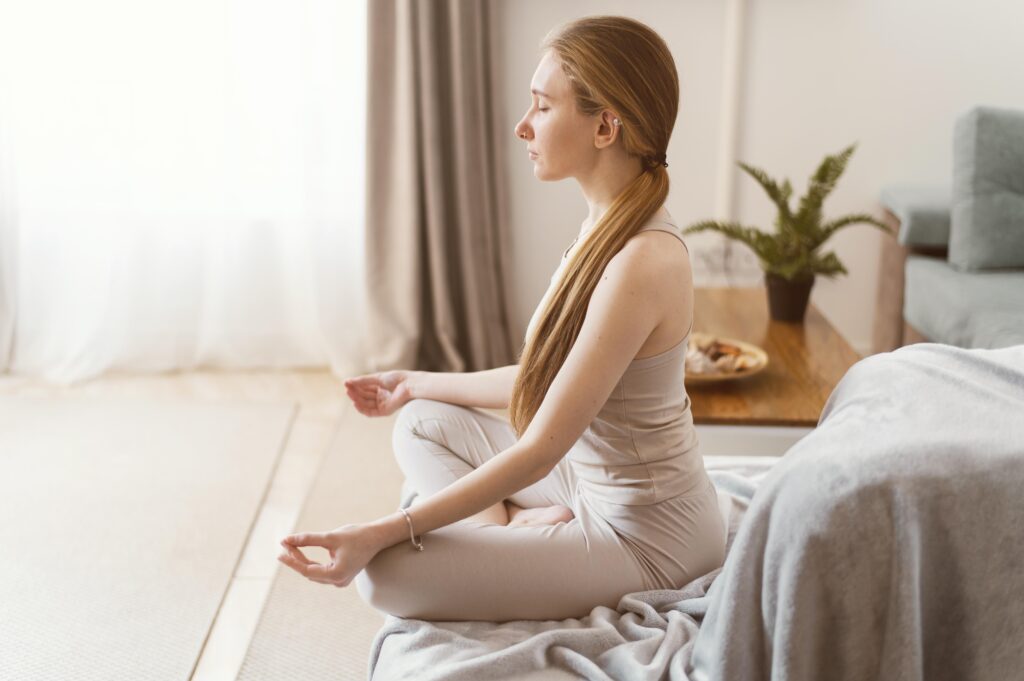
It’s essential not only to remain calm internally but also to create a calming environment externally.
Find a place where you can be in silence. Don’t forget to ventilate your room if you are not outdoors. Light candles or diffuse a scent you enjoy. Playing special music can also help. Mantras or gongs aren’t necessary – find whatever works best for you.
To Sum Up
Meditation, the oldest practice, has taught us to explore our inner world, reduce stress levels, and enhance mental health. Its effects on consciousness and emotional state provide the foundation for improved quality of life. Biohacking, based on advanced technology and scientific approaches, provides tools to optimize physical well-being, energy, and productivity.
Implementing these practices together not only helps to meet the challenges of modern lifestyles but also helps to create harmony between body and mind.
Managing emotions and stress through meditation, paired with innovative biohacking techniques, can achieve physical health and a deep sense of inner balance.
Thus, integrating meditation and biohacking is a practical strategic approach to health maintenance and reflects a modern view of the harmonious combination of traditional practices and advanced technologies to achieve the following goals.
for subscribing!